 By Shawn Henry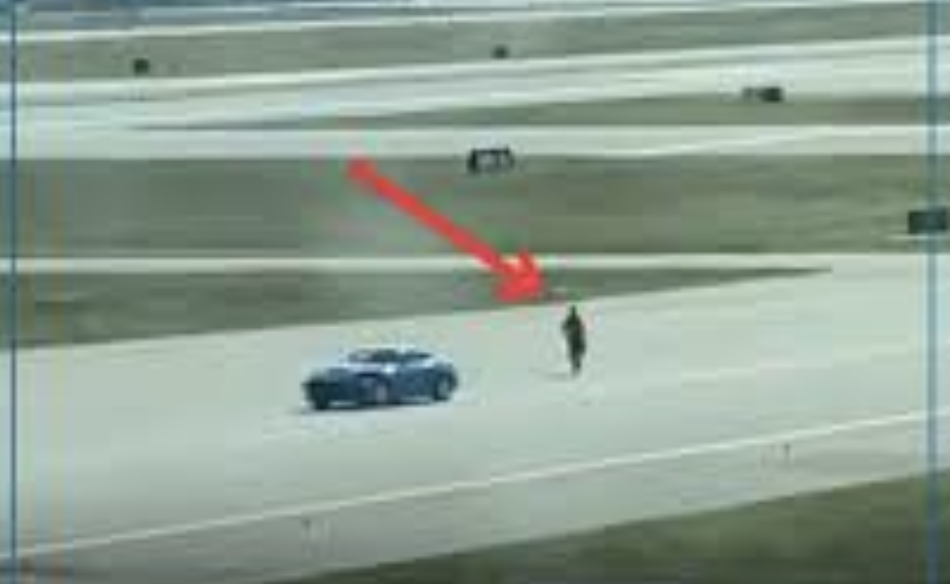
A quiet afternoon at Daytona Beach International Airport turned into a full-blown security nightmare when a 58-year-old man allegedly drove his Ford Mustang straight through a secured gate and onto an active taxiway. What followed wasn’t just reckless — it was dangerously close to catastrophe. According to authorities, the driver didn’t stop at breaching the perimeter. He attempted to board multiple aircraft while they were active, putting pilots, crew, and passengers at immediate risk.
This wasn’t just another DUI arrest. This was a breakdown of airport security with real-world consequences that could have easily escalated into something far worse.
What Happened at the Airport
The incident unfolded around 4:25 p.m. on Wednesday, when deputies were alerted that a blue Ford Mustang had smashed through a gate at the airport. By the time law enforcement arrived, the gate was destroyed and lying on the ground — a clear sign that the driver had forced his way into a restricted and highly sensitive area.
Authorities identified the driver as Bryan J. Parker, who reportedly admitted to being under the influence of both drugs and alcohol. He also told deputies he couldn’t remember what led up to the incident, raising even more concerns about his state of mind during the breach.
Witnesses reported seeing the Mustang driving directly onto the taxiway — an area reserved strictly for aircraft movement — where it nearly collided with a plane operated in the Embry-Riddle section of the airport. That near-miss alone could have turned deadly.
Attempting to Board Active Aircraft
Instead of stopping after entering the restricted zone, Parker allegedly escalated the situation further. Deputies say he exited the Mustang and attempted to board an occupied aircraft. He was unsuccessful, but the attempt alone highlights how close he came to creating a major aviation incident.
Security personnel and airport staff quickly moved to intervene. But Parker reportedly continued running across the tarmac, targeting another aircraft. An aircraft technician chased him down, and he was temporarily detained and placed on a truck’s tailgate.
That still didn’t end the chaos.
Authorities say Parker jumped off the tailgate and made yet another attempt to reach a different plane before being subdued again and finally placed in handcuffs.
By the time the situation was under control, multiple layers of airport security, operations staff, and even federal authorities — including the FBI — had responded.
A Mustang at the Center of the Chaos
For car enthusiasts, there’s an uncomfortable reality here. The Ford Mustang — an icon of American performance — was used as the tool to breach an airport perimeter and access a live taxiway. This wasn’t a high-speed police chase or a street racing incident. It was something far more serious: a vehicle crossing into aviation territory where it never belongs.
The Mustang itself isn’t the story — but its involvement underscores how easily a car, in the wrong hands, can become a serious threat beyond the road.
This wasn’t about horsepower or performance. It was about access, control, and a complete disregard for safety.
Security Questions Nobody Can Ignore
The biggest issue this incident raises isn’t just the actions of one intoxicated driver — it’s how he managed to get that far in the first place.
Airports are supposed to be among the most secure environments in the country, especially in areas where aircraft are actively moving. The fact that a civilian vehicle was able to crash through a gate and reach a taxiway raises serious questions about perimeter security, response time, and physical barriers.
Yes, airport personnel and security ultimately stopped the situation before it turned catastrophic. But the margin for error was razor thin. One wrong move — one second earlier or later — and this could have involved a direct collision with an aircraft.
That’s not just a local issue. That’s a system-level concern.
Legal and Financial Fallout Ahead
Parker now faces multiple charges, and the legal consequences are likely to be severe. Breaching an airport perimeter, interfering with aircraft operations, and attempting to board active planes is far beyond a standard DUI case.
There are also broader financial implications. Damage to airport infrastructure, potential operational disruptions, and the involvement of federal agencies all point to a costly aftermath.
Even though airport operations have continued, the investigation is ongoing — and it’s almost certain that security protocols will be reviewed and potentially tightened as a result.
Why This Matters Beyond One Incident
For enthusiasts and everyday drivers alike, this situation highlights a bigger truth: reckless behavior behind the wheel doesn’t just stay on the road anymore. When it crosses into critical infrastructure — like an airport — the stakes increase exponentially.
This isn’t about blaming drivers as a whole. It’s about recognizing how quickly one individual’s decisions can ripple outward, affecting industries, safety systems, and public trust.
It also raises a bigger question about how prepared critical facilities are to deal with unpredictable threats that don’t fit traditional patterns.
The Bigger Question Moving Forward
This incident could have ended far worse — and that’s exactly why it matters. A single driver, under the influence, managed to penetrate a secure airport zone and interact with active aircraft operations before being stopped.
So the real question isn’t just what happened — it’s what changes now.
Because if one car can get that far once, what’s stopping it from happening again?
 John Lloyd