 By Eve Nowell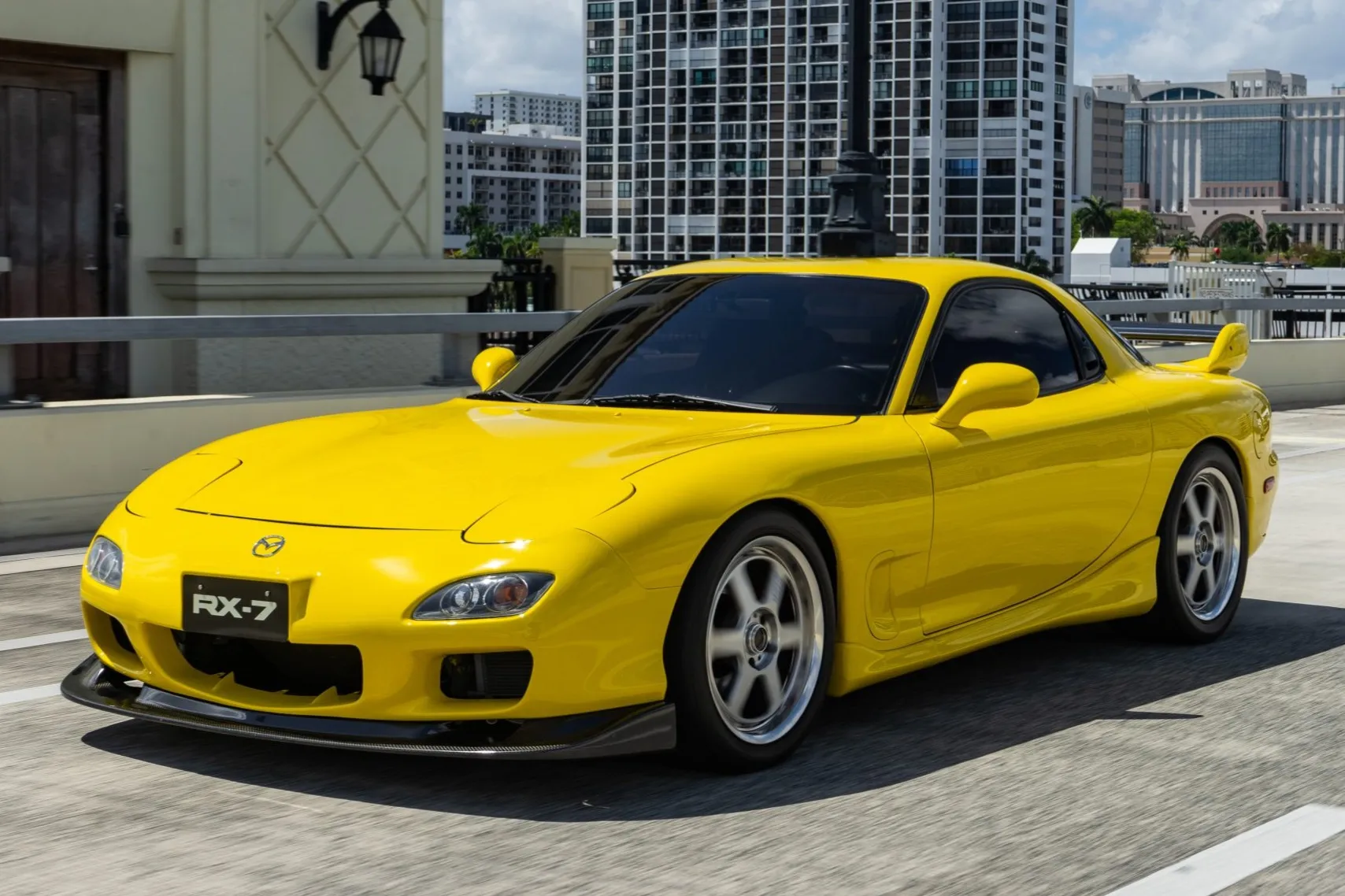
At first glance, it looks like a clean, desirable FD RX-7 in the right color with the right upgrades. The kind of car that usually sparks bidding wars without much hesitation. But this particular 1993 Mazda RX-7 R-1 isn’t that simple, and once you start digging into the details, the story shifts pretty quickly.
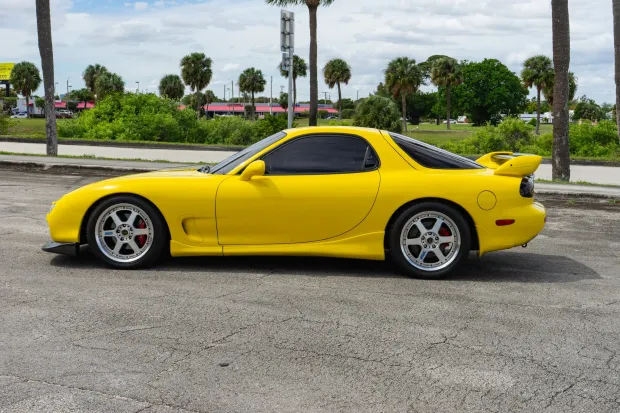
The car is currently sitting at $26,000 with about a week left in the auction. That number might seem reasonable for an FD, especially one wearing bright yellow paint and riding on Volk wheels. But here’s the part that matters. This isn’t a lightly modified example or a preserved collector car. It’s been through multiple owners, multiple states, and more than a few major changes along the way.
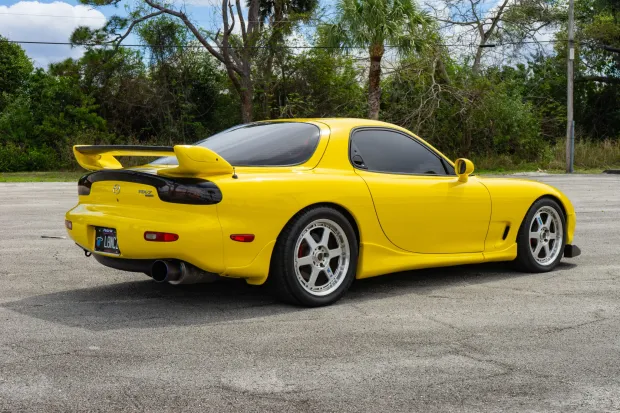
Originally finished in Competition Yellow Mica, the car doesn’t actually wear its factory paint anymore. It was repainted in 2019 after receiving a facelift using parts from a 1999 RX-7. That includes the front bumper, rear wing, and taillights. On paper, that might sound like a desirable upgrade. In reality, it’s also a signal that this car has been reshaped over time rather than preserved.
And that’s where things start stacking up.
Before the cosmetic changes, the car had already seen its share of trouble. A record from 1999 shows it hit a guardrail and took damage to the left front. That was decades ago, but it’s still part of the car’s history, and it never really disappears. Add in years of movement across Hawaii, Florida, South Carolina, and Tennessee, and you’re looking at a car that hasn’t exactly lived a quiet life.
Under the hood is where things get even more layered.
The 1.3-liter 13B-REW rotary engine didn’t stay stock for long. At one point, it was converted to a single turbo setup. Then later, around 2019, it was brought back to a sequential twin-turbo system using components from a 1999 model. That might sound like a step back toward factory configuration, but it wasn’t a simple reversal. The engine overhaul included a long list of replaced parts, from hoses and wiring to fuel system components and cooling hardware.
It’s the kind of rebuild that suggests effort, but also raises questions. Why was the single turbo setup removed? What condition was the engine in before the overhaul? Those answers aren’t spelled out, and that uncertainty lingers.
There’s also a note from 2023 that the double-throttle system has been disabled. That’s not a small detail. It changes how the engine behaves and adds another layer to the car’s already complicated setup. At the same time, spark plugs and radiator fans were replaced, which suggests ongoing maintenance but also reinforces the idea that this car needs attention, not just admiration.
Then there are the supporting mods.
You’ve got a Trust intercooler, Koyo aluminum radiator, aftermarket oil coolers, and an HKS ignition system. Fuel delivery is handled by a Walbro pump, and tuning comes from an A’PEXi ECU. On the exhaust side, a GReddy system and stainless downpipe handle the flow. It’s a familiar mix of parts for RX-7 builds, but again, it’s not subtle. This is a heavily modified car that’s been pushed and adjusted over time.
Power goes through a five-speed manual transmission paired with a limited-slip differential. That’s a plus for enthusiasts who want engagement, not just numbers. But it’s also worth noting that fluid leaks are present. That’s not unusual for a rotary, but it’s not something you ignore either.
The suspension setup leans toward performance with HKS coilovers, and the car sits on 17-inch Volk Racing wheels wrapped in Sumitomo tires. The catch is those tires date back to 2015. They may still hold air, but they’re well past their prime. Anyone serious about driving this car will be budgeting for replacements immediately.
Inside, the cabin tries to blend upgrades with a touch of OEM sourcing. The bucket seats are wrapped in black microsuede, and some interior trim comes from a 1994 model. There’s a short-throw shifter, a Spirit R shift setup, and drilled aluminum pedals. It sounds like a driver-focused environment, and in many ways, it is.
But it’s not perfect.
The passenger window switch doesn’t work. The instrument cluster had to be recalibrated due to intermittent issues. These aren’t deal-breakers, but they add to the overall picture. This isn’t a turnkey car. It’s one that requires attention, patience, and probably more money after purchase.
Mileage sits at around 58,000 miles, which might sound appealing at first. But with a car like this, mileage isn’t the full story. The modifications, the rebuild, and the history matter just as much, if not more.
And that’s where it gets complicated.
There’s a certain appeal to a modified RX-7 like this. It looks right, it has the right parts, and it checks a lot of enthusiast boxes. But it also carries the kind of history that makes buyers pause. Accident records, engine changes, electrical quirks, and fluid leaks don’t just disappear because the car presents well in photos.
At $26,000, the bidding reflects both interest and caution. This isn’t a bargain basement project, but it’s also not priced like a pristine collector piece. It sits somewhere in the middle, and that middle ground is where decisions get tougher.
Because buying a car like this isn’t just about what it is today. It’s about what it might need tomorrow.
For some buyers, that’s part of the appeal. The challenge, the tuning, the process of dialing it in. For others, it’s a warning sign that the story isn’t finished yet.
Either way, this RX-7 proves something pretty clearly. Not every clean-looking FD is a simple purchase. Sometimes, the deeper you look, the more you realize you’re not just buying a car. You’re buying everything that came before it.
Source
 John Lloyd
  Shawn Henry