 By Eve Nowell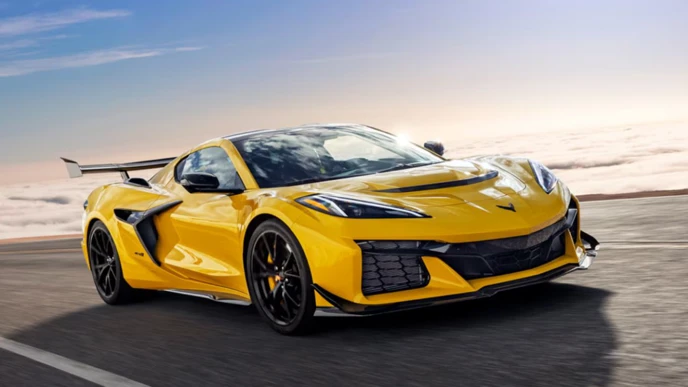
Chevrolet didn’t just build a supercar. It may have just disrupted the entire idea of what a supercar is supposed to be. With more than 1,000 Corvette ZR1s already produced for 2026, the brand is doing something that would’ve been unthinkable just a few years ago — turning a 1,000-horsepower, record-breaking machine into something approaching availability.
That decision is sending ripples through the performance car world. Because in a segment built on scarcity, Chevy just chose volume.
From Limited Halo Car to High-Volume Weapon
Production trackers show Chevrolet has already pushed past 1,000 units of the 2026 Corvette ZR1, alongside 156 units of the all-wheel-drive ZR1X variant. That number alone flips expectations. The 2025 ZR1 run sat at just 180 units, aligning more closely with traditional low-volume supercar strategy.
This time, Chevrolet is taking a very different approach. Instead of restricting supply to inflate exclusivity, it appears to be meeting demand head-on. That signals a shift in philosophy, one that prioritizes getting cars into the hands of buyers rather than turning them into instant collector trophies.
For enthusiasts, that’s a refreshing move. For exotic brands that rely on scarcity to justify pricing, it’s a potential problem.
Performance That Embarrasses the Establishment
The numbers behind the ZR1 make the production decision even more disruptive. With a 1,064-horsepower twin-turbo 5.5-liter V8, the car launches from 0 to 60 mph in as little as 2.2 seconds and pushes all the way to 233 mph.
That kind of performance doesn’t just compete — it dominates. The ZR1 has already taken down established benchmarks, beating the Porsche 911 GT2 RS at Road Atlanta by two seconds and outpacing the 911 GT3 RS by five seconds at Road America. At Virginia International Raceway, it even edged out the McLaren Senna.
These aren’t minor wins. These are direct hits against some of the most respected track-focused machines ever built.
And then there’s the price. Starting at $184,495, the ZR1 delivers performance that typically lives in the seven-figure hypercar space. That gap between cost and capability is exactly what makes this car such a threat to the traditional hierarchy.
The ZR1X Pushes Even Further
If the standard ZR1 wasn’t enough, Chevrolet took things even further with the ZR1X. By adding front-mounted electric motors, the hybrid system pushes total output to 1,250 horsepower.
The result is performance that crosses into territory usually reserved for the absolute elite. The ZR1X can hit 60 mph in just 1.68 seconds on a prepared surface and run the quarter mile in 8.675 seconds.
At a starting price of $210,000, it’s competing directly with names like Bugatti, Porsche’s 918, and modern electric hypercars — and in some cases, beating them. That’s a level of disruption the industry doesn’t ignore.
Buyers Are Playing It Surprisingly Safe
Despite all the headline-grabbing performance, buyer behavior tells a more conservative story. Nearly 27.4% of ZR1 buyers are opting for black, with white and yellow following behind. Riptide Blue Metallic sits at the bottom, chosen by just 4.8% of customers.
Even with aggressive styling and track-focused intent, most buyers are sticking with safe, traditional color choices. That trend continues inside the car, where over a quarter of buyers select Jet Black Nappa leather.
At the same time, performance-focused options are seeing strong demand. Around 80% of buyers are choosing the carbon-fiber aero package, and the high-end 3LZ trim dominates. Only a small fraction, 1.8%, are going for the base 1LZ configuration.
That combination says a lot. Buyers want the full performance experience — they just don’t necessarily want to stand out while doing it.
Why This Strategy Changes the Game
Chevrolet’s decision to produce the ZR1 at scale challenges one of the core principles of the supercar market: exclusivity equals value. Traditionally, limited production numbers have been used to justify extreme pricing and maintain brand prestige.
By building over 1,000 units, Chevy is effectively asking a different question. What happens when you deliver elite performance without artificial scarcity?
For buyers, it means more access. For the market, it creates pressure. If a sub-$200,000 car can outperform machines costing several times more, the value equation starts to shift.
That doesn’t just affect Corvette competitors. It forces a broader conversation about what customers are actually paying for — performance, branding, or exclusivity.
What This Means for Enthusiasts
For car enthusiasts, this is exactly the kind of shake-up the industry needs. The ZR1 proves that world-class performance doesn’t have to be locked behind ultra-limited production runs or seven-figure price tags.
At the same time, it raises questions about where the line between supercar and hypercar really sits. When a Corvette can outrun established icons while being built in the thousands, the categories start to blur.
That’s not a bad thing for drivers. It’s a challenge to the status quo.
The Bigger Question Moving Forward
Chevrolet has made its move, and it’s a bold one. By combining extreme performance with real production numbers, it’s forcing the rest of the industry to respond.
The real question now is whether other manufacturers follow this path — or double down on exclusivity to protect their margins. Because if performance like this becomes widely available, the entire supercar playbook may need to be rewritten.
 Shawn Henry