
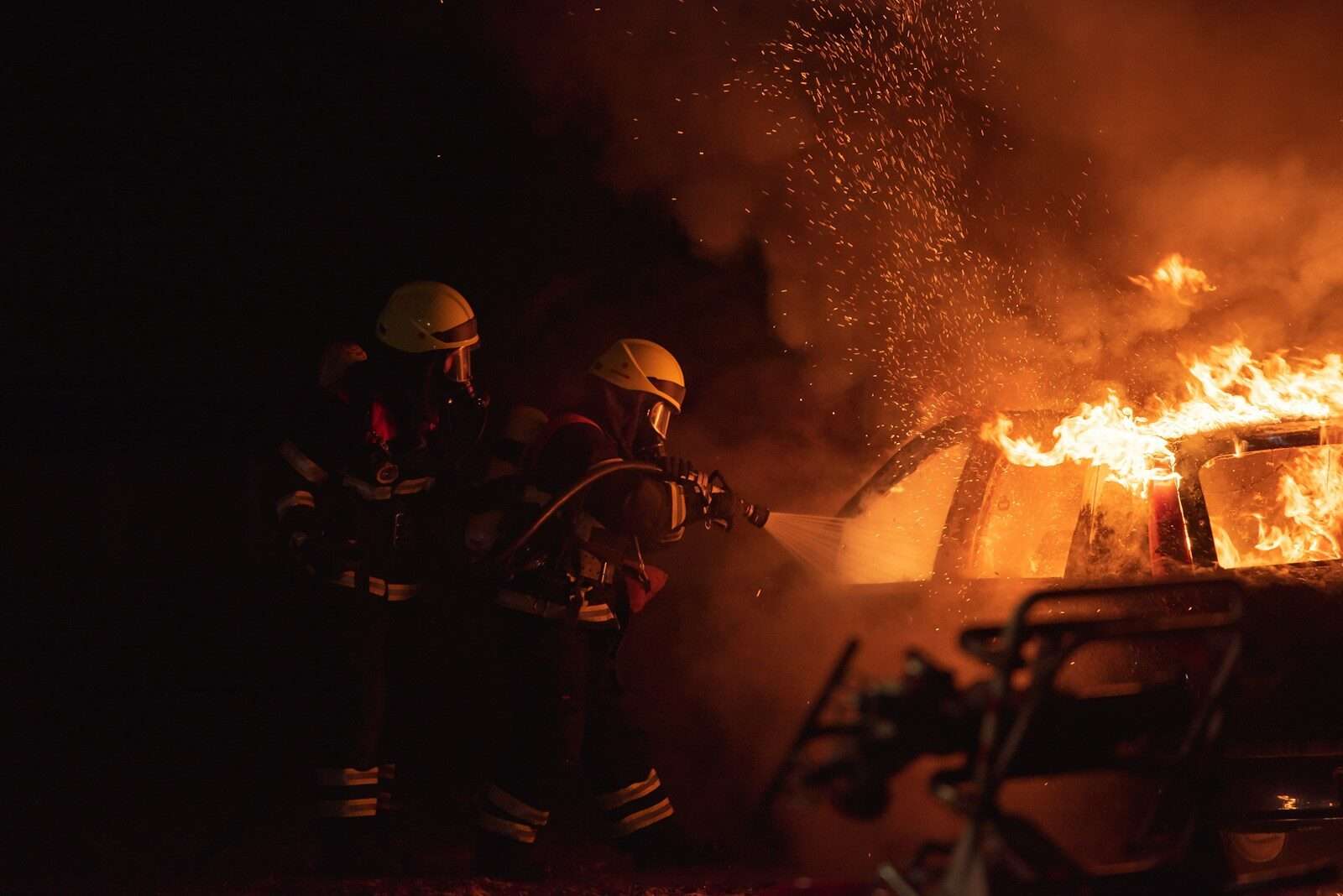
An electric vehicle fire doesn’t end when the visible flames disappear, and that’s the part catching firefighters and the public off guard. A burning gas-powered car follows a familiar script from ignition to extinguishing. EV fires rewrite that script with a dangerous twist: they can come roaring back hours after they appear to be fully under control.
That single difference is turning what should be a routine emergency response into a prolonged, resource-heavy operation with real risk that lingers long after the initial blaze looks like it’s out.
Why EVs Don’t Follow the Old Playbook
With a traditional internal combustion vehicle, firefighters know exactly what they’re dealing with: extinguish the flames, cool the remaining hot spots, and the scene stabilizes. The vehicle can then be cleared without much worry about it reigniting.
Electric vehicles don’t play by those same rules. When a lithium-ion battery pack enters thermal runaway, the fire isn’t just happening on the surface, it’s happening deep inside the battery cells themselves. That chemical reaction keeps generating heat internally even after visible flames are gone, producing a fire that vents gas, builds pressure, and can reignite without warning. For first responders, that unpredictability changes the entire playbook for handling these incidents.
The Danger That Shows Up After the Flames Are Gone
One of the toughest parts of an EV fire is what happens after it looks extinguished. The battery pack can keep overheating from within, releasing gases that are both toxic and flammable and that can linger, waiting for oxygen to re-enter the picture. That’s the moment things can go sideways again: without visible warning, the fire can reignite hours later, and a scene that looked fully controlled can turn dangerous all over again. That’s exactly why EV fire scenes tend to get treated as ongoing hazards well past the initial response, since putting the fire out the first time doesn’t necessarily mean it’s actually over.
Why These Fires Drink So Much Water
Water remains the primary tool for fighting EV fires, but the scale required is on a completely different level. One documented Tesla battery fire needed roughly 24,000 gallons of water over 40 minutes to bring under control, and in some cases EV fires can require up to 40 times more water than a conventional car fire. That’s not just a technical footnote, it has real operational implications for fire departments, especially anywhere water supply or response time is already stretched thin.
The root cause is battery design. EV packs sit low in the chassis inside durable, water-resistant casings, which is great for everyday driving and wet-weather safety but makes it far harder for water to actually reach the source of the fire once something goes wrong.
When Smart Engineering Becomes a Firefighting Obstacle
The same design choices that give EVs their handling edge work against responders during a fire. A low, sealed battery pack improves everyday performance and protects the system in normal use, but during a fire it becomes a physical barrier between firefighters and the actual heat source. Tests conducted in 2025 found that simply tipping a burning EV onto its side gave responders meaningfully better access to the battery pack, cutting suppression time noticeably when multiple hose lines were used. It’s a clear reminder that a vehicle’s design doesn’t just shape how it drives, it can shape how difficult it becomes to manage once things go wrong.
Why Fire Blankets Can Backfire
Some responders have tried smothering EV fires the way they’d handle other blazes, using fire blankets to cut off oxygen and contain things. On paper that sounds reasonable. In practice, it can make the situation worse. Covering an EV traps the gases the battery is still producing, letting them build up until the blanket gets moved or disturbed, at which point fresh air can trigger a sudden and potentially explosive reaction. That risk has pushed safety groups to actively warn against blanket use, since it can create more danger for the people trying to control the scene rather than less.
Rare, But Genuinely Complicated When They Happen
Here’s the nuance that’s easy to miss: EV fires are far less common than fires in traditional gas-powered vehicles. Data shows roughly 25 fires per 100,000 EVs compared to about 1,500 per 100,000 internal combustion vehicles, a massive gap that means EVs are significantly less likely to catch fire in the first place. But when they do ignite, the response is far more complex, requiring more time, more water, and more caution, and unlike a typical car fire, the danger doesn’t reliably end when the visible flames do.
What It Means for Drivers
This isn’t about stoking fear, it’s about understanding a genuine trade-off. Every vehicle type carries its own risk profile, and with EVs, the risk isn’t frequency, it’s fire behavior once an ignition actually happens. That distinction matters for emergency response planning, infrastructure, and even how damaged vehicles get stored or transported afterward. It also shapes how first responders are trained and equipped, which ultimately feeds back into public safety broadly.
The Bigger Question as Adoption Grows
EV adoption keeps accelerating, and fire behavior is just one piece of the adaptation the industry is still working through. EV fires remain rare, but they demand a level of response and caution that traditional vehicles simply don’t require. As more electric vehicles hit the road, the real question is whether fire department infrastructure and strategy are keeping pace with the risks that come along with them.