
Three hundred fifty people at General Motors’ Lansing Grand River complex are being laid off for six weeks starting in mid-January 2027. That sentence undersells what’s actually happening. Thanks to a decades-old union contract, most of those workers will keep collecting close to three-quarters of their normal paycheck while they’re off the clock. The layoff isn’t really the news. The reason for it is: GM is shutting the line down to retool it for a gasoline engine, inside a plant the company spent three years and half a billion dollars in federal money promising to convert to electric vehicles.
On Aug. 12, GM filed a WARN Act notice with Michigan’s Department of Labor and Economic Opportunity confirming the layoffs, first reported by CBS Detroit. The cuts hit team member, team leader, assembly operator and stamping operator roles across Lansing Grand River Assembly/Stamping and the nearby Lansing Regional Stamping site, spanning Eaton and Ingham counties. GM spokesperson Kevin Kelly said the January downtime is for “retooling” tied to the automaker’s $1.25 billion investment in “future vehicle production,” and that GM expects to recall the workers once the retooling period ends. In the meantime, affected employees are eligible for supplemental unemployment pay equal to 74% of their hourly wage, guaranteed under the national GM-UAW contract.
That 74% figure isn’t a courtesy. It’s Supplemental Unemployment Benefit pay, and organized labor spent years fighting to get it written into contracts, going back to the landmark 1955 Ford-UAW agreement that created something close to a guaranteed annual wage for factory workers. It’s a genuinely good deal for the people affected. It’s also a reminder that a “temporary layoff” inside an auto plant doesn’t carry the same risk it does almost anywhere else in the American economy, and that the softness of the landing can distract from how disruptive the underlying decision actually is.
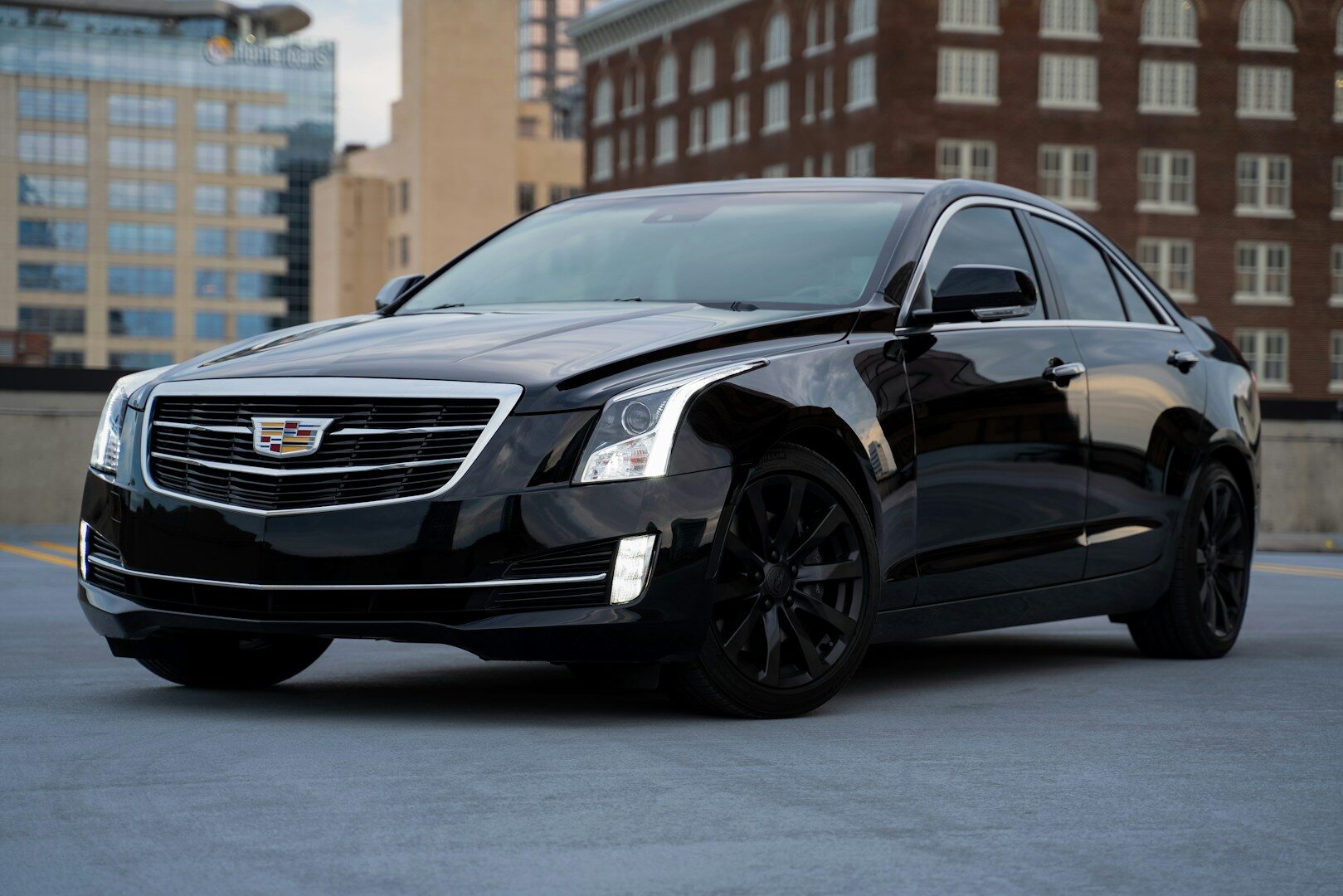
Here’s the part of GM’s announcement that deserves more attention than the layoff number. Lansing Grand River currently builds the Cadillac CT4 and CT5, the brand’s last gasoline-powered sedans. In July 2024, GM announced it would prepare this exact plant “for electrification,” backed by a $500 million grant from the Department of Energy’s Domestic Manufacturing Conversion Grant program, a fund created specifically to help factories convert to hybrid, plug-in hybrid, or fully electric vehicle production. GM said at the time that Lansing would join Factory ZERO, Orion Assembly, Spring Hill, Fairfax and Toledo Propulsion Systems “on our EV journey.”
The EV never arrived. Cadillac confirmed in October 2025 that both the CT4 and CT5 would be discontinued after the 2026 model year. The CT4 is retiring outright, with no replacement, while Lansing gets a next-generation CT5 built around a gasoline engine. Auto Wire has previously reported that the redesigned car is expected to share GM’s updated Alpha platform with a reworked, rear-drive Camaro. A plant that taxpayers helped fund to build electric Cadillacs is retooling in January to build one with a fuel tank.
If that sounds familiar, it should. Lansing is at least the third GM assembly plant in about a year where an EV plan quietly became a gas plan. Orion Assembly in Michigan was supposed to build electric Silverados and Sierras; GM redirected it to gas-powered full-size trucks and SUVs instead, shifting those EV trucks to Factory ZERO in Detroit-Hamtramck. Spring Hill, Tennessee got $275 million to add a gas-powered Chevrolet Blazer alongside the Cadillac LYRIQ and VISTIQ EVs already built there. GM’s own investor materials describe all of this as “giving customers choice.” Read plainly, it looks like a company hedging against EV demand that arrived slower than its own investment plans assumed just two or three years earlier.
The $500 million federal grant was earmarked for an electric Lansing. The car coming off the retooled line in 2027 will need an oil change.
GM comes out ahead either way. It still gets to book nine-figure “manufacturing investment” headlines, keeps a profitable, union-represented sedan plant running, and hedges against a slower-than-promised EV transition without writing off the retooling cost. The federal program built to accelerate electrification gets a newly non-electric plant. And the 350 workers filing for supplemental pay this January will eventually come back to a factory building one sedan nameplate instead of two, since the CT4 isn’t coming back in any form.
None of this means Lansing Grand River is in trouble. A next-generation Cadillac sedan on a shared, high-performance platform is more product security than plenty of aging sedan plants get. But the next time an automaker announces a nine or ten-figure investment “for electrification,” it’s worth remembering how this one turned out. The grant money arrives with a press release. What actually gets built arrives quietly, sometime later, one WARN notice at a time.