
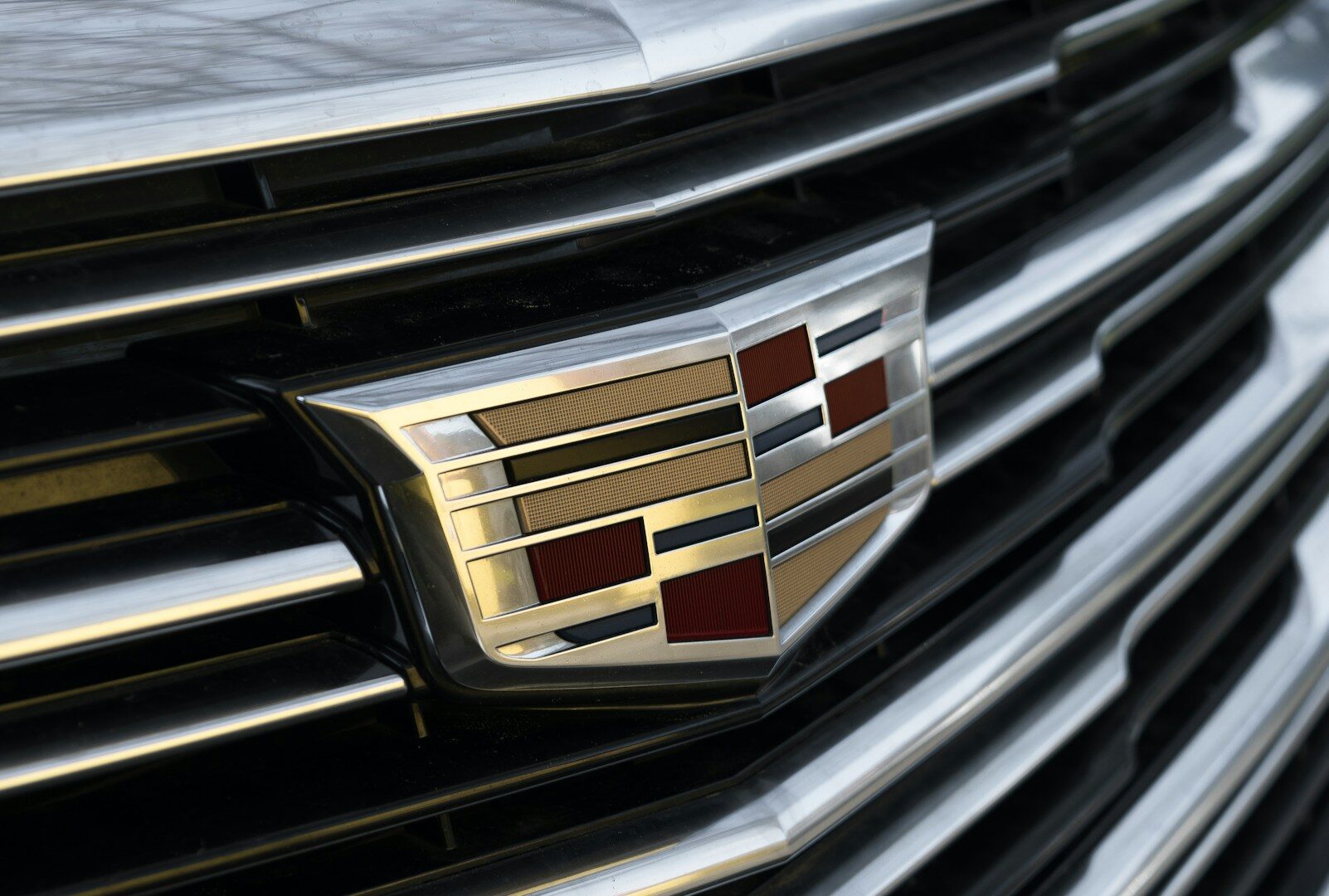
Spring Hill, Tennessee, doesn’t get much attention outside of GM’s investor calls, but for the past several years it’s been ground zero for one of the more expensive bets in the modern auto industry: Cadillac’s push to become an electric-first brand. LYRIQ. LYRIQ-V. VISTIQ. A $2.3 billion battery joint venture with LG Energy Solution. This is the plant GM pointed to whenever anyone asked whether Cadillac was serious about going electric.
So it’s worth sitting with what GM just announced. The company is putting $275 million more into Spring Hill, and $150 million of that is earmarked for what GM’s own release calls “a future Cadillac internal-combustion product.” Not another EV. A gas-powered Cadillac, built on the same site as the electric ones.
GM frames this as a vote of confidence in Spring Hill’s workforce and its role in the company’s manufacturing network. That part is true enough. But the more interesting story is buried in the details GM didn’t put in a headline: the plant built to prove Cadillac could go electric is about to prove it still needs gasoline.
Why a five-vehicle plant matters more than a new engine
Once this new Cadillac arrives, Spring Hill Assembly becomes what GM calls a “five-vehicle operation,” building LYRIQ, LYRIQ-V, VISTIQ, the next-generation XT5, and now an ICE Cadillac, with Chevrolet Blazer production still to come in 2027. That kind of flexibility sounds mundane, but it’s a genuine engineering achievement. Building a battery-electric vehicle and a combustion vehicle on the same line means designing conveyors, fixtures, and torque tools that can handle a battery pack sliding into one vehicle’s underbody and a longitudinal engine and exhaust system dropping into the next. Plenty of automakers have tried “flexible” plants and ended up with vehicles that merely tolerate sharing a roof. GM is betting Spring Hill can do better, largely because it has no other choice left. Committing an entire plant to EVs alone starts to look risky the moment sales don’t cooperate.
That’s the real subject of this story. Not Spring Hill’s facilities budget. Cadillac’s own electric roadmap, which at one point pointed the brand’s sedan lineup toward electric-only production. Building a new gas Cadillac inside a plant designed for electric ones isn’t a footnote to that plan. It’s a retreat from it, dressed up as an expansion.
The engine nobody expected to matter this much
The second half of the investment is, if anything, more revealing. GM is spending $125 million to refurbish equipment and extend the life of the 2.7L turbo engine program at Spring Hill’s propulsion plant. That engine isn’t some legacy small-car motor. It powers the Chevrolet Colorado, GMC Canyon, and, this is the part that should surprise people, the full-size Silverado and Sierra.
Here’s the wait, really moment: America’s best-selling full-size pickups are being built with a turbocharged four-cylinder engine, not a V8, and GM just decided that engine deserves new tooling rather than a retirement date. That’s not an accident. Federal fuel economy rules push automakers toward smaller-displacement, turbocharged engines because EPA test cycles reward lower displacement more than they reward outright power, and a boosted four-cylinder can approach a naturally aspirated V8’s towing numbers on paper while posting noticeably better window-sticker mileage. The 2.7L has quietly become one of the more important engines in GM’s truck lineup because it lets the company sell three-quarter-ton capability without the fuel economy penalty regulators are watching closely.
Extending its life also means GM isn’t in a hurry to replace it with something newer, and it isn’t counting on electrification to solve the truck emissions equation anytime soon either. Say what you want about the optics of a four-cylinder half-ton truck. The regulatory math is why it exists, and GM just bet real money that it will keep existing for years to come.
This is also not an isolated decision. In December, GM redirected $550 million once earmarked for a dedicated EV truck plant toward gas-engine production instead. Spring Hill is now the second site this year where money that once pointed toward electric-only capacity is being spent to keep combustion lines running.
Spring Hill has seen this movie before
There’s a historical irony here that GM’s press office understandably left out. Spring Hill was built in 1990 as the home of Saturn, GM’s attempt to prove it could reinvent itself as a smaller, more nimble car company with a different relationship to its customers. Saturn didn’t survive GM’s 2009 restructuring. The plant did, and it has spent the years since being retooled for whatever GM’s current identity crisis requires: mainstream SUVs, then Cadillac’s electric future, and now a hedge against that same electric future arriving on schedule.
That’s the throughline worth remembering. GM will spend roughly $9 billion on U.S. manufacturing this year, and it’s tempting to read every check like this one as evidence of pure momentum. Some of it is. But this particular $275 million says less about how confident GM is in Spring Hill and more about how much GM still needs gasoline to pay the bills while the electric side of the business, including cars like the VISTIQ, catches up to the timeline the company announced a few years ago.
The feature everyone will notice is the new Cadillac. The number that actually matters is the one attached to a truck engine most people assumed was already on its way out.