 By Shawn Henry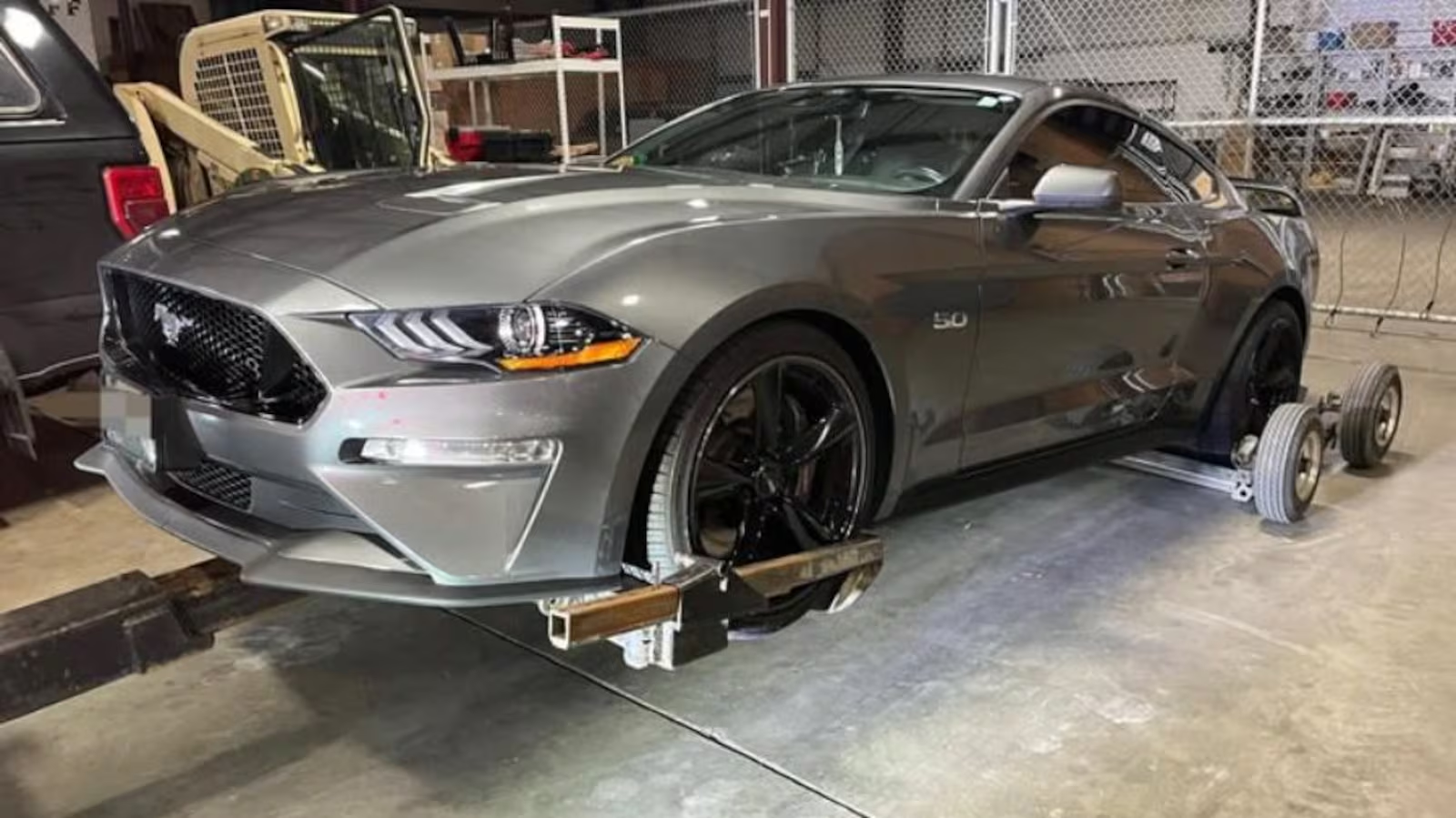
A high-speed police chase involving a Ford Mustang pushed past 130 mph before abruptly ending — not with an arrest, but with a mystery. The driver disappeared, the car was abandoned, and now the legal and financial fallout could be just getting started.
This wasn’t just another reckless driving incident. It’s the kind of situation that puts a spotlight on the fine line between performance driving and outright criminal behavior — and it leaves behind consequences that go far beyond a speeding ticket.
A Routine Stop Turns Into a 130 MPH Run
The incident began in Thurston County when a deputy attempted to pull over a Mustang driver for speeding. Instead of stopping, the driver made a decision that instantly escalated the situation.
The Mustang took off, accelerating to speeds around 130 mph. That kind of velocity isn’t just dangerous — it’s the kind of speed that turns public roads into unpredictable, high-risk environments. According to authorities, the driver pushed through intersections at those speeds, increasing the danger not just for law enforcement, but for anyone else on the road.
At that point, the situation shifted from a traffic stop to a full-blown pursuit.
Why Deputies Backed Off
Despite the extreme speed, the chase didn’t continue indefinitely. The pursuing deputy made the call to terminate the pursuit rather than continue at those speeds through intersections.
That decision reflects a broader shift in how law enforcement handles high-speed chases. The risk to public safety often outweighs the benefit of immediate capture, especially when a suspect is driving at triple-digit speeds in populated areas.
Ending a pursuit doesn’t mean the driver gets away clean. It simply changes how the situation is handled — and in this case, it didn’t take long for authorities to locate the vehicle.
The Mustang Turns Up — But the Driver Is Gone
A short time after the pursuit ended, the Mustang was found abandoned in DuPont. No driver. No explanation. Just an empty performance car sitting as the only piece of evidence left behind.
Authorities quickly impounded the vehicle, effectively turning it into leverage in whatever comes next. While the driver may have avoided immediate arrest, leaving the car behind doesn’t erase the trail.
In fact, it may have just made things easier for investigators.
The Financial Fallout Is Just Beginning
Walking away from a car after a high-speed chase isn’t just a dramatic exit — it’s a costly one.
Once a vehicle is impounded, getting it back isn’t as simple as showing up and asking for the keys. Fees, penalties, and potential legal restrictions can pile up fast. Depending on how the case unfolds, the driver could be facing far more than just towing and storage costs.
There’s also the reality that law enforcement now has possession of the vehicle. That creates a direct link to whoever owns it, narrowing down the search for the person behind the wheel.
Even if the driver thought abandoning the car would buy them time, it likely did the opposite.
Legal Trouble That Doesn’t Disappear
Evading law enforcement at high speeds carries serious legal consequences. This wasn’t a minor infraction — it involved fleeing, excessive speed, and dangerous driving through intersections.
Even without an arrest at the scene, cases like this don’t just fade away. Authorities now have the vehicle, the location it was found, and the circumstances of the chase. That’s more than enough to continue building a case.
And when charges do come, they won’t be light.
The Reputation Problem for Performance Cars
For car enthusiasts, situations like this create a frustrating narrative. A Mustang — one of the most iconic performance cars ever built — ends up in the spotlight for all the wrong reasons.
The reality is that cars like this are designed for speed and performance, but they’re not the problem. The issue comes down to how they’re used. When incidents like this happen, they tend to fuel broader scrutiny around performance vehicles and aggressive driving.
That can lead to increased enforcement, stricter oversight, and more attention on enthusiasts who are simply enjoying their cars responsibly.
A Pattern That Keeps Repeating
This isn’t the first time a high-speed chase has ended with an abandoned vehicle. It’s a pattern that shows up again and again — driver pushes too far, realizes the risk, and bails out.
But what’s often overlooked is that abandoning the car doesn’t reset the situation. It shifts the timeline. The consequences still catch up, just not immediately.
And in many cases, the delayed fallout is even worse.
What This Means for Drivers
For everyday drivers and enthusiasts, this situation highlights a simple reality: once a traffic stop turns into a pursuit, the stakes change instantly.
What could have been a ticket becomes a serious legal issue. What could have been a minor inconvenience becomes a long-term problem with financial and legal consequences.
It’s a reminder that decisions made in seconds — especially behind the wheel of a high-performance car — can stick around for years.
The Bigger Question
At the center of this story is a driver who disappeared, leaving behind a car and a growing list of problems. Authorities now hold the vehicle, and the investigation is ongoing.
The real question isn’t just who was behind the wheel — it’s what happens when they’re found.
Because when a 130 mph escape ends with an abandoned Mustang, the chase might be over — but the consequences are just getting started.
Photo courtesy of the Thurston County Sheriff’s Office
 Eve Nowell