 By Shawn Henry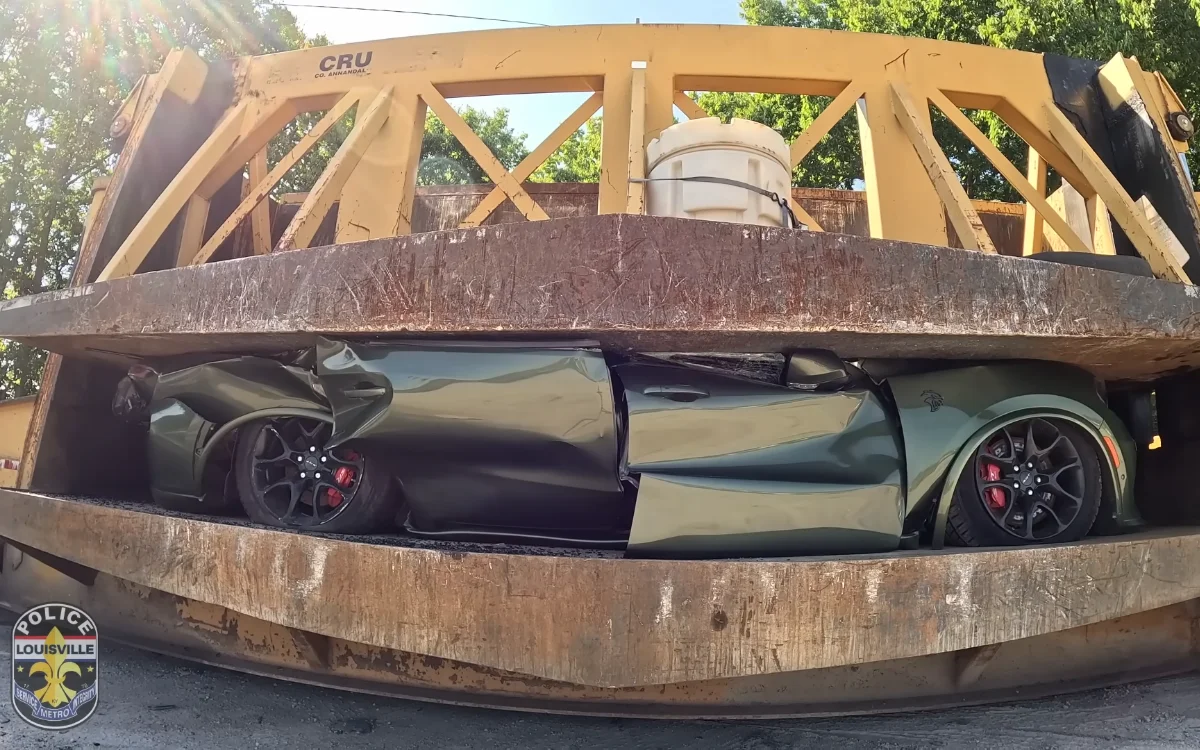
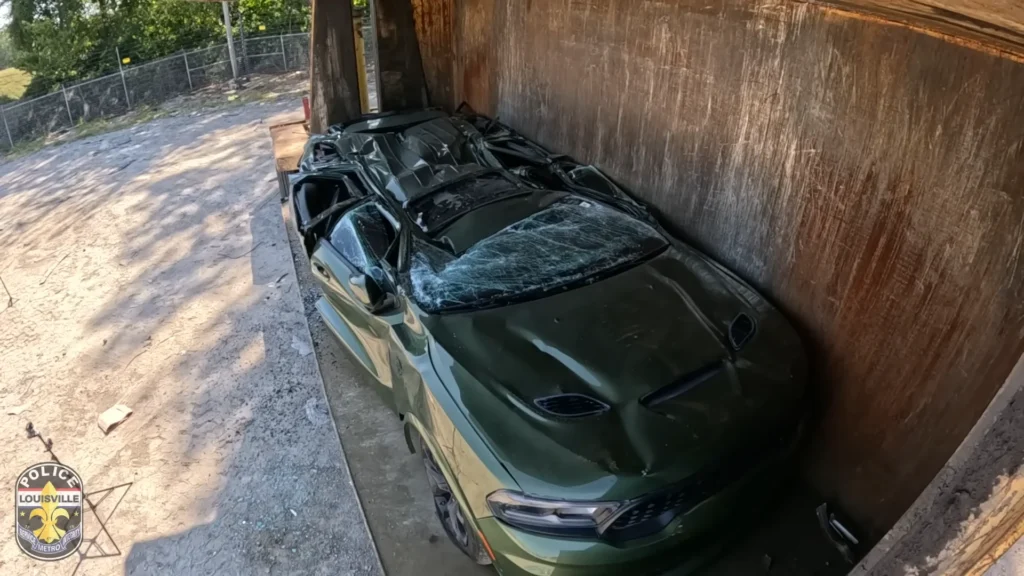
It’s not every day you see a 710-horsepower performance SUV flattened into scrap metal on purpose. But that’s exactly what happened in Louisville, where police publicly crushed a Dodge Durango SRT Hellcat—an SUV worth around $100,000—to send a message about street racing. The problem is, that message didn’t land the way officials probably expected.
Instead of applause, the move triggered outrage across the car community. Enthusiasts weren’t just upset about the destruction of a rare, high-performance vehicle—they were questioning why a machine like that had to be destroyed at all. And more importantly, whether this kind of public display actually solves anything.
What Led to the Hellcat’s Destruction
The Durango Hellcat wasn’t randomly selected. According to authorities, the 2021 SUV had been confiscated in 2024 during a crackdown on illegal street racing in the city. That part isn’t unusual. Law enforcement agencies regularly seize vehicles tied to criminal activity, especially when it comes to reckless driving or organized racing.
What is unusual is what happened next. Instead of auctioning the vehicle off—which is the standard route—or repurposing it for official use, Louisville Metro Police chose to destroy it. Not quietly, either. The crushing was done publicly, with images and footage shared online to maximize visibility.
The intent was clear: send a zero-tolerance message to anyone thinking about engaging in street racing. But that decision instantly turned a seized asset into a symbol—and not necessarily the one officials had in mind.
Why This Hit Enthusiasts So Hard
The Dodge Durango SRT Hellcat isn’t just another SUV. It’s one of the most extreme performance SUVs ever built, packing a supercharged 6.2-liter HEMI V8 producing 710 horsepower and 645 lb-ft of torque. That kind of output puts it in the same conversation as some of the most powerful vehicles ever sold for the street.
It was also never meant to be common. The Durango Hellcat started as a limited-run model, only brought back due to overwhelming demand. For many enthusiasts, it represents a peak era of internal combustion performance—big power, no apologies.
Watching one get crushed isn’t like seeing a standard commuter car scrapped. It feels like watching a piece of automotive history get erased. And for a community that already feels like high-performance gas-powered vehicles are under constant pressure, the optics matter.
The Decision That Sparked Debate
Here’s where things get complicated. From a law enforcement perspective, the move was about deterrence. Destroy something valuable, make it public, and send a signal that illegal behavior comes with serious consequences.
But from a practical standpoint, critics argue the opposite. Vehicles like this are often auctioned, generating revenue that can be reinvested into public programs or law enforcement itself. Crushing it eliminates that value entirely.
That raises a fair question: who actually benefits from destroying a six-figure vehicle? The person who lost it certainly doesn’t. But neither does the public that could have indirectly gained from its resale.
Instead, what remains is a dramatic visual—and a growing divide between authorities and car enthusiasts.
The Bigger Picture: Cars, Control, and Consequences
This situation taps into a larger tension that’s been building for years. High-performance vehicles are more powerful and more accessible than ever before. At the same time, enforcement around speed, racing, and vehicle modifications has become more aggressive.
That doesn’t mean enthusiasts are the problem. Far from it. Most drivers who appreciate performance cars do so responsibly. But high-profile incidents—and the responses to them—often shape public perception and policy in ways that affect everyone.
When a rare performance SUV gets crushed to make a point, it sends a broader signal about how these vehicles are viewed. Not as engineering achievements or enthusiast icons, but as potential liabilities.
From Hellcats to Hyper SUVs: A Changing Landscape
The Durango Hellcat sits in a lineage of increasingly powerful SUVs that have redefined what performance looks like. From the early days of the Lamborghini LM002 to modern machines like the Jeep Grand Cherokee Trackhawk and Tesla Model X Plaid, the segment has evolved into something few could have imagined decades ago.
Today’s performance SUVs routinely push beyond 700, even 1,000 horsepower. They blur the line between practicality and extreme speed, offering supercar-level performance in family-friendly packages.
That evolution is part of what makes the destruction of a Hellcat so symbolic. It represents not just the loss of one vehicle, but a moment in a broader shift—where performance is colliding with regulation, and where the future of enthusiast cars feels increasingly uncertain.
What This Means for Drivers
For everyday drivers and enthusiasts, the takeaway isn’t that performance vehicles are under attack. It’s that the actions of a few—and the responses to those actions—can shape how all drivers are treated.
Street racing is illegal, and enforcement is expected. But when enforcement crosses into spectacle, it raises questions about effectiveness versus optics. Is the goal to prevent dangerous behavior, or to make an example that resonates beyond the actual incident?
Because once you start crushing six-figure vehicles to prove a point, the conversation shifts. It’s no longer just about stopping illegal activity. It’s about how far authorities are willing to go—and what that means for the future of car culture.
The Real Question Moving Forward
In the end, the crushed Hellcat leaves behind more than twisted metal. It leaves a debate that isn’t going away anytime soon.
Does destroying a rare, high-performance vehicle actually deter bad behavior? Or does it simply fuel frustration among those who see cars as more than just transportation?
For a community already navigating tighter rules, rising costs, and an uncertain future, moments like this hit harder than expected. And the next time a city decides to make an example out of a car, the question will be the same:
Is this about safety—or about sending a message at any cost?