 By Eve Nowell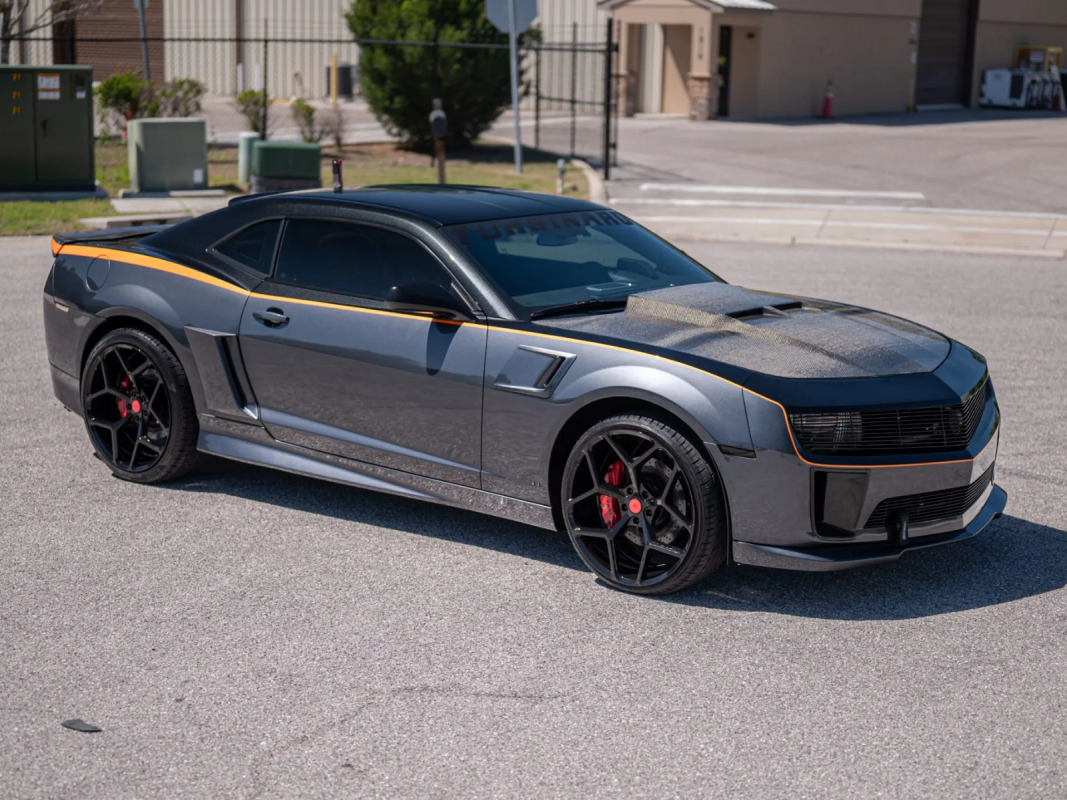
This isn’t just another modified muscle car listing. A 2010 Chevrolet Camaro powered by a military-sourced jet engine is now up for auction, and it’s the kind of build that forces you to stop and ask what performance even means anymore.
They call it the Turbinaro. And yes, it has an actual afterburner.
At first glance, it sounds like a stunt. But this thing is very real, very loud, and now sitting on Bring a Trailer with bidding underway. That alone would be enough to grab attention. But the deeper you look, the more this car starts to say something bigger about where enthusiast culture is headed.
What This Camaro Actually Is

The foundation is a 2010 Camaro. From there, everything goes sideways.
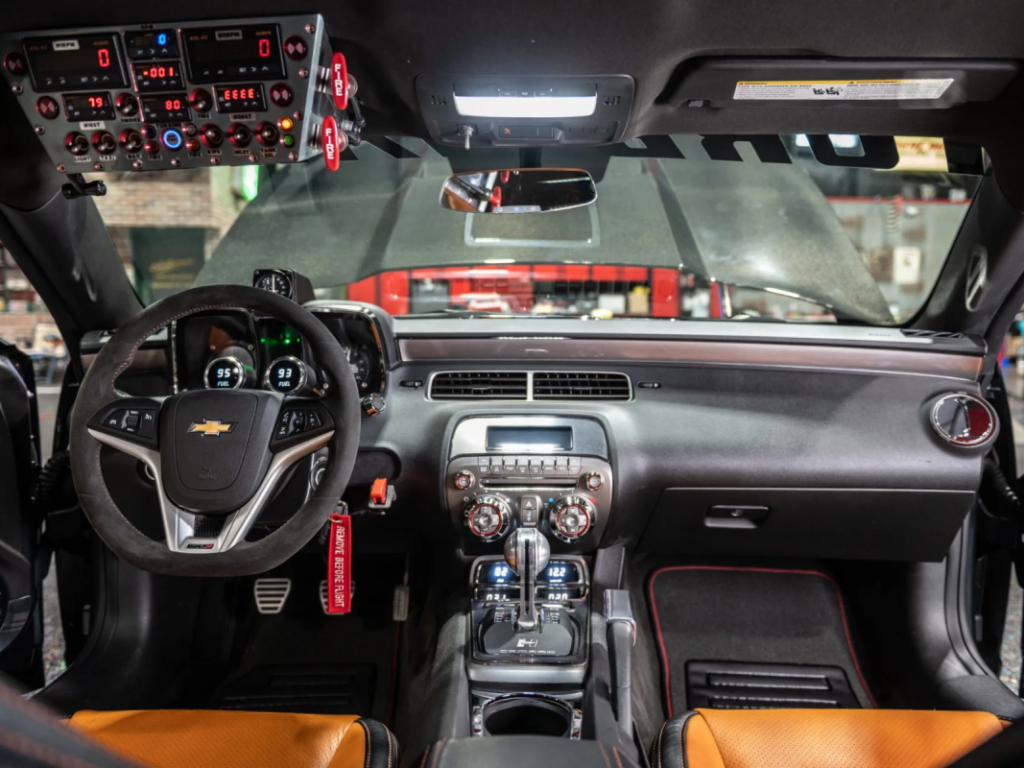
Instead of a traditional piston engine, this car runs a Boeing T50 turboshaft engine, the kind typically found in military aircraft. It’s not just dropped in for show either. The setup includes a dedicated overhead control panel and an afterburner, pushing it firmly into territory that most road cars never even come close to.
That’s where things change.
This isn’t a build designed for convenience. It’s loud to the point where normal driving feels almost secondary. The driving footage shows a car that behaves nothing like a typical Camaro, with a three-speed automatic transmission that shifts harshly and unpredictably. It’s raw, mechanical, and a little unhinged.
And then there’s the fuel.
Jet fuel isn’t something you casually pick up on your way home. Turboshaft engines also burn through it faster than most people would be comfortable with, especially with fuel prices doing what they’ve been doing lately. So no, this isn’t a daily driver. Not even close.
The Build That Took Years and Didn’t End There
The story behind the car matters just as much as the hardware.
The project was originally started by Troy Mann, who spent nine years bringing the concept to life before his death in 2024. That alone gives the car a different weight. This wasn’t a quick viral build. It was a long-term vision that someone saw through over nearly a decade.
After that, the car ended up in the hands of Garrett Mitchell, better known as Cleetus McFarland. With a massive following on YouTube, he took the project further, refining and reworking parts of the build while documenting the process for millions of viewers.
That’s where it shifts again.
This car isn’t just a one-off experiment. It became content, a spectacle, and a piece of modern car culture all at once.
What the Current Owner Changed
The current owner picked up the Camaro in February 2025 and made several updates aimed at making it at least somewhat manageable.
A Flaming River rack-and-pinion steering system was added, along with an electric noise suppression setup. The fuel system was also reworked, including synchronization adjustments, larger overflow tanks, and a revised air filter assembly.
Even with those changes, calling it refined would be a stretch.
The car still carries all the characteristics of a jet-powered machine crammed into a road-going chassis. It also features dual fuel cells and a fire suppression system, which tells you everything you need to know about the level of risk involved.
Visually, it leans into the madness. There’s a two-tone paint scheme with an orange stripe, oversized 22-inch wheels, and a front fascia inspired by early Camaros. It’s aggressive, a little chaotic, and completely unapologetic.
The Auction and What It’s Telling Us
As of now, bidding sits at $25,000, with the auction set to close on April 9. That number feels almost low considering what this car represents, but it also highlights something important.
Cars like this don’t fit neatly into traditional value categories.
You’re not buying reliability. You’re not buying practicality. You’re buying a story, a piece of internet-era car culture, and something that exists purely because someone decided it should.
And that’s rare.
The listing notes a clean title and no reported accidents, which is almost surprising given what this car is. But again, this isn’t about clean ownership history. It’s about whether someone out there wants to take on something this extreme.
Why This Matters Right Now
Here’s the bigger picture.
The Camaro as a production model is gone, at least for now. It ended its run in 2024, leaving a gap in the American muscle landscape. At the same time, there are ongoing discussions about whether it could return in some form.
That conversation is happening alongside a shift in policy that has made the future of performance cars less predictable. Electric vehicles have been pushed hard, then questioned just as quickly. Meanwhile, rumors suggest competitors like Dodge may be looking at bringing back high-powered internal combustion options.
So where does something like the Turbinaro fit into all of that?
It doesn’t. And that’s exactly the point.
This car exists outside the rules, outside the regulations, and outside the direction the industry seems to be heading. It’s a reminder of what happens when creativity isn’t filtered through corporate strategy or compliance checklists.
The Line Between Innovation and Insanity
There’s always been a fine line in car culture between pushing boundaries and going completely off the rails. This Camaro walks that line and then keeps going.
It’s not trying to be efficient. It’s not trying to be practical. It’s trying to be loud, extreme, and unforgettable. And it succeeds at all three.
At the same time, it raises a question that enthusiasts keep running into.
What happens when builds like this become the only place where true experimentation still exists?
Because mainstream performance is getting more controlled, more regulated, and in some cases, more predictable. That doesn’t mean it’s worse. But it does mean cars like this stand out even more.
The Reality Behind the Hype
At the end of the day, the Turbinaro isn’t for everyone. Most people wouldn’t want to deal with the noise, the fuel demands, or the unpredictability. That’s fine.
But that’s not why it exists.
It exists because someone decided a Camaro should have a jet engine and didn’t stop until it did. Then someone else picked it up and pushed it further. Now it’s sitting on the auction block, waiting for the next person willing to take it on.
And that leaves one question hanging.
In a world where performance is increasingly shaped by rules, software, and efficiency targets, how many cars like this are we going to see in the future, and what happens if they disappear entirely?
 Shawn Henry
  John Lloyd