 By Shawn Henry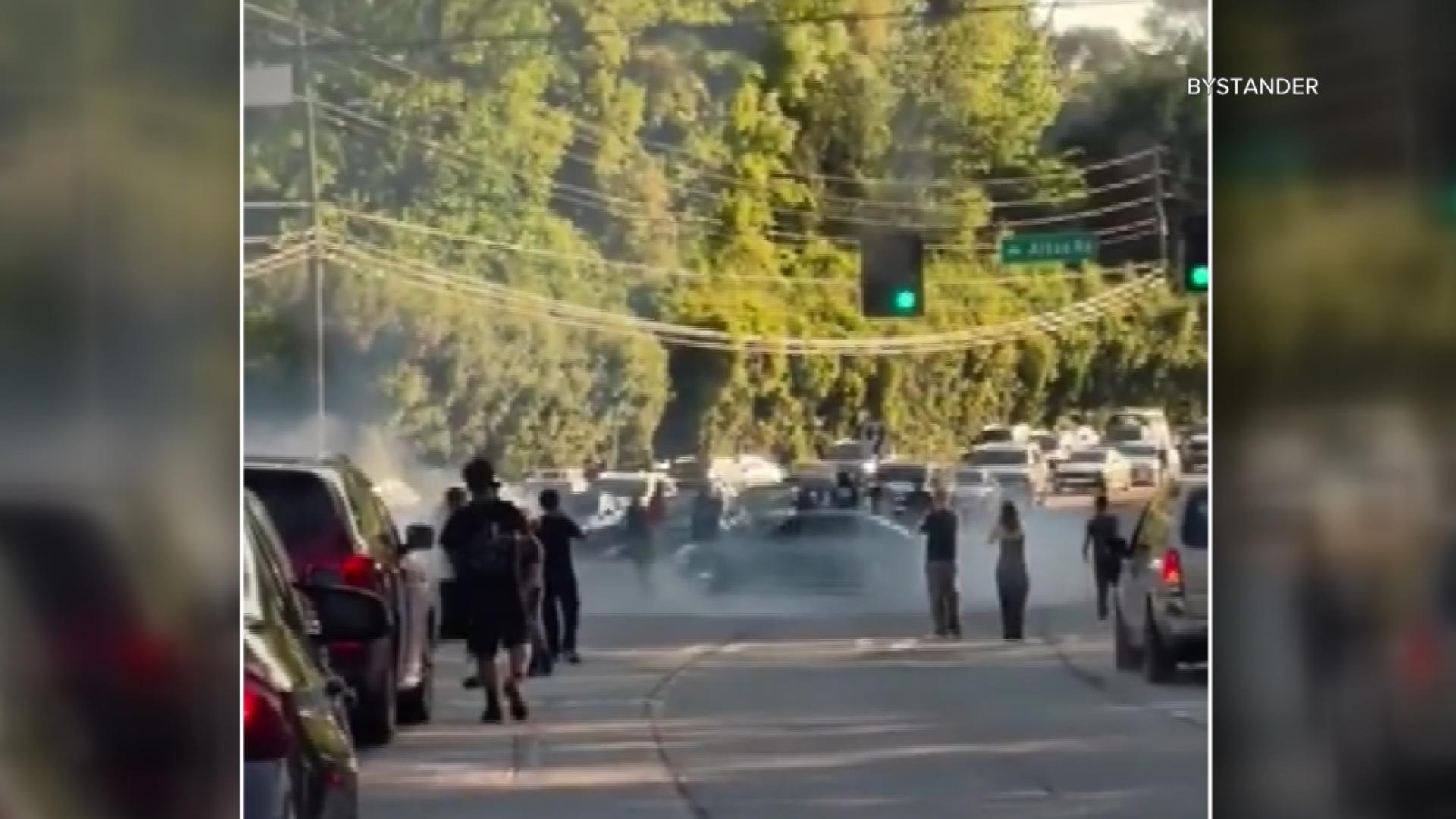
A routine drive turned into something far more dangerous on a Saturday evening in metro Atlanta, and the worst part might not be the takeover itself. It’s what didn’t happen when someone called for help. A DeKalb County woman says she was stuck in the middle of a street takeover, surrounded by spinning cars and crowds, and when she dialed 911, no one answered.
That’s where things start to feel a little off.
The incident unfolded just after 6 p.m. at the intersection of Chamblee Tucker and Alton roads. Even after everything cleared out, the scene left behind its own evidence. Tire marks etched into the pavement, a reminder of how out of control things had gotten in a matter of minutes. But for the driver caught in it, those marks don’t come close to telling the whole story.
She was simply on her way to a friend’s house. Nothing unusual, nothing risky. Then suddenly, traffic stopped moving. Cars began circling. People flooded the intersection. And just like that, she was boxed in with no clear way out.
Here’s the part that matters. This wasn’t just loud engines and smoke. According to her account, some people in the crowd appeared to be holding weapons. Fireworks were going off. Cars were spinning in tight circles, dangerously close to anything and anyone nearby. It wasn’t a controlled environment. It wasn’t organized. It was chaotic.
And that’s where it gets complicated.
Being stuck in that kind of situation isn’t just frustrating. It’s unpredictable. One wrong move, one driver losing control, and it could turn into something much worse. With no escape route, she did what most people would do. She reached for her phone and called 911.
No answer.
She says she stayed on the line for about a minute. Silence. No dispatcher picked up. No instructions. No reassurance that help was on the way. Just a phone call that went nowhere while the situation around her kept escalating.
The takeover didn’t break up right away either. She estimates it lasted somewhere between 20 and 30 minutes. That’s a long time to sit in a car surrounded by spinning vehicles and unpredictable behavior, especially when you’re already on edge. Every second stretches out when you don’t know how it’s going to end.
Eventually, she was able to get out and make it home safely. But the story doesn’t wrap up cleanly there.
Roughly 45 minutes after she first tried calling for help, she received a text message from DeKalb County 911 asking if she needed a callback. By that point, she was already home. The moment had passed. The danger was gone, at least for her.
Still, that delay leaves a mark.
Because this wasn’t just about one night or one intersection. She says she’s heard similar concerns from others in the area, people who have struggled to reach emergency services when they needed them. That kind of pattern starts to raise bigger questions. If you can’t get through during a situation like this, what happens during something even more serious?
Police did confirm that officers responded to the scene at some point. But by the time they arrived, the takeover had already dispersed. The cars were gone. The crowd had moved on. What was left behind was the aftermath, not the event itself.
That gap matters.
Street takeovers have been showing up more frequently in cities across the country. They’re unpredictable by nature. They pop up quickly, draw crowds, and disappear just as fast. For drivers who accidentally end up in the middle of one, there’s no warning. No easy exit. And in this case, no immediate help either.
County leaders have acknowledged that the 911 system has been dealing with staffing shortages. They’ve also said improvements are in the works, including potential technology upgrades to handle higher call volumes more effectively. That sounds good on paper. But situations like this show what the problem looks like in real time.
A driver stuck in a dangerous situation doesn’t care about long-term plans. They need someone to answer the phone.
There’s also the reality of what could have happened. When cars are spinning in tight circles on public roads, surrounded by crowds, the margin for error is almost nonexistent. Add in fireworks and the possibility of weapons, and it stops being a nuisance and starts looking like a real safety risk.
That’s the bigger issue here.
Drivers aren’t signing up to be part of these events. They’re just trying to get from one place to another. And when something like this blocks them in, they rely on the idea that help is one call away. If that call doesn’t connect, the situation shifts fast.
For this DeKalb County woman, the outcome could have been worse. She got out safely. She made it home. But the experience stuck with her, and not just because of what she saw.
It’s because when things got unpredictable, the system that’s supposed to be there didn’t show up in time.
And that’s a hard thing to ignore.
Source
 Elizabeth Puckett
  John Lloyd