 By John Lloyd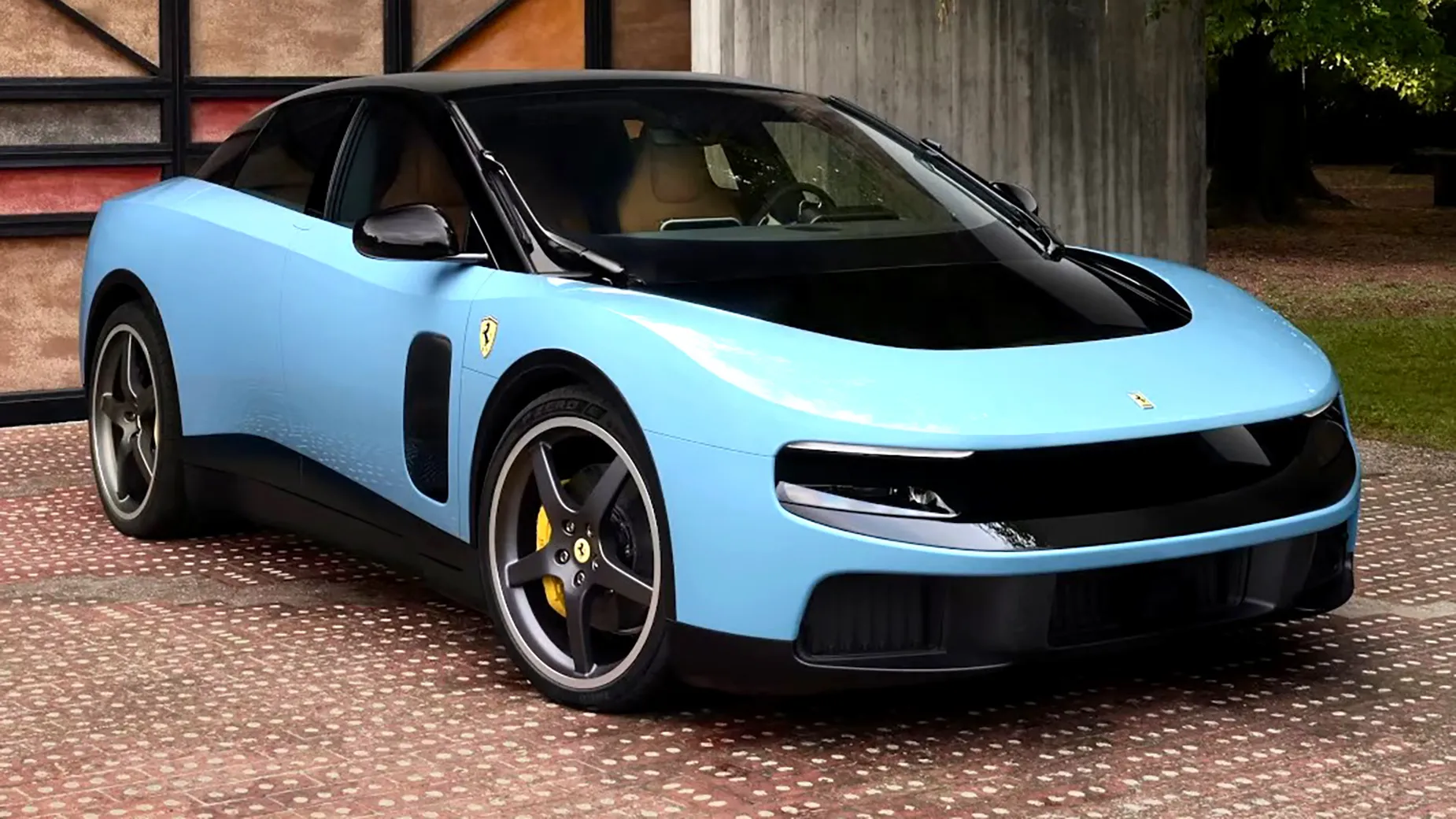
Ferrari’s controversial Luce reveal was already headed toward a difficult launch before the public ever saw the car. The styling alone triggered immediate debate, especially among longtime Ferrari enthusiasts struggling to understand where the brand is heading with its latest EV push. But according to details that surfaced after the Rome event, the real drama may have happened behind closed doors long before the embargo expired.
The biggest shock came from claims that Ferrari threatened media outlets with staggering financial penalties tied to leaks. According to YouTuber Shmee, whose real name is Tim Burton, embargo agreements connected to the Luce reportedly carried penalties worth €600,000, or roughly $700,000.
That number instantly changes the tone of the entire launch.
Automakers regularly use embargo agreements during vehicle launches. Journalists get early access, manufacturers control timing, and everyone agrees not to publish before a specific date. That part is normal. What is not normal is hearing about penalties at this scale. A €600,000 threat moves far beyond standard PR management and into territory that sounds more like damage control for a product the company knew would trigger backlash.
And apparently, it worked.
Unlike many modern launches where leaked photos hit Instagram or Reddit days before the official reveal, Ferrari managed to keep the Luce tightly contained until the embargo lifted. That almost never happens anymore, especially with a high-profile vehicle from one of the world’s biggest automotive brands.
According to Burton’s breakdown of the event, Ferrari’s security measures went far beyond aggressive paperwork. When journalists arrived, their phones and laptops were reportedly sealed with security stickers. Media attendees were not allowed to use their own camera operators or equipment. Ferrari instead controlled the video crews, controlled the footage itself, and only distributed clips shortly before publication windows opened.
That setup created a strange environment for automotive journalists covering one of the most controversial Ferrari launches in recent memory.
Here’s the part that matters. Automotive journalism depends heavily on first impressions and independent reactions. But Burton described a reveal environment where journalists had limited time with the car while Ferrari staff and PR representatives remained nearby throughout the experience. Reporters reportedly had roughly 30 minutes around the Luce before publication deadlines approached.
That changes the dynamic completely.
Instead of walking away with genuine analysis or detailed impressions, many journalists were left scrambling to process a car that apparently looked far different in person than expected. Burton repeatedly described confusion upon seeing the Luce for the first time, questioning whether the vehicle even resembled a Ferrari at all.
That reaction matters because Ferrari is not just another automaker experimenting with EVs. Ferrari built its identity around emotion, engines, noise, and mechanical drama. Every major design decision gets magnified because enthusiasts expect Ferrari to protect that legacy more carefully than most manufacturers.
And that’s where the Luce becomes complicated.
Ferrari clearly understands traditional enthusiasts may not be the primary audience for this vehicle. According to Burton, tech creators were given a completely different level of access during the launch process. Influencers including Marques Brownlee reportedly attended separate events, with some even receiving opportunities to drive the vehicle before traditional automotive journalists got meaningful access.
Burton described automotive journalists as the “second wave.”
From Ferrari’s perspective, the strategy makes sense. The Luce does not appear designed to win over diehard Ferrari purists already shopping for sports cars or a Purosangue. Ferrari already has products for those buyers. The Luce appears aimed at a completely different customer, someone entering the Ferrari ecosystem from the tech or luxury EV world rather than from traditional supercar culture.
That is a massive shift for the brand.
This is where the story turns. Ferrari has successfully expanded beyond traditional sports cars before. The California faced skepticism when it arrived, yet it brought new buyers into the company. The Purosangue also generated controversy because many enthusiasts hated the idea of a Ferrari SUV until the market proved there was enormous demand.
But the Luce feels different because it attacks two sensitive areas at once. It changes both the powertrain and the design language at the same time.
That combination creates risk.
Ferrari enthusiasts have historically tolerated controversial styling if the driving experience delivered traditional Ferrari character. They have also tolerated major engineering changes when the cars still looked unmistakably Ferrari. The Luce appears to challenge both sides simultaneously, which explains why Ferrari may have wanted such strict control over first impressions.
And honestly, that concern may not have been misplaced.
The internet has changed vehicle launches permanently. One bad photo angle, one awkward clip, or one confused reaction can dominate social media before the official presentation even starts. Automakers now spend enormous money trying to control narratives during launch windows because public perception forms instantly online.
Ferrari simply pushed that strategy further than most companies dare.
Still, the heavy-handed approach risks creating a different problem. Restricting journalists too aggressively can make the entire launch feel defensive before the public even decides whether it likes the car. When media access becomes tightly managed and leak penalties reach absurd numbers, people naturally start wondering what the company was so worried about in the first place.
That detail matters.
Ferrari’s image depends heavily on authenticity, emotion, and exclusivity. The company sells more than performance figures. It sells mythology. But carefully manufactured launch environments can sometimes collide with enthusiast culture, especially when longtime Ferrari fans already feel uncertain about the brand’s EV direction.
And enthusiasts notice when traditional automotive voices appear sidelined in favor of broader tech influencers.
To Ferrari, the math may still work. Tech-focused buyers represent fresh money and potentially younger audiences unfamiliar with Ferrari’s old-school identity. Those customers may care more about innovation, luxury, and design than naturally aspirated engines or racing heritage.
But that strategy comes with consequences.
Ferrari risks creating a disconnect between the brand’s future ambitions and the enthusiasts who helped build its reputation in the first place. The Luce may absolutely attract new buyers. Ferrari likely believes it will. The bigger question is whether those gains come at the cost of alienating the audience that once viewed Ferrari as untouchable.
Right now, the Luce itself is controversial enough. The launch strategy surrounding it may have made the situation even louder.
And if Ferrari felt the need to lock down journalists with reported $700,000 leak threats just to control the reveal, that says a lot about how nervous the company may have been about what happened next.
 Shawn Henry