
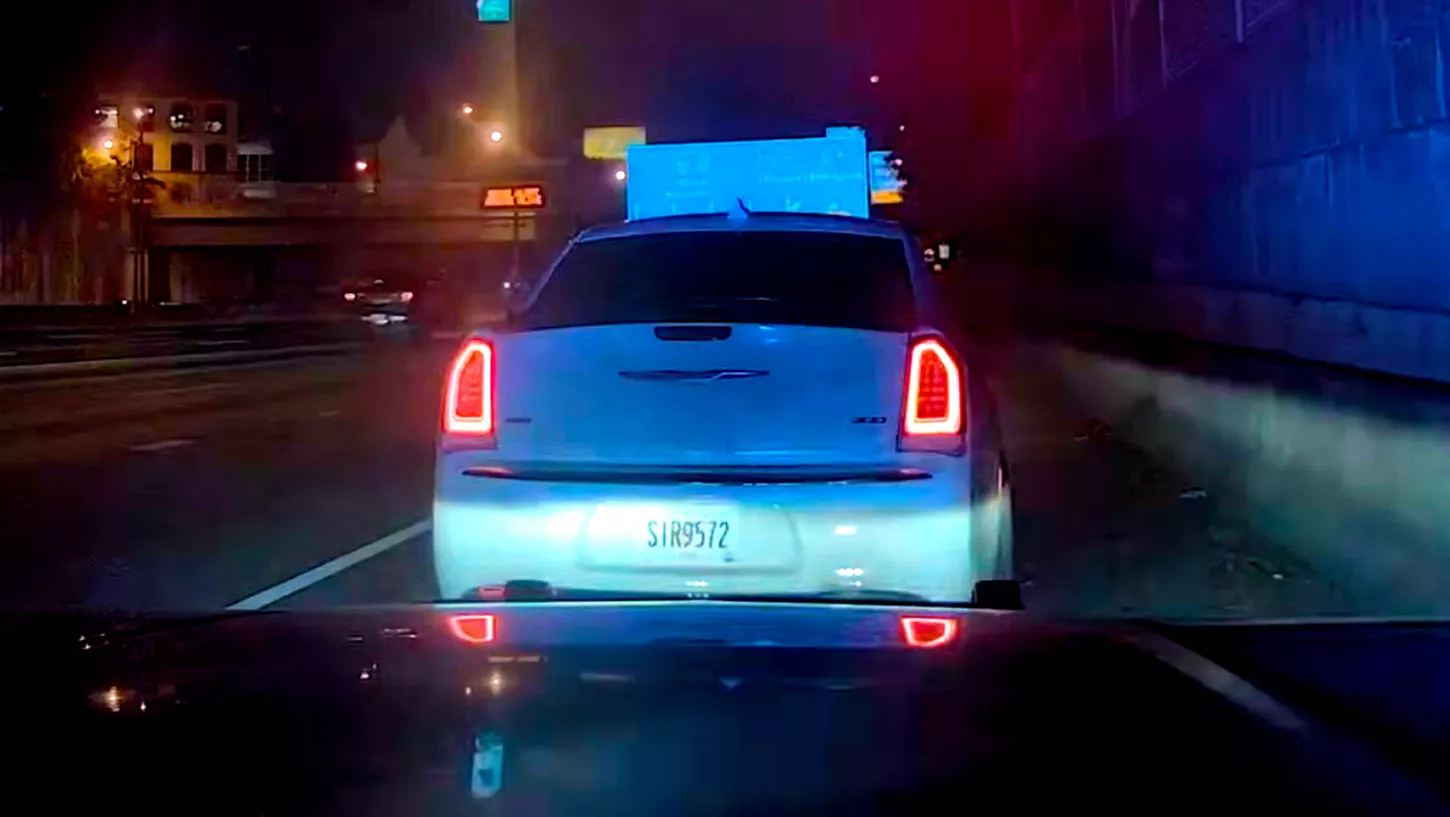
A white Chrysler 300 that looked like nothing special turned a routine traffic stop into a seven-minute pursuit that ended with troopers losing the car entirely — Mustangs included.
A Routine Stop That Went Sideways in Seconds
Dashcam footage that recently surfaced through a records request shows a Georgia State Patrol trooper, identified as Trooper Brown, initiating what looked like a routine stop on September 14, 2025. The Chrysler displayed no visible performance badges or modifications. As the trooper exited his vehicle and approached on foot, the driver suddenly accelerated away southbound, triggering emergency lights and a pursuit within seconds.
Triple-Digit Speeds on I-20
The Chrysler merged onto I-20 West at high speed, quickly opening distance from the initial pursuing unit. Additional troopers joined, including patrol vehicles identified as Ford Mustangs, and for a stretch both the fleeing sedan and pursuing units hit triple-digit speeds while weaving through traffic — a level of speed and lane-changing that put uninvolved civilian motorists directly in the middle of the chase.
A Sideswipe on the Exit Ramp
Things got more dangerous once the suspect exited at Lawton Street. The Chrysler squeezed between a Chevrolet Malibu and a Jeep Gladiator during the exit maneuver, clipping and knocking off the Malibu’s side mirror without slowing down. No injuries were reported from the contact, but it’s a clear illustration of how quickly a fleeing driver’s decisions become a hazard for everyone else on the road, not just the pursuing officers.
How the Chase Actually Ended
Troopers struggled to close the gap as the pursuit moved into residential neighborhoods — at one point, a trooper cresting a hill at speed bottomed out his patrol car, with another officer narrowly avoiding the same mistake behind him. Dashcam audio captured growing frustration among officers as the Chrysler consistently pulled away whenever they gained ground. After roughly seven minutes, troopers lost visual contact with the vehicle and formally terminated the pursuit about 90 seconds later — a standard protocol response once safe tracking is no longer possible, rather than officers simply giving up.
The Question Everyone’s Asking: What Was Under the Hood?
Dashcam audio includes officers speculating the Chrysler may have been running a high-performance engine, though that detail has never been officially confirmed. It’s a reasonable guess — the Chrysler 300 has historically been offered with a range of engines including high-output V8 options — but the more relevant point is that the car’s ability to consistently create distance from pursuing Mustangs was evident throughout the footage, engine specifics aside.
Where the Case Stands
No arrests have been announced, the driver’s identity hasn’t been released, and it remains unclear whether the Chrysler was stolen or registered to the suspect. Fleeing and attempting to elude law enforcement at high speed typically carries serious penalties if a suspect is eventually identified and apprehended, and the investigation into the September 14 pursuit remains open.