 By Shawn Henry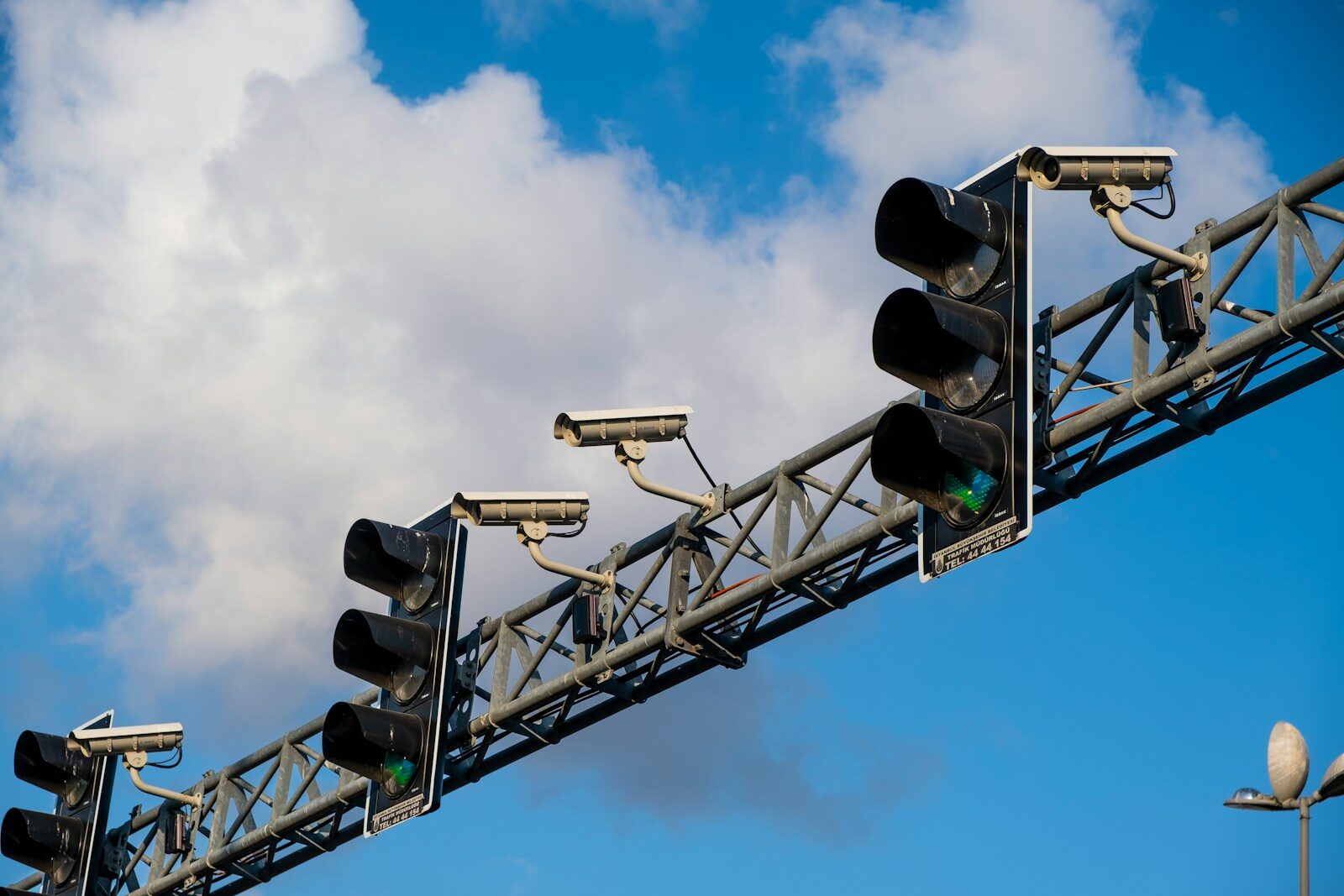
A Broward County judge has dismissed a red-light camera ticket and raised serious constitutional concerns about Florida’s automated traffic enforcement system, potentially setting up a legal challenge to the state’s red-light camera law. The ruling questions whether it is lawful to hold a vehicle’s registered owner responsible for a violation when authorities cannot prove who was actually driving the car at the time.
The decision centers on Florida’s Mark Wandall Traffic Safety Act, the law that authorizes the use of red-light cameras across the state. Those cameras are commonly installed at high-traffic intersections to automatically record vehicles that enter an intersection after the traffic signal turns red. When a violation is detected, the registered owner of the vehicle typically receives a citation in the mail, even if that person was not behind the wheel.
Judge Steven P. DeLuca dismissed the citation in the Broward County case after concluding that the current system may conflict with constitutional standards that govern how violations are proven in court. The judge argued that the burden of proof should remain with the government, not the vehicle owner, when determining who committed the violation.
Under the current law, the registered owner is presumed responsible for the red-light violation unless they can prove otherwise. If the owner was not driving, they must submit a sworn affidavit identifying the person who was operating the vehicle at the time of the incident. Without that affidavit, the owner can still be held liable for the ticket.
Judge DeLuca’s ruling challenges that framework. In his view, requiring the owner to prove they were not the driver flips the normal legal standard on its head. Instead of the government proving every element of the violation, the owner is effectively forced to defend themselves and identify another driver in order to avoid the penalty.
The case highlights a central legal question surrounding automated enforcement: whether a traffic citation tied to a vehicle rather than a person can meet constitutional standards. Red-light camera violations are technically treated as civil infractions in Florida, but they carry penalties that resemble those in criminal cases.
DeLuca described the red-light camera system as “quasi-criminal.” While the citations are processed through a civil framework, they still result in monetary penalties and formal findings of guilt that can affect a driver’s record. Because of those consequences, the judge suggested that a higher standard of proof should apply before someone is held responsible.
That distinction became the key issue in the case. If authorities cannot clearly identify who was driving, the judge argued, holding the registered owner liable may conflict with the principle that the government must prove every element of a violation.
For now, the ruling only applies to the specific case in Broward County. The dismissal does not immediately change how red-light cameras operate across Florida, and the Mark Wandall Traffic Safety Act remains in effect statewide.
However, legal observers say the decision could become significant if the issue moves up the court system. A higher court reviewing the constitutional argument could potentially determine whether the current enforcement structure is legally sound.
If that happens, the implications could extend far beyond a single ticket. Cities throughout Florida rely on red-light cameras to enforce traffic laws at busy intersections, issuing thousands of citations each year.
Boynton Beach alone operates 15 red-light camera systems across seven intersections. Similar systems are active in numerous cities across the state, where they are used to monitor intersections without requiring a constant police presence.
Drivers who have received citations under the system have long argued that the law places too much responsibility on the vehicle owner. Some believe the cameras should be removed entirely, especially when the system cannot always determine who was behind the wheel.
Others view the technology as a practical enforcement tool in areas where police officers cannot be stationed around the clock. Traffic cameras allow authorities to monitor multiple intersections simultaneously and document violations that might otherwise go unnoticed.
The broader debate surrounding automated enforcement has continued as technology becomes more sophisticated. Modern camera systems can capture high-resolution images, timestamps, and vehicle information within seconds of a violation.
Looking ahead, emerging systems powered by artificial intelligence are already expanding automated enforcement capabilities in some parts of the country. These systems can identify multiple types of traffic violations simultaneously and analyze traffic patterns in real time.
Some jurisdictions have begun testing AI-assisted cameras capable of detecting speeding, illegal turns, and other violations automatically. Cities including Dallas have explored such technology as part of broader traffic enforcement strategies.
Supporters believe more advanced systems could address some of the concerns raised in cases like the Broward County ruling. Cameras capable of more precisely identifying drivers or linking violations to individuals rather than vehicles could potentially strengthen the evidentiary foundation of automated citations.
For now, however, the constitutional question raised in Florida remains unresolved. The Broward County decision has introduced a legal challenge that could eventually reach higher courts, where judges may determine whether the state’s red-light camera system meets the standards required to hold drivers accountable.
Until then, Florida’s automated traffic enforcement program will continue operating under the Mark Wandall Traffic Safety Act, even as the legal debate over responsibility and proof begins to take shape inside the court system.
 John Lloyd