 By Shawn Henry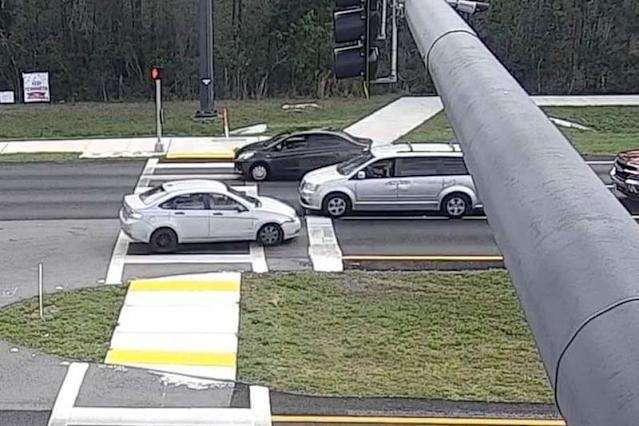
It’s not every day a driver tells law enforcement their car is stuck in reverse — and then decides to keep driving anyway. But that’s exactly what unfolded in Flagler County, Florida, where a routine traffic encounter quickly turned into a legal headache with bigger implications than it first appears.
William Murphy III, 47, was taken into custody after deputies encountered him operating a vehicle under unusual circumstances. According to footage shared by the Flagler County Sheriff’s Office, Murphy claimed his vehicle had malfunctioned and was stuck in reverse. Instead of stopping or seeking immediate help, he said he chose to continue driving backward in an attempt to reach a mechanic.
That decision didn’t just raise eyebrows. It resulted in criminal charges and another reminder that unusual situations behind the wheel don’t excuse legal responsibility.
What Actually Happened on the Road
Details surrounding the incident center on Murphy’s explanation and the visual evidence captured during the encounter. Deputies documented the situation, which showed a vehicle being operated in reverse under conditions that clearly stood out as unsafe.
Murphy’s reasoning was simple, at least from his perspective. If the car couldn’t move forward, he believed the only option was to keep it moving backward until he could get it repaired. That logic might sound creative, but it doesn’t hold up under traffic laws or basic road safety standards.
Driving in reverse for extended distances on public roads introduces obvious risks. Visibility is limited, reaction time is reduced, and surrounding drivers have no expectation of encountering a vehicle moving that way. What may have felt like a temporary workaround quickly became a dangerous situation.
The Legal Reality: No Pass for Unsafe Driving
Murphy now faces charges for driving with a suspended or revoked license, which significantly complicates the situation. This wasn’t just about how the vehicle was being operated. It was about whether he should have been behind the wheel at all.
Driving on a suspended or revoked license is already a serious offense. Adding an unusual and potentially hazardous driving behavior on top of that only increases the scrutiny. Law enforcement doesn’t make exceptions for mechanical issues when the driver is not legally permitted to operate a vehicle in the first place.
Murphy was released after posting a $1,000 bond, but the legal process is far from over. Charges tied to license status can carry ongoing consequences, including additional restrictions and penalties depending on the outcome.
Why This Matters for Everyday Drivers
At first glance, this story might sound like a one-off situation or even something out of a viral video. But it highlights a broader issue that affects every driver on the road: responsibility doesn’t disappear when something goes wrong with the vehicle.
Mechanical failures happen. Anyone who has spent time around cars understands that. But how a driver responds to that failure matters just as much as the issue itself. Continuing to operate a compromised vehicle in a way that puts others at risk crosses a line from inconvenience into liability.
For enthusiasts especially, this hits close to home. Car culture is built around problem-solving, wrenching, and figuring things out. But there’s a clear difference between fixing a problem and driving through it in a way that creates danger for everyone else.
The Bigger Picture: When Decisions Behind the Wheel Go Too Far
This incident also taps into a larger pattern where drivers attempt to improvise solutions on public roads. Whether it’s limping a damaged car home, pushing mechanical limits, or in this case, driving in reverse, those decisions can escalate quickly.
Public roads aren’t controlled environments. They’re shared spaces where unpredictability creates risk. When one driver introduces an unusual or hazardous situation, everyone else on the road is forced to react.
Law enforcement’s response in cases like this isn’t about punishing creativity. It’s about maintaining a baseline level of safety that keeps traffic moving predictably. Once that predictability is gone, the potential for accidents increases dramatically.
Who Pays the Price
Situations like this don’t just affect the driver involved. Other motorists, pedestrians, and even first responders are pulled into the risk equation. A vehicle moving in reverse where it shouldn’t be creates confusion, and confusion on the road is where mistakes happen.
From a legal standpoint, the driver faces the most immediate consequences. But the ripple effects can extend far beyond a single traffic stop. Charges tied to license violations and unsafe driving behavior can impact insurance, driving privileges, and future interactions with law enforcement.
There’s also the broader perception issue. Incidents like this can feed into narratives about reckless or irresponsible drivers, even though most enthusiasts and drivers take safety seriously. That disconnect is something the automotive community constantly has to push back against.
A Simple Problem, A Complicated Outcome
At its core, this was a situation that started with a claimed mechanical issue and ended with criminal charges. The gap between those two points is where decision-making comes into play.
Murphy’s choice to keep driving, despite the circumstances, is what ultimately defined the outcome. The legal system doesn’t weigh intentions as heavily as actions, especially when public safety is involved.
And that’s the takeaway that matters most. When something goes wrong behind the wheel, the solution isn’t always to keep going.
What This Reveals About Driving Today
Modern driving comes with more variables than ever, from advanced vehicle systems to increasingly strict enforcement of traffic laws. But one thing hasn’t changed: drivers are still responsible for how they handle unexpected situations.
This case may stand out because of how unusual it sounds, but the underlying issue is familiar. When does trying to solve a problem cross into creating a bigger one?
And if a car really does fail in a way that limits control, the bigger question becomes unavoidable — is getting it off the road the priority, or just getting it somewhere else?