 By Shawn Henry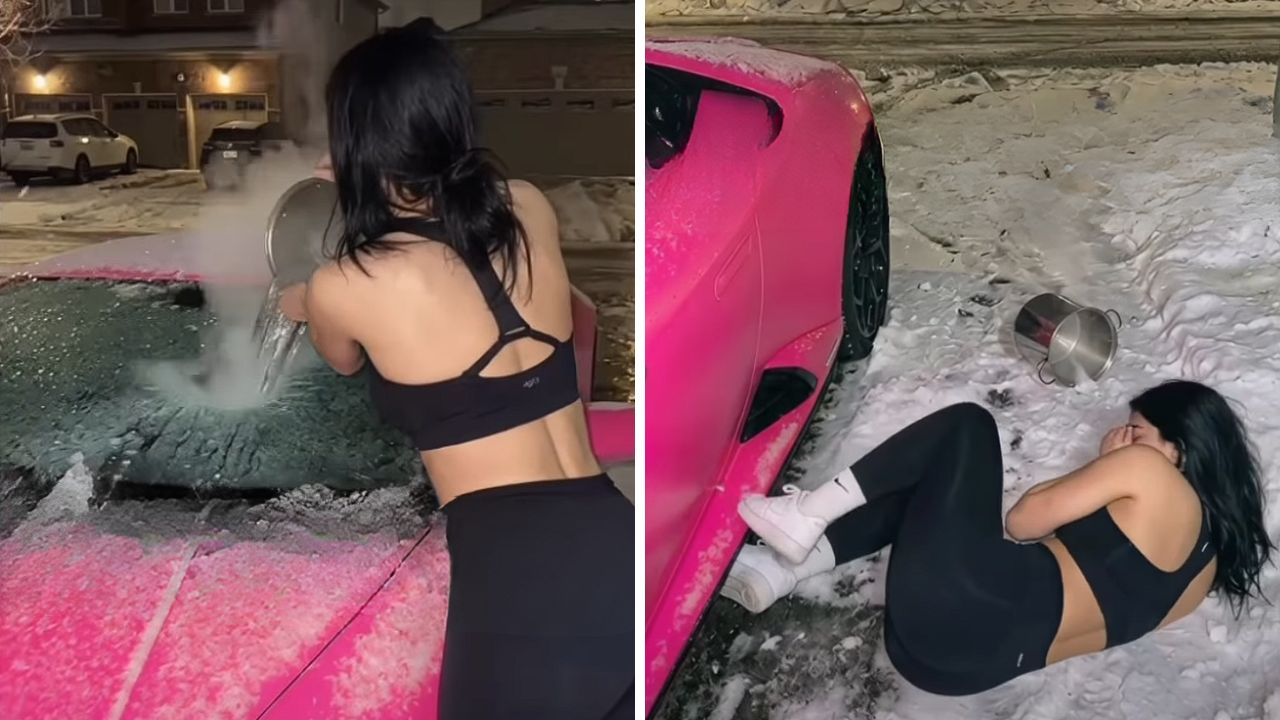
A bright pink Lamborghini Huracán suffered sudden windshield damage after hot water was poured onto its frozen glass during a de-icing attempt captured in a viral social media video. The clip, shared on Instagram, shows a woman attempting to melt ice on the supercar’s windshield by pouring hot water across the frozen surface. Moments after the water hits the glass, the windshield fractures dramatically and collapses inward, sending water pouring into the vehicle’s interior.
The video quickly circulated online after being posted to the Instagram account itsmadisonclarkk, where viewers watched the incident unfold in real time. What began as a quick attempt to clear ice from the windshield escalated into immediate and visible damage. As the hot water spread across the frozen glass, the windshield cracked violently, the structural integrity failed, and the glass gave way, leaving the front of the Lamborghini exposed to the elements and flooding the cabin area.
Observers described the moment as a classic example of thermal shock, a phenomenon that occurs when a material experiences a sudden and extreme change in temperature. In the case of a frozen windshield, the glass is already sitting at temperatures below freezing. A thin sheet of ice forms across the surface while the glass beneath remains uniformly cold. When very hot water is suddenly introduced to a small portion of that surface, the temperature difference becomes extreme and immediate.
The section of glass directly struck by the hot water rapidly expands due to the sudden heat. However, the surrounding areas of the windshield remain frozen and contracted. That difference creates intense stress within the material, forcing the glass to absorb pressure unevenly. Under those conditions, even a structurally strong windshield can fracture quickly, particularly if the glass already contains minor imperfections or small stone chips from normal driving.
Investigators and automotive experts frequently point out that even small defects in automotive glass can increase the likelihood of catastrophic cracking during rapid temperature shifts. Tiny rock chips or stress marks that are normally harmless under everyday conditions can act as weak points. When exposed to thermal shock, those weak points allow fractures to spread rapidly across the windshield surface.
In the Lamborghini video, the result was immediate and dramatic. The glass did not simply crack along one edge or develop a small fracture line. Instead, the structural pressure caused the windshield to fail across a wider area, allowing the panel to cave inward. Water poured directly into the interior once the glass collapsed, creating additional damage beyond the broken windshield itself.
While the clip sparked strong reactions online, the mechanics behind the incident are well understood within automotive and materials science fields. Automotive windshields are built from laminated safety glass designed to withstand impacts and protect occupants during collisions. However, the glass still responds to physical stress caused by rapid heating or cooling, especially when temperature differences occur across small sections of the material.
A frozen windshield creates exactly the conditions where thermal shock becomes possible. The entire sheet of glass begins at roughly the same low temperature, locked under a thin layer of ice. Introducing extremely hot water to just one area produces an uneven expansion effect. As the heated area grows rapidly while the surrounding glass stays rigid and contracted, the internal stress can exceed what the glass structure can handle.
In some cases, pouring warm or moderately heated water onto ice may not cause immediate damage. Environmental conditions, the actual temperature of the water, and the condition of the glass itself can all influence whether a windshield cracks. However, the risk increases dramatically when the water temperature is significantly higher than the surface of the glass.
Even a windshield without visible damage can be vulnerable if the temperature difference is extreme enough. For drivers, that means what appears to be a quick solution to remove ice can quickly turn into an expensive repair if the glass fails under thermal pressure. In the case of a high-performance vehicle like the Lamborghini Huracán, replacing the windshield alone can involve significant cost due to specialized parts and installation requirements.
Beyond the broken glass itself, incidents like this can create additional issues for the vehicle. Once the windshield collapses or cracks open, water can flow directly into the dashboard area and cabin. That can expose interior electronics, upholstery, and trim components to moisture. In high-end vehicles equipped with complex digital systems and sensors, water intrusion can create repair complications that extend far beyond the windshield replacement.
The viral video highlights how quickly a routine winter task can turn into a costly mistake. Removing ice from a windshield is a common challenge for drivers during cold weather, especially when temperatures fall below freezing overnight. However, applying extremely hot water to frozen glass introduces the kind of rapid temperature change that automotive materials are not designed to handle.
Standard methods for clearing ice rely on gradual temperature changes or mechanical removal. Drivers often use windshield scrapers to physically remove ice from the surface without exposing the glass to sudden heat. Another common approach involves starting the vehicle and directing warm air from the defroster system toward the windshield, allowing the temperature to rise gradually.
Chemical de-icing products are also widely used to break down ice accumulation without creating extreme thermal stress on the glass. These sprays are designed to lower the freezing point of ice and allow it to loosen from the surface of the windshield. Compared to sudden temperature shocks, these methods work more slowly but reduce the likelihood of damaging the glass.
In the case of the Lamborghini Huracán featured in the viral video, the damage occurred within seconds once the hot water hit the frozen windshield. The rapid fracture demonstrates how quickly thermal shock can escalate from a simple ice-removal attempt into a major repair situation. What began as a routine effort to clear ice ultimately left the supercar with a shattered windshield and water flooding into the cabin.
The video continues circulating widely online as viewers react to the moment the glass fails under pressure. For automotive owners, the incident serves as a clear reminder of how sensitive vehicle glass can be when exposed to sudden temperature changes. Once thermal shock takes hold, the structural stress inside the windshield can cause failure almost instantly, leaving drivers facing costly damage that started with a simple attempt to remove ice.
 John Lloyd
  Eve Nowell