 By Shawn Henry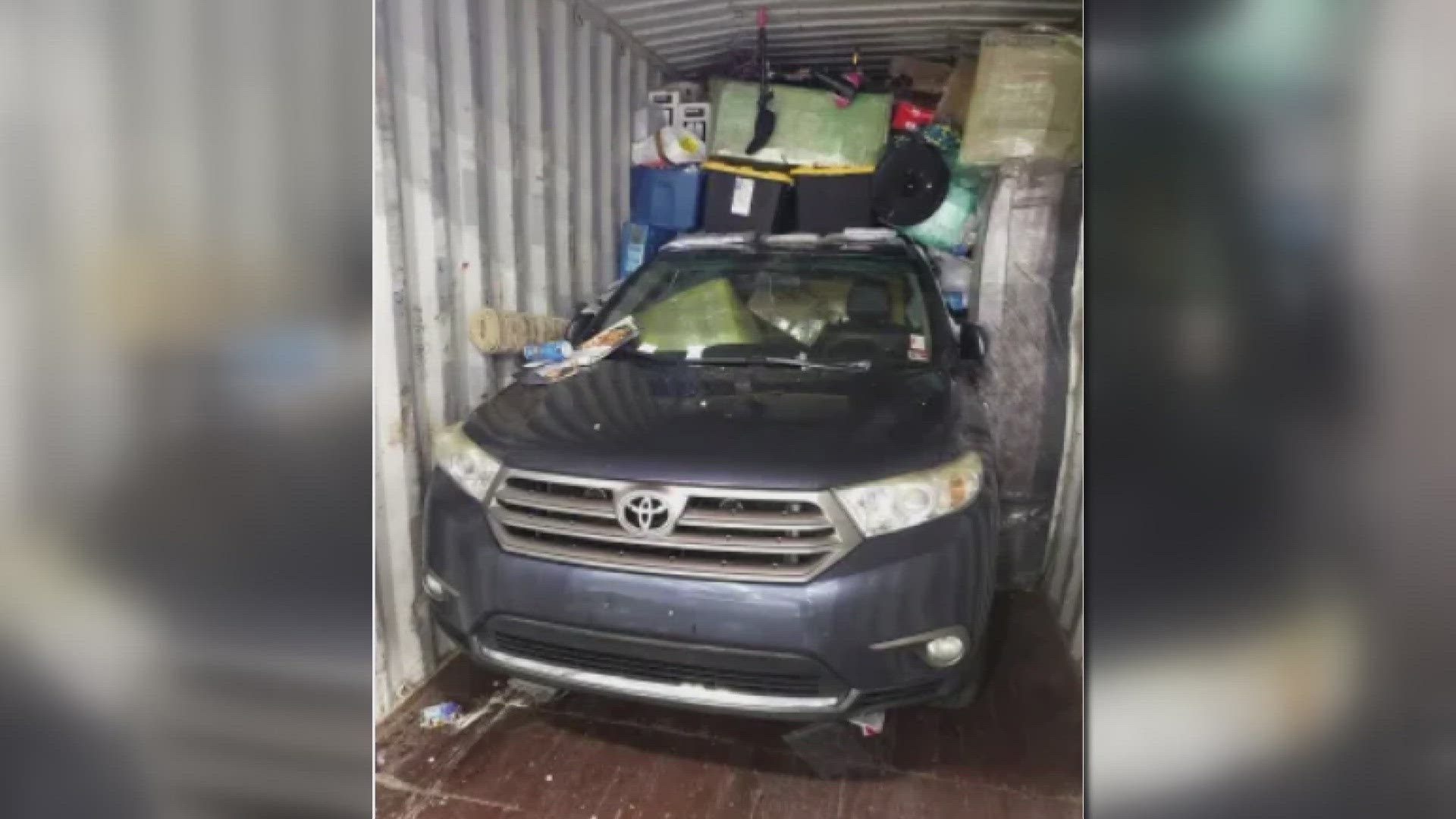
Two Jeep Wranglers stolen from a Southeast Washington, D.C. street were recovered weeks later inside a shipping container at the Port of Baltimore that was preparing to depart for West Africa. Authorities located the vehicles before they left the country after customs agents discovered them during export inspections. The recovery stopped the stolen SUVs from disappearing into an international vehicle trafficking pipeline that investigators say routinely moves stolen vehicles overseas.
The thefts occurred in January on South Carolina Avenue Southeast, where two Jeep Wranglers were parked on the street overnight. Surveillance cameras captured the operation as it unfolded. Video showed suspects approaching one of the vehicles, breaking in, and driving away within seconds. Roughly thirty minutes later, the same group returned to the same block and stole another Jeep Wrangler parked across the street.
Police reported that both thefts happened quickly and without confrontation, allowing the suspects to leave the area before officers could respond. The vehicles vanished from the neighborhood overnight, leaving the owners to report the thefts the following morning. One of the stolen Jeeps belonged to local resident Nick Cioffi, who later learned the vehicle had been recovered hundreds of miles away at a major East Coast shipping hub.
Weeks after the theft, Cioffi received a call from law enforcement informing him that his Jeep had been located during a federal inspection at the Port of Baltimore. According to authorities, customs agents opened a shipping container and discovered multiple stolen vehicles inside. The container held Cioffi’s Jeep Wrangler, the neighbor’s Jeep taken during the same theft spree, and a Chevrolet Corvette.
Investigators determined the container had been prepared for export and was scheduled to be shipped to West Africa. Officials said the discovery stopped the vehicles from leaving the United States and prevented them from entering a network that traffics stolen cars into foreign markets.
While the vehicles were recovered, the outcome for the owners was complicated by insurance procedures that had already moved forward after the thefts. By the time authorities located the Jeeps, Cioffi’s insurance company had already processed the claim and declared the vehicle a total loss. As a result, the recovered SUV now legally belongs to the insurer.
Authorities also indicated the Jeep will remain in federal custody for some time as investigators continue examining the shipping container and the theft operation behind it. The vehicle is being held as evidence while officials work to identify those responsible for the export attempt.
Federal officials say the discovery reflects a broader pattern involving organized criminal groups that target vehicles in U.S. cities and quickly route them toward international shipping ports. Customs and Border Protection officials in Baltimore reported that the region plays a significant role in intercepting stolen vehicles before they leave the country.
Data from fiscal year 2024 shows the Baltimore Field Office ranked second nationwide for stolen vehicle recoveries tied to export attempts. During that period, authorities recovered 250 vehicles that had been reported stolen before they could be shipped overseas.
Investigators say certain models are particularly attractive to organized theft rings because they hold value in overseas markets and are relatively easy to move through illicit export networks. According to the agency’s data, Toyota Highlanders were the most frequently recovered stolen vehicle model intercepted in export operations last year. Jeeps ranked second among the most commonly recovered vehicles.
Officials say West Africa remains one of the primary destinations for stolen vehicles leaving U.S. ports. The region sees heavy shipping traffic from American ports, which creates opportunities for traffickers to move vehicles through cargo shipments. Authorities reported that organized criminal groups operating internationally maintain supply chains designed to transport stolen vehicles from U.S. cities directly into foreign markets.
Those networks often rely on speed and timing. In many cases, the theft occurs shortly before the vehicle is packed into a shipping container. Investigators say vehicles are sometimes stolen from dealerships or rental fleets and then moved rapidly toward ports before the theft is detected.
The delay between the initial theft and the official report can create a window for traffickers. Customs officials check vehicle identification numbers during export inspections to confirm that shipments are legitimate. However, if the vehicle has not yet been reported stolen when the inspection occurs, it may not appear in law enforcement databases.
Authorities say that delay can allow stolen vehicles to pass through ports unnoticed if they are loaded quickly enough. Once the shipment leaves the country and arrives at its destination, recovering the vehicle becomes significantly more difficult.
In the Southeast D.C. case, investigators determined the stolen Jeeps were already packed and staged for export when customs agents inspected the container. Because the vehicles had been reported stolen by that time, authorities were able to flag them and halt the shipment before it departed the port.
No arrests have been publicly announced in connection with the thefts or the attempted export of the vehicles. Authorities have not released details about the suspects involved or how the vehicles were moved from Washington, D.C., to the Baltimore port facility.
For the owners, the recovery offered confirmation about where the vehicles had gone after disappearing from their neighborhood street. The thefts happened quickly, but the discovery of the shipping container showed how rapidly stolen vehicles can be moved through organized trafficking routes.
After the incident, Cioffi said he upgraded security on his remaining vehicles to reduce the chances of another theft. He installed kill switches and steering wheel locks on both of his cars, steps intended to make it harder for thieves to drive them away if another attempt occurs.
The investigation into the stolen vehicle shipment remains ongoing. Federal authorities continue examining the container and the theft network responsible for moving the vehicles toward international export. Officials have not announced arrests as investigators work to identify the individuals behind the operation.