
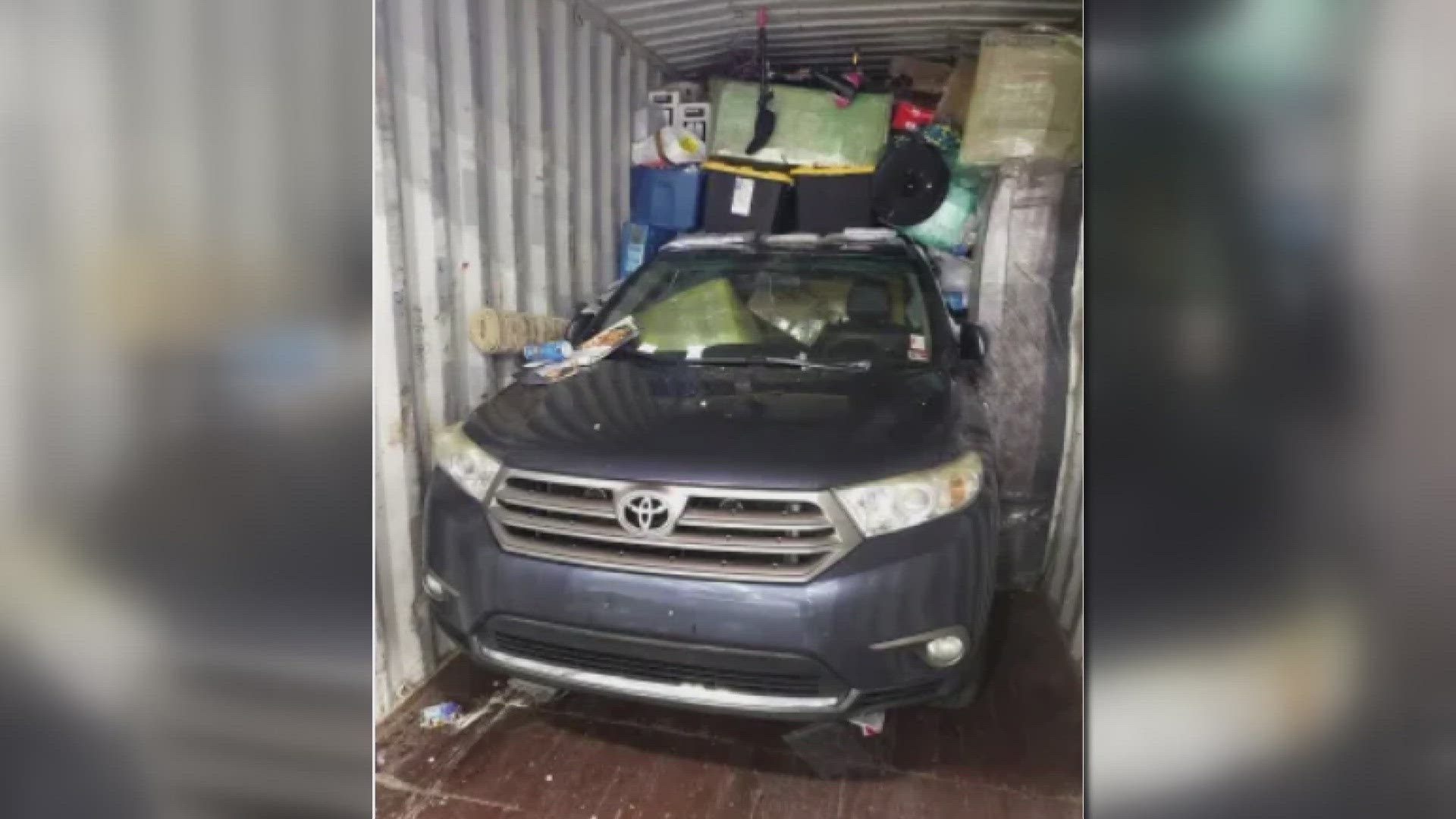
Two Jeep Wranglers stolen off a Southeast Washington, D.C. street turned up weeks later exactly where investigators feared they would: sealed inside a shipping container at the Port of Baltimore, staged to leave the country for West Africa. Customs agents caught them just in time — but for one owner, “recovered” doesn’t mean he gets his Jeep back.
Two Thefts, Thirty Minutes Apart
The thefts happened in January on South Carolina Avenue Southeast, caught on surveillance video showing suspects break into one parked Wrangler and drive off within seconds. About thirty minutes later, the same group returned to the same block and took a second Jeep Wrangler parked across the street. Both vehicles were gone before officers could respond, and the owners didn’t discover the thefts until the next morning. One belonged to local resident Nick Cioffi.
Found in a Container With a Corvette, Bound for West Africa
Weeks later, Cioffi got a call: his Jeep had turned up during a federal inspection at the Port of Baltimore. Customs agents had opened a shipping container and found it packed with his Wrangler, his neighbor’s Wrangler from the same theft spree, and a Chevrolet Corvette — all staged for export to West Africa before the container was flagged and the shipment halted.
Recovered, But Not Returned
Here’s the part that stings: by the time investigators located the Jeeps, Cioffi’s insurance company had already processed his claim and declared the vehicle a total loss. Under that settlement, the recovered SUV now legally belongs to the insurer, not Cioffi — and it’s staying in federal custody for now anyway while investigators continue examining the container and the theft operation behind it. Getting a stolen car back physically doesn’t automatically undo the financial paperwork that moved forward in the meantime.
Why Baltimore Is a Chokepoint for This Exact Crime
Customs and Border Protection’s Baltimore Field Office ranked second nationwide for stolen-vehicle export recoveries in fiscal year 2024, intercepting 250 vehicles before they left the country. Toyota Highlanders topped the list of most frequently recovered models nationally, with Jeeps ranking second — models that hold strong resale value overseas, which is exactly what makes them attractive to organized trafficking rings in the first place.
The mechanics of these operations depend on speed: vehicles get stolen, packed into containers, and staged for export before their theft reports catch up to the port’s inspection database. Customs agents check VINs during export inspections, but if a car hasn’t been logged as stolen yet, it can slip through undetected. In this case, the Jeeps had already been reported stolen by the time the container was inspected, which is precisely why agents were able to flag and stop the shipment.
What the Owner Did Next
No arrests have been announced in either the thefts or the attempted export, and investigators haven’t released details on how the vehicles moved from a D.C. street to a Baltimore port container. Cioffi, for his part, didn’t wait around for answers — he’s since installed kill switches and steering wheel locks on his remaining vehicles, a direct response to how quickly his Jeep disappeared in the first place.