 By Eve Nowell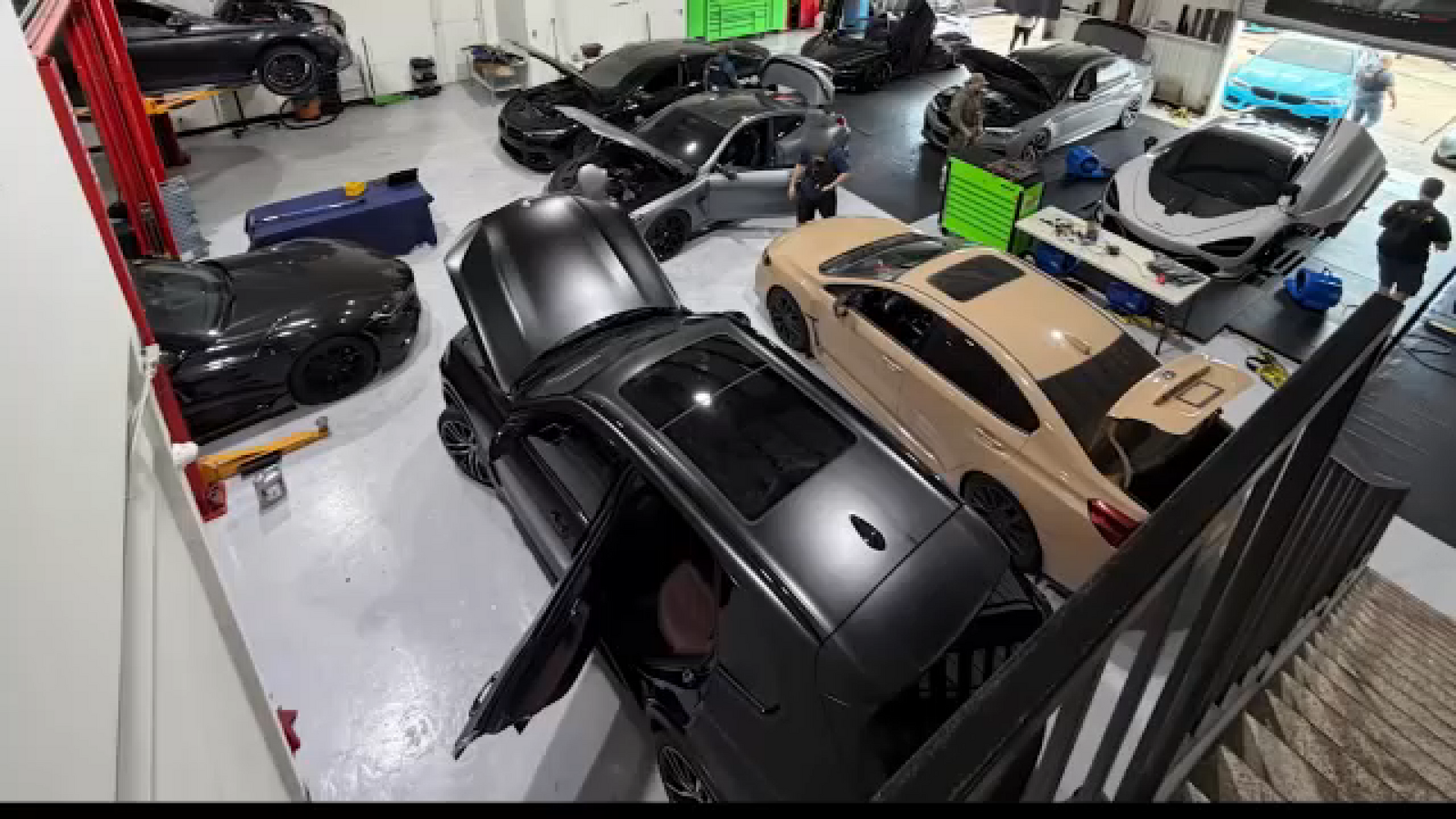
A body shop in west Houston is now at the center of a case that feels less like routine fraud and more like a system being twisted until it breaks. Luxury cars, missing paperwork, and a legal tool meant to protect businesses all collided in a way that ended with police hauling out high-end vehicles and stacks of cash.
And this wasn’t a one-off mistake.
According to the Houston Police Department, the owner of Pure Performance on Windswept Lane, Talal Obeid, was arrested on March 31. That same day, officers moved in and raided the shop. What they found inside immediately raised the stakes.
Nine high-end vehicles were seized, including seven BMWs. Alongside those cars, police also recovered $47,000 in cash.
That’s where things start to shift from questionable business practices to something much bigger.
Investigators say the case centers around fraudulent mechanic’s liens. That’s a legal tool body shops can use to claim payment for work done on a vehicle. If a customer doesn’t pay, the shop can eventually take ownership through that process. It’s supposed to protect legitimate work. But police say it was used very differently here.
Here’s the part that matters. Authorities believe this wasn’t just local. They describe it as a large-scale operation involving vehicles coming from California to Houston. The claim is that cars were being moved, then tied up in lien claims that weren’t backed by real repairs.
In other words, paperwork was doing the heavy lifting, not actual work.
The sequence laid out by investigators paints a clear picture. A vehicle gets connected to the shop. A lien is filed claiming expensive repairs. The numbers aren’t small either. Tens of thousands of dollars. Then comes the problem. There’s no supporting documentation.
Police pointed to one example involving an AMG Mercedes. In September, Obeid filed notice that he intended to claim a mechanic’s lien on the car, stating he had completed $63,000 worth of work. That’s a serious amount of labor and parts.
But when authorities looked closer, things didn’t add up.
No photos of the damage were provided. No receipts for parts. No clear trail showing the work actually happened. And when police followed up on March 9 asking for records, they were told none were available. Still, the claim stood.
And that’s where it gets complicated. Because mechanic’s liens, when used correctly, carry legal weight. They can lead to ownership changes if left unchallenged. That makes them powerful.
It also makes them vulnerable if someone decides to push the limits.
Police say that’s exactly what happened here. Vehicles tied to these liens were effectively being taken without proper justification. Not through theft in the traditional sense, but through paperwork that looked legitimate on the surface. That distinction matters, but not in a good way.
Because for the vehicle owners or lienholders, the outcome is the same. A car disappears into a legal process they didn’t authorize or expect. And the pattern didn’t stop with one case.
There’s also a pending lawsuit tied to the shop. VW Credit Leasing claims Pure Performance threatened to file a $60,000 lien on a vehicle leased to a California customer. According to that filing, the shop could not provide a work order showing the repairs were authorized.
That’s a red flag, plain and simple. At the same time, complaints have been building elsewhere. A Facebook group dedicated to customer issues with the shop has surfaced, suggesting frustration had already been bubbling before the arrest.
So by the time police stepped in, there were already signs something wasn’t right.
During the investigation, media crews tried to get answers. Employees at the shop didn’t speak. A man identified by nearby business owners as Obeid briefly appeared, face partially covered, then left in a BMW marked with the shop’s branding.
No explanation. No clarification. Just more questions. And stepping back, this case hits on something bigger than one business or one arrest.
Mechanic’s liens exist for a reason. Shops need a way to get paid for real work. Cars don’t get fixed for free, and unpaid bills can cripple small operations. That system is supposed to balance things out.
But if that system is used without proof, without documentation, without actual repairs behind it, it stops being protection and starts becoming leverage. That’s a problem for anyone who owns a vehicle.
Because most drivers don’t think twice about where their car goes for service. They assume the process is straightforward. Drop it off, get it fixed, pay the bill. Simple. This case suggests it’s not always that simple.
If the allegations hold, then paperwork alone was enough to put ownership of high-value vehicles into question. Not because of mechanical work, but because of how the process was handled. That’s a hard reality to ignore.
For law enforcement, the case is ongoing. The charges tied to fraudulent liens and the seizure of vehicles point to a deeper investigation still unfolding. What’s already clear is that multiple vehicles, significant cash, and a pattern of questionable filings have put this shop under serious scrutiny.
For drivers, there’s a different takeaway. Trust matters. Documentation matters. And when those things are missing, even something as routine as a repair can turn into something much harder to unwind.
This situation didn’t start with flashing lights or a chase. It started with paperwork. And that paperwork, according to police, may have been enough to take cars that didn’t belong to the shop in the first place. That’s not a small issue. That’s a system being tested, and for some drivers, it looks like it failed.
 Shawn Henry