
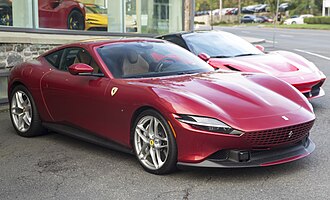
Ferrari finally did what many enthusiasts hoped it would avoid for as long as possible. The Italian supercar giant officially unveiled its first fully electric production car, and the stakes behind this launch are massive.
The new Ferrari Luce arrives with four doors, five seats, over 1,000 horsepower, and a jaw-dropping €550,000 price tag that translates to roughly $640,000. That alone would be enough to spark controversy. But this isn’t just another expensive Ferrari. This is the company betting that the future of high-end performance no longer revolves around screaming V12 engines.
That’s where things change.
More Stories Like This
- Teen Shot at Massachusetts Car Meet as Burning Stolen Car Full of Bullet Holes Sends Crowd Running
- Hellcat Murder Case Takes Dramatic Turn After Suspect Rejects Plea Deal in Deadly AirTag Tracking Confrontation
Ferrari built its reputation on noise, drama, and mechanical emotion. The company’s identity has always been tied to combustion engines that felt violent, theatrical, and alive. Now it’s launching a fully electric luxury vehicle at a time when other performance brands are pulling back from aggressive EV plans after weak demand started showing cracks in the market.
Porsche has already faced slowing EV momentum. Lamborghini has taken a more cautious approach. Yet Ferrari is diving in with its most radical production shift in decades.
And it’s doing it with a family-focused five-seater.
The Luce, which means “light” in Italian, was revealed Monday during a major launch event in Rome attended by more than 200 reporters. Ferrari CEO Benedetto Vigna described the project as the result of five years of work, underscoring just how long the company has been preparing for this moment.
Ferrari clearly understands the risk involved here. The company knows many longtime enthusiasts see electrification as the exact opposite of what made Ferrari special in the first place. A silent Ferrari has always sounded like a contradiction. That’s why the automaker tried to engineer around one of the biggest complaints surrounding EVs.
The Luce amplifies natural vibration sounds from its electric powertrain in an attempt to preserve some of the emotional sensation drivers expect from a Ferrari. It’s an unusual move that reveals how carefully the company is trying to walk the line between tradition and modern technology.
Here’s the part that matters.
Ferrari is not targeting traditional supercar buyers alone with the Luce. The company is going after wealthy customers who want luxury, practicality, and high-end technology wrapped inside a Ferrari badge. This is not a stripped-out track weapon built for weekend canyon runs. It’s a luxury electric grand tourer designed for families with massive bank accounts.
The Luce features comfortable seating for five passengers along with a large 600-liter trunk. Ferrari also leaned heavily into premium materials inside the cabin, using leather, glass, and anodized aluminum surfaces instead of following the minimalist touchscreen-heavy layouts popularized by Tesla and several Chinese EV manufacturers.
That detail matters because Ferrari appears determined to avoid turning the Luce into just another tech appliance on wheels. Physical controls remain part of the interior design, preserving at least some connection to traditional performance-car ergonomics.
Outside, though, the shift is impossible to ignore.
The Luce breaks away from Ferrari’s classic aggressive styling formula with a larger body and expansive glass-heavy design language. During the launch presentation, Ferrari showcased multiple color variants ranging from the brand’s iconic red to white and light blue. The visual direction feels far more modern luxury crossover than old-school exotic supercar.
That alone is likely to divide enthusiasts.
Ferrari says the Luce produces more than 1,000 horsepower through four electric motors, one mounted at each wheel. The setup helps deliver improved agility despite the vehicle weighing more than 2.2 tons. Top speed exceeds 310 kilometers per hour, and Ferrari claims the Luce can travel more than 500 kilometers on a charge.
Those numbers are serious. Nobody can argue the Luce lacks performance.
But performance alone has never been the entire Ferrari formula.
This is where the story turns.
Ferrari is making this move while the global EV market becomes increasingly complicated, especially in the luxury and performance segments. Wealthy buyers may embrace cutting-edge technology, but many still associate emotional driving experiences with combustion engines. The sound, vibration, and raw mechanical character of Ferrari’s V8 and V12 cars remain central to the brand’s identity.
Ferrari seems convinced that a new generation of wealthy buyers simply views performance differently. The company believes younger clients raised around AI, smartphones, and advanced technology may care less about engine heritage and more about seamless luxury combined with brutal acceleration.
That’s a huge gamble.
The company also has another target in mind: China.
Ferrari sees the Luce as an opportunity to grow deeper into markets where EV adoption is already widespread and large gasoline-powered vehicles face heavy taxation. China remains one of the most important battlegrounds for luxury automakers chasing future growth, and Ferrari knows electrification could help remove barriers that make traditional high-displacement supercars harder to sell there.
Related Incidents
- Classic Car Buyers Lose Thousands After Scammers Hijack Real Auto Shops in Multi-State Fraud Scheme
- Stellantis’ Stunning Comeback: Hemi V8 Demand Helps Reverse $26 Billion Collapse as Massive Cost Cuts Begin
- The Real Story Behind a 1966 Mustang Running Tesla Full Self-Driving and Why It’s Exposing a Major Industry Standoff
At the same time, Ferrari risks alienating some of the loyal enthusiasts who helped turn the brand into an icon long before EVs dominated industry planning meetings.
And that tension is now impossible to ignore.
The involvement of former Apple design chief Jony Ive and his collective LoveFrom only reinforces how seriously Ferrari approached the Luce as a technology-focused luxury product rather than a conventional sports car. Ferrari isn’t just building an electric vehicle. It’s trying to redefine what a Ferrari can be without losing the prestige attached to the badge.
Whether that works is another question entirely.
Luxury automakers across the industry are discovering that ultra-wealthy buyers still want emotion, exclusivity, and character. Speed alone no longer guarantees excitement when every high-end EV can produce outrageous acceleration numbers. Ferrari built its empire on creating machines that felt emotional and unpredictable in ways many modern EVs simply do not.
Now the company is betting $640,000 customers will accept a very different interpretation of performance.
Ferrari may ultimately succeed because few brands command the loyalty and prestige it does. But if the Luce fails to connect with buyers emotionally, the fallout could reach far beyond one model. It would expose a growing problem inside the performance-car world: massive horsepower and advanced technology still cannot fully replace the mechanical drama enthusiasts fell in love with decades ago.