
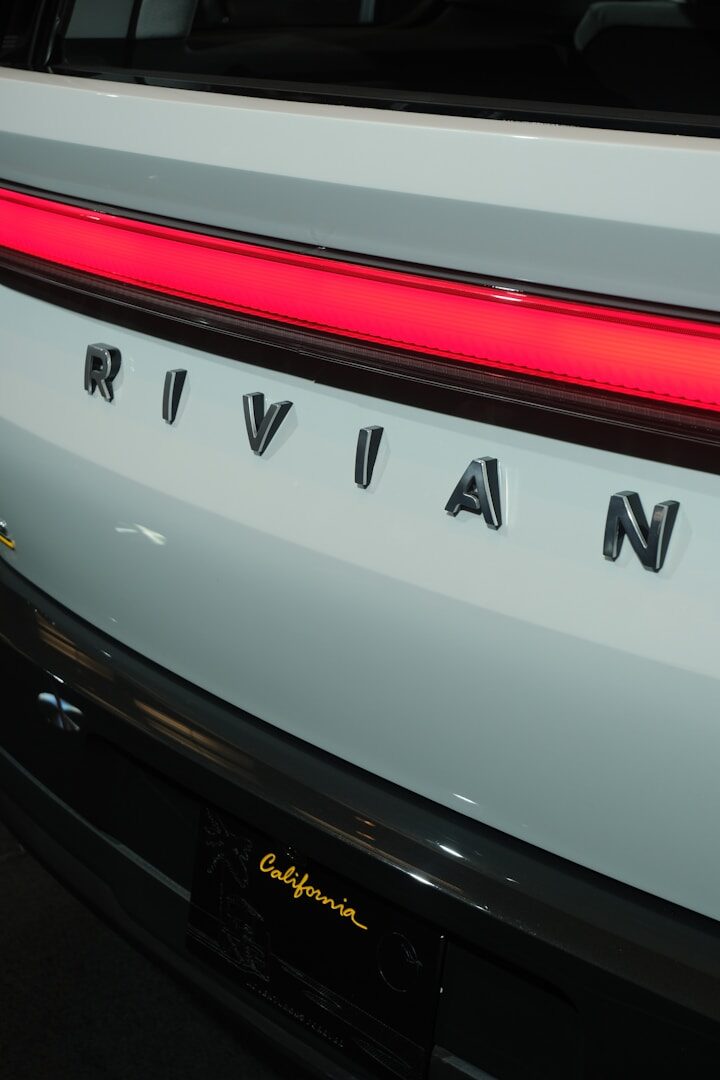
Rivian’s second quarter looks like a turning point if you read the top line and a warning if you read the middle.
The top line is genuinely good. Revenue of $1.658 billion, up 27 percent. Consolidated gross profit of $179 million against a $206 million gross loss in the same quarter a year earlier — a $385 million swing in twelve months. Production at Normal, Illinois hit 12,613 units, more than double the 5,979 Rivian built in Q2 2025. Gross margin went from negative 16 percent to positive 11 percent in four quarters. Those are the numbers of a company that has finally figured out how to build cars.
The middle is where it gets uncomfortable.
The cars still lose money
Strip the second-quarter results into segments and the automotive business posted a gross loss of $36 million. Better than the $335 million hole a year ago, but still a hole — and that number is doing some heavy lifting even to get there.
Rivian booked $108 million in regulatory credit revenue in the quarter, a $103 million year-over-year increase on the automotive line alone. It also recognized an IEEPA tariff refund receivable. Both of those are real money. Neither has anything to do with the cost of a battery pack, a stamping die, or an hour of line labor. Back them out and the metal is still underwater, and it’s underwater in a quarter that also absorbed roughly $100 million in incremental cost of revenues from ramping R2 production above normalized levels.
Related Articles
- Stellantis Keeps Losing Workers Inside Buildings Undergoing Renovation or Downsizing
- Ford Is Now Planning For Chinese Automakers To Land In America
Which leaves the actual profit engine. Software and services generated $515 million in revenue and $215 million in gross profit at a 42 percent margin. Of that revenue, $308 million — 60 percent — came from the Volkswagen Group joint venture. In other words, the consistently profitable part of Rivian right now is a contract electrical-architecture and software shop selling engineering to another automaker. That’s a legitimate business, and it’s arguably the smartest thing Rivian has ever done. It is not a car company making money on cars.
The second-half math nobody wants to do
Rivian delivered 12,194 vehicles in Q2 against an outlook of 9,000 to 11,000, and raised full-year guidance to 65,000–70,000 units.
Add the halves. First-half deliveries were 22,559 — 10,365 in Q1 and 12,194 in Q2. Hitting the bottom of the new range requires roughly 42,400 vehicles in the back half. Hitting the top requires about 47,400. That is close to double the first-half run rate, in two quarters, on a plant that just finished absorbing a brand-new production line.
It’s not impossible. R2 is a fresh line ramping from near zero, and ramps are non-linear. But the guidance assumes essentially everything goes right at the exact moment Rivian is also chasing a new hands-free driving rollout it says will begin by year’s end.
The cash picture
Free cash flow was negative $849 million for the quarter, built from $487 million of operating cash burn and $362 million of capital expenditure. Inventory climbed to $1.661 billion as Rivian stocked parts for R2, with accounts payable rising from $595 million to $889 million to partly fund it.
Rivian ended June with $5.310 billion in cash and short-term investments. In July it priced an offering of 75 million shares at $15.50, ultimately netting about $1.317 billion including the underwriters’ option, for pro forma liquidity of $7.163 billion.
Here’s the number to sit with: shares outstanding went from 1,240 million at the end of December to 1,362 million at the end of June, before the July raise. Accumulated deficit stands at $28.2 billion. Rivian is buying its way to scale with equity, and every quarter that the automotive segment stays negative is another quarter of that. Expected additions include $1 billion of non-recourse debt from Volkswagen and $250 million more in equity from Uber, both conditional.
What Uber is actually buying
The Uber arrangement gets described as a lifeline, but the structure matters. Uber will invest up to $1.25 billion through 2031 subject to the achievement of certain autonomous milestones by specific dates. Uber or its fleet partners expect to buy 10,000 fully autonomous R2 robotaxis, with an option on 40,000 more starting in 2030. Deployment targets San Francisco and Miami in 2028, expanding to 25 cities by 2031.
That’s a performance contract, not a cheque. Rivian has to ship working autonomy on schedule to unlock it. Worth keeping in mind whenever the $14 billion “current and targeted capital” figure gets quoted.
Related Articles
- What Really Happens If You Never Change Your Oil: A Timeline
- Porsche Sold 24,000 Fewer Cars and Made a Third More Money — Here’s How
Meanwhile, the boring business is compounding: Amazon now runs more than 40,000 Rivian delivery vans, and the commercial van platform passed one billion cumulative miles this quarter. That fleet is the closest thing Rivian has to predictable volume, and it barely gets discussed.
If you’re actually shopping
The R2 headline price and the R2 you can buy are two different vehicles. Per Rivian’s own trim announcement, the car delivering now is the Performance with Launch Package at $57,990 — dual-motor AWD, 656 horsepower, 609 lb-ft, 3.6 seconds to 60, 330 miles EPA-estimated, semi-active suspension, 4,400-pound tow rating. The 450-horsepower Premium at $53,990 arrives late 2026. The single-motor Standard at $48,490, which is the range champion of the family at a Rivian-estimated 345 miles, lands in 2027. The much-advertised roughly $45,000 variant with 275-plus miles isn’t due until late 2027.
That sequencing is deliberate and it’s why the ramp cost lands where it does: the most expensive trim eats the ugliest cost curve. If you want the value proposition Rivian has been advertising since 2024, you’re waiting another eighteen months, and you’re betting on a company that has raised equity twice this year to get there.
Two practical notes for anyone signing now. The R2 ships with a native NACS port, so Supercharger access requires no adapter and CCS does — that’s a real ownership convenience and a resale talking point. And the Launch Package bundles lifetime Autonomy+ rather than a subscription, which is the kind of thing that quietly holds value on a used listing three years out when the second owner discovers what the monthly costs.
Rivian’s quarter was a beat. It was also a reminder that the company is still funding the gap between building good cars and building them profitably — and that the gap is currently being papered over by regulatory credits and Volkswagen’s engineering budget.