
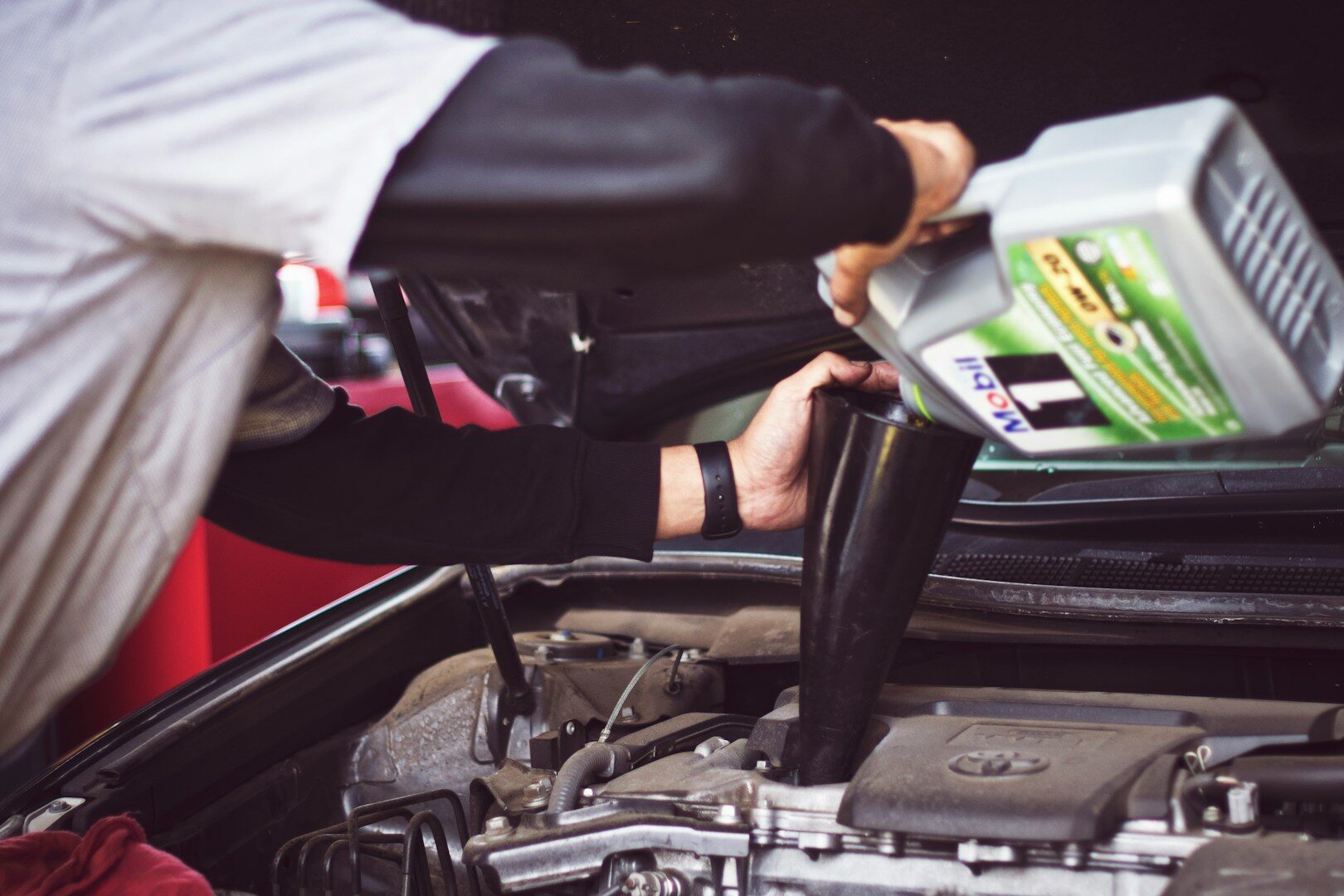
Picture two identical cars rolling off the same factory line, same engine, same badge, same new-car smell. One owner changes the oil like clockwork. The other treats the dashboard reminder as background noise and never gets around to it, not once. Ask any mechanic how that story ends and you’ll get the same wince every time, because engine oil isn’t just a fluid, it’s the one thing standing between a smooth-running engine and a very expensive pile of scrap metal. Here’s exactly how that second car’s story unfolds, mile by mile, from the moment the oil starts to turn to the moment the engine finally taps out.
Mile Zero: Liquid Gold Doing Its Job
Fresh oil is almost amber in color, slick and thin enough to race through every passage in the engine within seconds of startup. It coats camshafts, wraps around bearings, and cushions thousands of tiny metal-on-metal collisions every minute, all while carrying heat away from parts that would otherwise cook themselves. Most owners never think about it in these terms, but that quart of oil is doing the work of a bloodstream, and like blood, it doesn’t stay clean forever. The countdown toward trouble starts the moment the engine first fires up, it just takes a while for the consequences to catch up.
500 to 1,000 Miles Past Due: The Calm Before the Storm
This is where the trap is set. The recommended interval passes, usually somewhere between 5,000 and 10,000 miles depending on the car, and absolutely nothing seems to happen. The engine still starts, still idles smoothly, still pulls hard on the highway. Behind the scenes, though, the oil has already started losing viscosity and picking up microscopic shards of metal shed by normal wear. The additive package, the detergents and anti-wear agents engineered into every bottle, is still fighting hard enough to hide the damage. Drivers who skip this first change and get away with it often conclude that oil changes are overrated. That conclusion is about to get very expensive.
3,000 to 5,000 Miles Overdue: The Oil Starts Losing the Fight
Pull the dipstick now and the oil that once looked like honey has turned into something closer to used coffee grounds, dark, gritty, and thick with soot and moisture it can no longer hold in suspension. That thickness is doing real damage at the microscopic level, slowing how quickly oil reaches the camshaft lobes and bearing surfaces on a cold start. Fuel economy quietly slips. A faint rattle or tick creeps in during the first few seconds after startup, the sound of parts rubbing together just a little longer than they’re supposed to before oil pressure builds. It’s easy to explain away as an old car being an old car. It isn’t.
5,000 to 10,000 Miles Overdue: Sludge Moves In
Now comes the part that should genuinely worry any owner, sludge. Think of it as the automotive equivalent of clogged arteries, a thick, tar-like residue that forms when overheated, exhausted oil starts breaking down instead of doing its job. It collects in the oil pan, cakes onto valve covers, and slowly chokes off narrow internal oil passages. Once those passages start clogging, oil pressure can crash in specific corners of the engine even while the gauge on the dashboard insists everything is fine. This is usually the point where a check engine light or oil pressure warning finally flickers on, which feels like an early warning but is actually a lagging indicator. The damage didn’t just start, it’s already well underway.
10,000 to 20,000 Miles Overdue: The Engine Starts Talking Back
This is where things stop being theoretical and start being audible. Piston rings, coated in varnish and carbon deposits, lose their tight seal against the cylinder wall, letting oil sneak into the combustion chamber and burn off in a puff of blue-tinted exhaust smoke. Check the oil level and it’s mysteriously lower than it should be, because the engine is quietly drinking it. Bearings that once ran on a perfect, whisper-thin film of oil start wearing unevenly, and a low, rhythmic knock creeps in, worse at idle, worse under load, impossible to ignore. Turbocharged engines suffer even faster here, since a turbo’s bearings spin at speeds north of 100,000 RPM and depend entirely on clean, plentiful oil to avoid literally melting themselves.
20,000 Miles and Beyond: Living on Borrowed Time
Very few engines survive this long without an oil change without screaming about it, but the ones that do are running on pure luck. Sludge can fully block the oil pickup screen inside the pan, starving entire sections of the engine of any lubrication at all for a few terrifying seconds during hard acceleration. Camshaft lobes and lifters, under some of the highest contact pressure anywhere in the engine, wear down enough to throw off valve timing, causing a rough idle, random misfires, and a noticeable, frustrating loss of power. Every mile driven at this stage is a small bet against physics, and physics does not lose those bets forever.
The Point of No Return: When the Engine Finally Gives Up
Eventually, the oil simply stops being oil in any meaningful sense. It’s either thickened into a substance the pump can barely push through the engine, or broken down so completely that it can no longer keep metal from touching metal. When that protective film finally disappears, bearings are usually the first casualty, seizing under the heat and friction of direct metal contact. A seized bearing can lock a connecting rod or crankshaft solid in an instant, and at highway speed that can mean an abrupt, total loss of power, sometimes punctuated by a loud bang and a wisp of smoke curling out from under the hood. There’s no limping to the shop from here. An engine that fails this way needs a full rebuild or a total replacement, no exceptions.
The Real Question: $80 Now, or $8,000 Later?
A routine oil change typically runs somewhere between 40 and 120 dollars. A full engine replacement or rebuild runs anywhere from 4,000 to well over 10,000 dollars, and that’s before adding in towing, a rental car, and the days spent without a vehicle at all. Laid out side by side like that, an oil change stops sounding like routine maintenance and starts sounding like one of the best insurance policies a car owner will ever buy. The unsettling part of this entire timeline is how quiet it is. There’s no siren, no flashing light spelling out exactly how many miles are left before something breaks, just a slow, silent countdown that ends the same way every time it’s ignored long enough. The recommended interval was never really a suggestion. It’s the line between an engine that outlives the car around it and one that dies of entirely preventable causes, years too soon.