 By Shawn Henry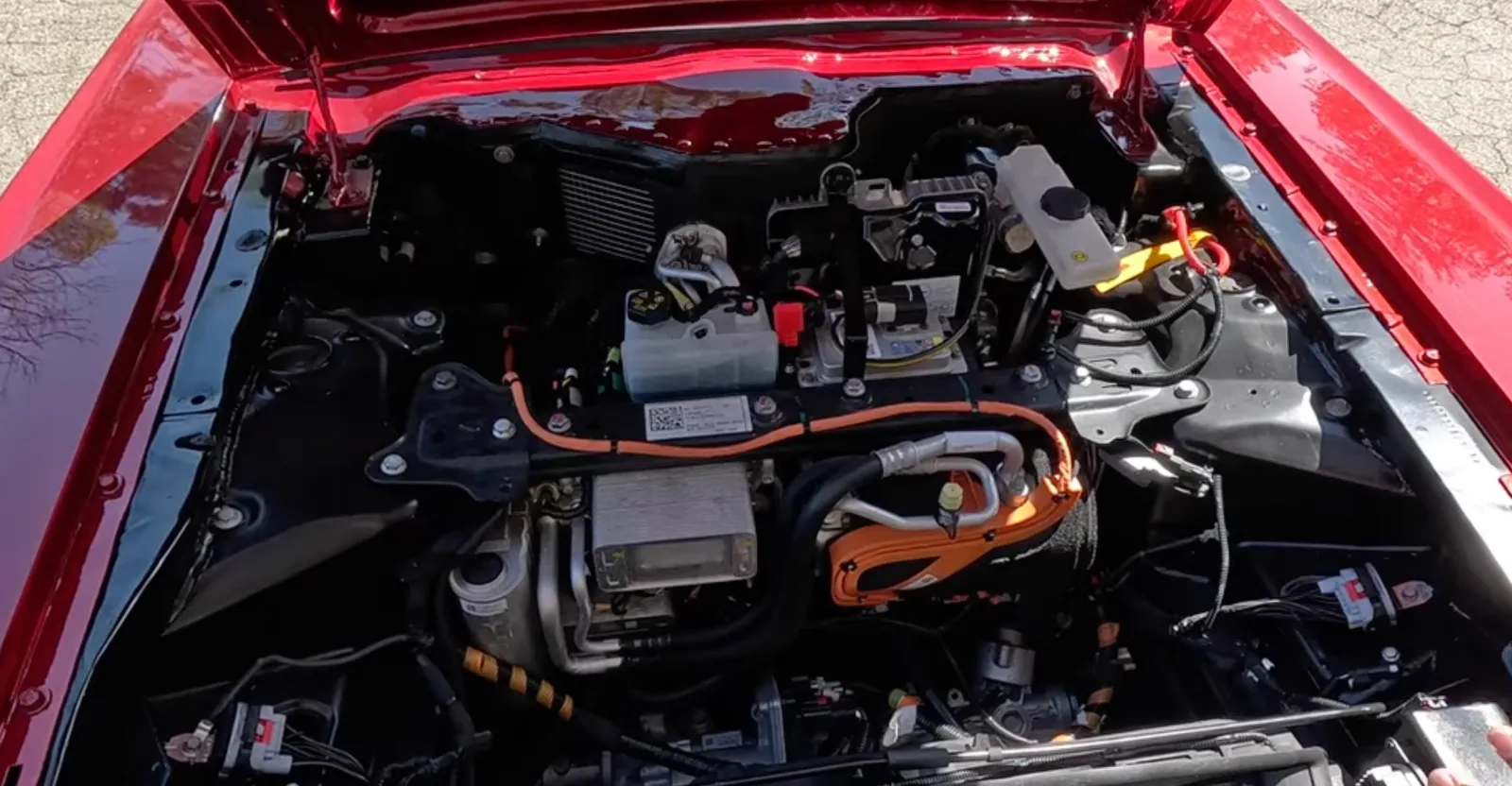
A 1966 Ford Mustang running Tesla’s Full Self-Driving system sounds like a joke until you realize it’s real. Built in a Sacramento shop for about $40,000 over two years, this car is not just an EV swap. It’s a working demonstration that Tesla’s most controversial technology can live outside a Tesla.
That’s where things change. Because major automakers have resisted adopting Tesla’s software for years. Meanwhile, a small independent shop just made it work inside a 60-year-old muscle car.
More Stories Like This
- Texas Gas Station Clash: Woman Caught Kicking Corvette Z06 Sparks Heated Fight Over Noise, Property Damage, and Driver Rights, Watch
- Inside the Missouri City Chop Shop Bust: Stolen Trucks, Multi-Agency Crackdown, and What It Means for Car Owners
- $350K Shocker: Modified “New” Acura NSX-T Sparks Collector War and Rewrites What Enthusiasts Pay For
From Facebook Find to Software-Driven Machine
The project started with a basic find. A 1966 Mustang picked up from Facebook Marketplace in 2022. What followed was not a simple restoration. It was a complete transformation led by Yaro Shcherbanyuk and his family at Calimotive Auto Recycling.
The shop specializes in Tesla and Rivian parts, which gave them a serious advantage. Instead of guessing their way through the build, they had access to the exact components needed.
The Mustang was stripped down completely. At first, the plan was to use a Model S drivetrain. That idea changed once the team realized the newer Model 3 battery could fit more cleanly within the Mustang’s structure.
Rebuilding the Mustang Around Tesla Hardware
The final build is essentially a Model 3 hiding under classic sheet metal.
Three sections of a 2024 Model 3 floor and seating system were integrated into the Mustang’s body. The battery case had to be shortened to fit, but the original dimensions of the car were maintained. That detail matters because it kept the car visually authentic while completely changing what was underneath.
Power now comes from a dual-motor setup delivering around 400 horsepower and 471 lb-ft of torque. That’s enough to push this vintage Mustang from zero to 60 mph in about 3.5 seconds.
Related Incidents
- Vandals Target Police Surveillance Cameras in Oakland — What This Means for Drivers and Street Crime Enforcement
- Rivian Cuts $2 Billion From Federal Loan But Expands Georgia Plant Output—What This Means for EV Production Power
That kind of performance is not just quick for a classic. It puts it in serious modern performance territory.
The Part That Changes Everything
The drivetrain is impressive, but it is not the headline.
The real story is the software.
The team retrofitted Tesla’s full camera array onto the Mustang, enabling Autopilot, Sentry Mode, and Full Self-Driving in supervised form. According to reports, the system works. That makes this likely the first non-Tesla vehicle to actually run Tesla’s FSD technology.
Inside, the transformation is just as complete. A 15-inch touchscreen from the Model 3 controls the car, handling everything from driving functions to over-the-air updates. Even the steering wheel has been replaced with a yoke pulled from a Cybertruck.
This is not a partial conversion. It is a full integration of Tesla’s ecosystem into a car that predates modern electronics entirely.
Efficiency That Doesn’t Make Sense on Paper
You would expect a 1960s body to struggle with efficiency compared to a modern EV. That assumption does not hold up here.
During testing, the car reportedly achieved 258 watt-hours per mile. That is roughly in line with a standard Model 3, despite the Mustang’s less aerodynamic shape.
At around 80 percent battery, it showed about 194 miles of range. Those are numbers that make this build more than a novelty. It is functional, usable, and surprisingly efficient.
That detail matters because it proves this is not just a showpiece. It behaves like a real EV.
Why Automakers Haven’t Done This
This is where the story gets uncomfortable for the industry.
Tesla has openly discussed licensing its Full Self-Driving technology to other automakers. So far, none have signed on. Some have outright rejected the idea, favoring alternative systems.
Yet here is a small independent shop running Tesla’s software on a non-Tesla platform with off-the-shelf components.
That creates a clear contradiction. If a private builder can make this work for under $40,000, the barrier is not purely technical.
And that’s where it gets complicated. The hesitation from automakers may not be about capability. It may be about control, branding, and long-term ownership of software systems.
My personal Robotaxi, 1966 Ford Mustang with Tesla guts. Probably the first non-Tesla running FSD. pic.twitter.com/Au0QH9wZOh
— Yaro (@Tutrifour) August 7, 2025
The Rise of Tesla-Powered Conversions
Beyond the software angle, this build highlights a growing trend. Tesla components have become the go-to solution for EV conversions.
Classic cars are increasingly being rebuilt with modern electric drivetrains, and Tesla parts are leading that movement. Companies already offer similar builds starting at around $75,000, making this project look relatively affordable.
The broader conversion market is expanding as well. Valued at $5.9 billion in 2024, it is expected to grow steadily over the next decade.
That growth reflects a shift in how enthusiasts think about older cars. Instead of restoring them to original condition, more builders are reimagining them with modern technology.
What Enthusiasts Should Be Paying Attention To
For drivers, this project cuts both ways.
On one side, it shows what is possible. A classic Mustang can be faster, cleaner, and more advanced than it ever was from the factory. It can even drive itself under certain conditions.
On the other side, it raises questions about identity. When a car loses its original drivetrain, its original feel, and even its control interface, what exactly is it anymore?
That tension is not going away. Some enthusiasts will see this as innovation. Others will see it as losing what made the car special in the first place.
The Bigger Fight Behind the Build
This Mustang is not just a one-off experiment. It is a glimpse into a larger conflict in the automotive world.
Software is becoming the most important part of modern vehicles. Automakers are struggling to build it, control it, and monetize it. Tesla has a working system that others have not adopted, even as independent builders prove it can be done.
That creates a strange situation. The technology exists. The demand is there. But the industry is not moving in the same direction.
You Should Read This Next
NYC ‘Pit Crew’ Theft Ring Busted After $1.2M Parts Heist Leaves 250 Drivers Stranded
Missile Debris Slams Into Tesla Model Y Roof in Israel — What Happened Next Is Turning Heads
A Classic Car That Exposes a Modern Problem
This 1966 Mustang should not exist in its current form, at least not according to how the industry operates. Yet it does, and it works.
That forces a bigger question.
If a small shop can integrate full self-driving tech into a classic car for a fraction of what major automakers spend on development, what is really holding the industry back?
Continue Reading: Consumer Reports Names the Best Cars Built in the USA — And the Results Aren’t What You’d Expect
 Eve Nowell
  John Lloyd