 By Shawn Henry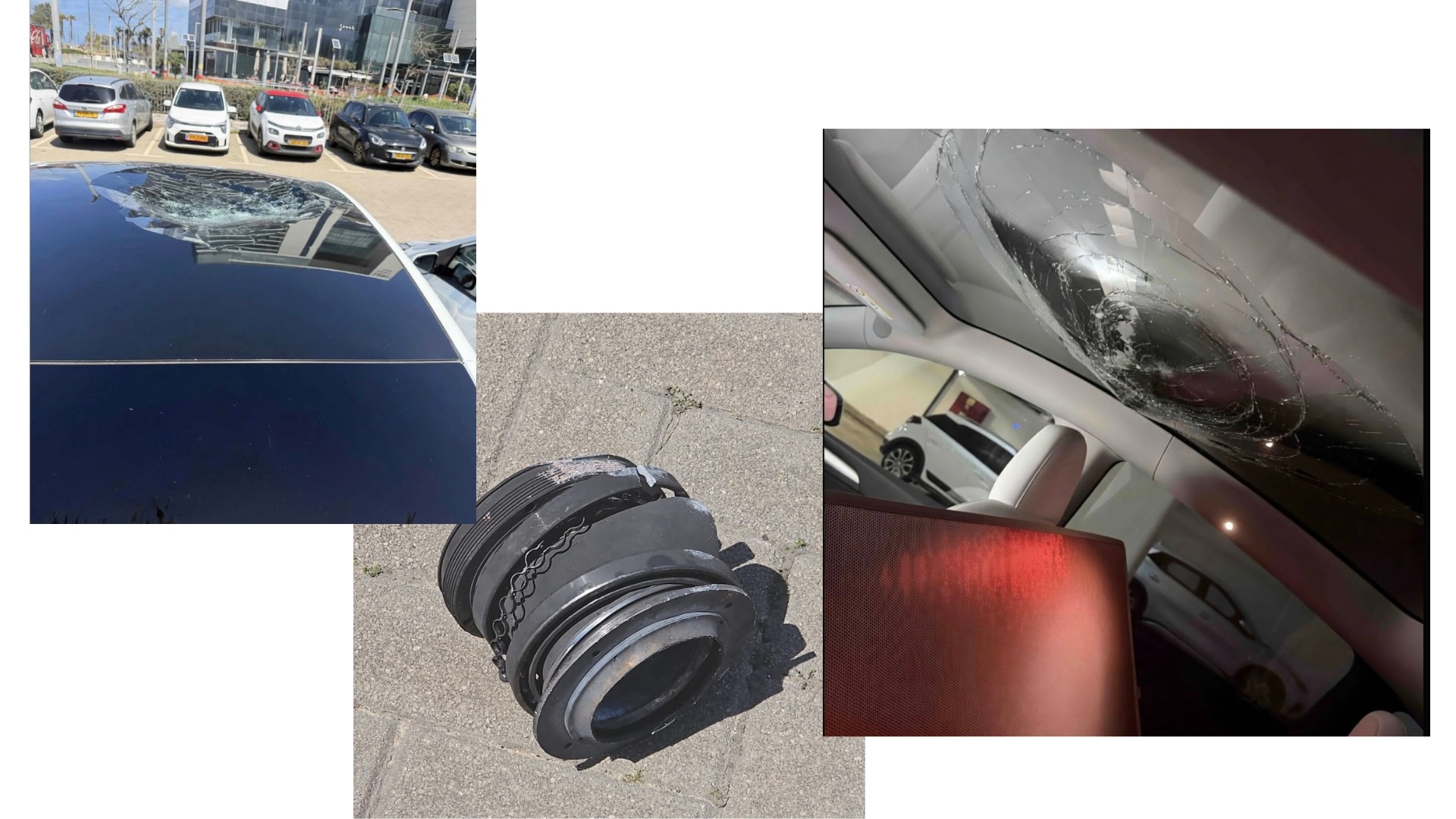
A piece of a ballistic missile falling out of the sky is about as extreme as it gets. Yet in Netanya, Israel, that exact scenario played out, and the result is grabbing attention far beyond a single damaged car.
A heavy metal fragment from an intercepted Iranian missile came crashing down onto a parked 2024 Tesla Model Y. The impact was direct, violent, and could have easily turned catastrophic. Instead, the vehicle’s massive glass roof absorbed the hit in a way that is now fueling a broader conversation about real-world automotive safety.
More Stories Like This
- 20K Vehicle Recall: Jeep Wagoneer, Dodge Charger EV
- The Classic Car Mistake That Can Cost Owners Thousands Overnight
- GWM Targets Ferrari With V8 Supercar as China’s Trend Breaker Doubles Down on Big Engines
What Happened in Netanya
The incident took place in Netanya, a coastal city north of Tel Aviv that has seen repeated missile threats during Iran’s ongoing campaign. Interception systems are designed to neutralize incoming threats, but they often leave behind falling debris. That’s where things get dangerous on the ground.
In this case, one of those fragments came down hard on a parked Tesla Model Y owned by Lara Shusterman. The chunk of metal struck the panoramic glass roof with enough force to leave a deep crater. This was not a minor impact. It was a direct hit from a falling object tied to a military-grade event.
What matters is what didn’t happen next.
The glass did not explode. It did not shatter into sharp fragments. It did not collapse into the cabin. Instead, it absorbed the force, contained the damage, and forced the debris to fall away from the vehicle.
That detail matters.
The Moment That Could Have Gone Wrong
A traditional glass panel under that kind of stress could have turned into a hazard instantly. Shattered glass raining into the cabin is not just damage, it is a serious injury risk. That risk becomes even more severe if occupants are inside.
Here, the structure held.
The impact left visible damage, but the integrity of the roof remained intact. The debris did not penetrate into the interior space. That single outcome likely prevented what could have been a far more serious situation.
Shusterman later shared the aftermath online, pointing directly to the vehicle’s construction as the reason the incident didn’t escalate.
Why the Roof Didn’t Fail
Tesla’s panoramic roof design is not just about aesthetics. It uses laminated glass layers engineered to absorb impacts while maintaining structure. This is the same basic principle used in windshields, but scaled up significantly for a large roof panel.
Related Incidents
- Brand-New Ram 1500 Triggers Airbags on the Highway—Now Owner Is Stuck With a $20K Shock
- GM’s EV Truck Future Suddenly Looks Uncertain as Reports Clash With Company Denials
The roof is also built with strength in mind. It is designed to support more than four times the weight of the vehicle itself. That kind of structural capacity is typically discussed in rollover scenarios, but this incident shows it has implications beyond crash testing.
Here’s where the story turns.
This wasn’t a lab test. This wasn’t a controlled demonstration. This was a real-world strike involving debris from a ballistic missile interception. That’s about as unpredictable as it gets, and the material held up.
The Bigger Safety Conversation
For drivers and enthusiasts, this raises a question that goes beyond Tesla. How do modern vehicles handle extreme, unexpected impacts?
Glass roofs have often been a point of debate. Some drivers question their durability. Others worry about heat, glare, or long-term wear. Incidents like this shift that conversation in a different direction.
This was not a rock kicked up on the highway. This was a heavy object falling from the sky with significant force. The fact that the roof absorbed the hit without catastrophic failure challenges some of the assumptions people have about large glass panels in vehicles.
That doesn’t mean every glass roof is built the same. It doesn’t mean every impact would end the same way. But it does highlight what engineered materials can do when they are pushed to the limit.
Real-World Stakes in an Unpredictable Environment
Netanya has been one of the more frequently targeted areas during recent missile activity. That means incidents like this are not isolated in terms of risk exposure. Falling debris is an ongoing concern for civilians in the area.
You Should Read This Next
Volkswagen Walks Away From Bugatti After 28 Years, Leaving the Hypercar Icon Facing an Uncertain Future
Toyota’s $200K GR GT Supercar Might Reject Buyers—And That’s Exactly the Point
From a driver’s perspective, that adds a layer of unpredictability that most markets never face. You can control how you drive. You can maintain your car. You cannot control what falls out of the sky.
That’s where vehicle design becomes more than just comfort or performance. It becomes about resilience in situations no one plans for.
Who Benefits From This Outcome
Tesla, whether intentionally or not, just had its engineering tested in one of the harshest ways possible. And it passed that test in a way that is now being shared widely.
For the owner, the outcome speaks for itself. A potentially dangerous impact was contained. The vehicle took the hit instead of transferring that risk into the cabin.
For other drivers, it raises awareness. Not just about Tesla, but about how materials and design choices can matter when things go wrong fast.
What This Means Moving Forward
This incident is not about marketing claims or controlled demonstrations. It is about what happened when something went very wrong in the real world.
A missile fragment fell out of the sky and hit a parked car. That alone is a headline. The fact that the car absorbed it without catastrophic failure is what’s driving the conversation now.
It leaves a bigger question hanging in the air.
If vehicles are increasingly expected to handle unpredictable environments, from extreme weather to random impacts, how much emphasis should be placed on structural resilience in everyday design?
Because in this case, that design decision made all the difference.
Continue Reading: $3 Million Lawsuit Hits Delaware Dealership Over Alleged Double Financing Scheme
Source