 By John Lloyd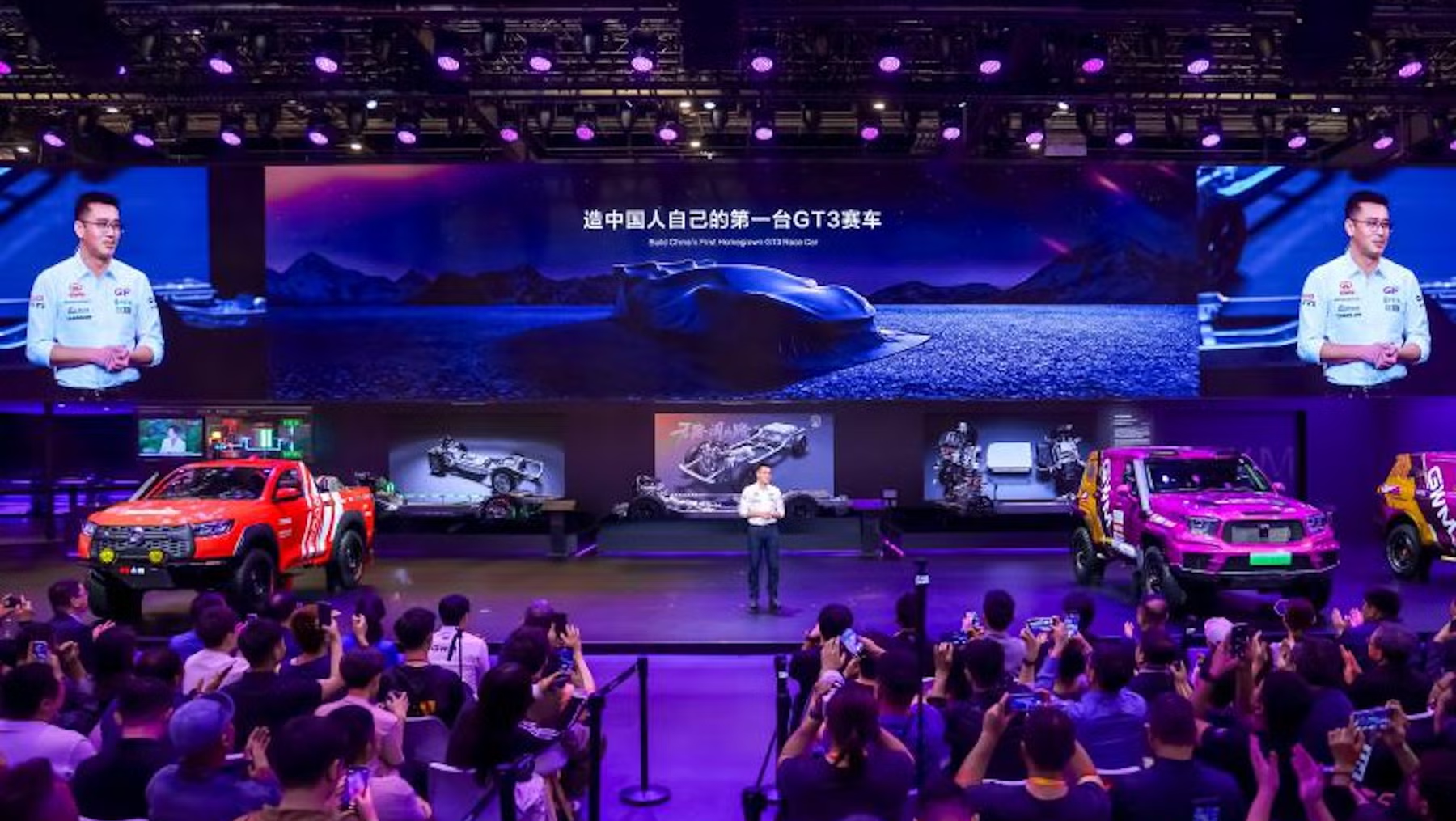
Great Wall Motor just took a swing at the establishment, and it is not a small one. At a time when the industry is running hard toward downsizing and electrification, the Chinese automaker rolled into the 2026 Beijing International Auto Show talking about a V8-powered supercar aimed straight at Ferrari. That is not subtle. It is not cautious. And it is absolutely intentional.
This is where the story turns.
More Stories Like This
- GM’s EV Truck Future Suddenly Looks Uncertain as Reports Clash With Company Denials
- Brand-New Ram 1500 Triggers Airbags on the Highway—Now Owner Is Stuck With a $20K Shock
- Toyota’s $200K GR GT Supercar Might Reject Buyers—And That’s Exactly the Point
GWM used the show to introduce its new global performance division, branded “GWM GF,” and confirmed that a flagship supercar is already in development. Chairman Jack Wei made it clear the target is not regional rivals or budget performance cars. The benchmark is Ferrari. The timeline points to a public reveal around 2027, which means development is already well underway behind the scenes.
That alone would be enough to raise eyebrows. But GWM did not stop there.
The company is also expanding its V8 strategy beyond a halo car. The same push for high-displacement power will extend into its premium off-road lineup, including a V8-powered version of the Tank 700. That SUV will not share the exact engine with the supercar, but the message is the same. GWM is betting that big engines still matter, even as regulations tighten and competitors pivot away.
Here’s the part that matters.
GWM knows this direction runs against the current inside China. Jack Wei openly acknowledged that a V8 program does not align with domestic trends. The local market has been moving aggressively toward electrification and smaller, more efficient powertrains. But GWM is not building this program for China alone. The focus is global, and the company believes there is still demand where it counts.
That decision did not happen in a vacuum. Chief Technology Officer Nicole Wu pointed directly to feedback from markets like Australia, where buyers continue to favor larger engines despite increasing emissions pressure. The sentiment is familiar to anyone paying attention. There is still a strong belief among enthusiasts and everyday drivers alike that nothing replaces displacement.
Related Incidents
- $3 Million Lawsuit Hits Delaware Dealership Over Alleged Double Financing Scheme
- Trump Could’ve Blocked It — Instead, Vehicle Surveillance Mandates Are Advancing
GWM is leaning into that idea, but it is not ignoring reality either.
The company expects its V8 engines to incorporate electrification to meet international emissions requirements. That means hybrid systems are likely part of the package moving forward. It is a balancing act between performance and compliance, and it is one every automaker is dealing with right now. The difference is that GWM is choosing to keep the big engine alive while others phase it out.
And that is where things get complicated.
Australia itself is starting to move away from high-displacement performance due to tightening legislation. Demand is still there, but the regulatory environment is shifting. GWM is essentially betting that it can thread the needle, delivering the performance buyers want while still meeting global CO2 standards. That is not easy, and plenty of established brands are struggling to do it cleanly.
To make this work, GWM has brought in serious engineering firepower. Former McLaren GT Chief Engineer Adam Thomson has joined the company to oversee platform and vehicle development. That is not a token hire. It is a clear signal that GWM understands the level of expertise required to build a credible supercar, especially one claiming Ferrari as its benchmark.
Thomson’s role focuses on new platforms and vehicle integration, which will be critical as GWM builds out its performance architecture from the ground up. This is not about tweaking an existing model. It is about creating something capable of competing on a global stage where expectations are brutally high.
That detail matters.
GWM is not just building a supercar for showroom appeal. The company plans to take this platform into motorsport, with ambitions to develop a GT3 race car alongside a road-going GT3 variant. That move adds another layer of credibility, but it also raises the stakes significantly. Motorsport is unforgiving, and any weaknesses get exposed fast.
It also changes how this project will be judged.
A supercar aimed at Ferrari invites scrutiny on every level, from performance to engineering to brand identity. Turning that same platform into a GT3 contender means GWM is stepping into a world where heritage and reputation carry weight. There is no hiding behind marketing claims once the car hits the track.
So why take the risk?
Because the payoff could be massive. If GWM pulls this off, it reshapes how the brand is perceived globally. Moving from mainstream SUVs and utes into high-performance territory is a leap, but it is one that can redefine a company’s ceiling. It signals ambition. It signals confidence. It tells the market that GWM is not content staying in its lane.
At the same time, failure would be just as visible.
You Should Read This Next
- Shell’s 10-Minute Charging EV Isn’t Just a Concept—It’s a Warning Shot to the Entire Industry
- Volkswagen Walks Away From Bugatti After 28 Years, Leaving the Hypercar Icon Facing an Uncertain Future
Building a V8 supercar in today’s climate is already a bold move. Doing it while promising Ferrari-level benchmarking raises expectations to a point where anything less than excellence will be called out immediately. Add in the complexity of hybrid integration and global emissions compliance, and the margin for error gets even thinner.
Still, GWM is pushing forward.
The company is committing to V8, V6, diesel, and hybrid powertrains across its lineup, refusing to narrow its focus to a single path. That flexibility could become an advantage in markets where customer preferences vary widely. Or it could stretch resources in a way that makes execution harder.
Either way, the direction is clear.
GWM is not following the trend. It is challenging it. And by aiming directly at one of the most iconic names in performance, it has ensured that the entire industry is paying attention. The next step will determine whether this bold strategy becomes a breakthrough or a cautionary tale.
Continue Reading: Jeep Wrangler Gets Stuck, Then Ignites 20-Acre Wildfire in Florida Forest
 Shawn Henry