 By Eve Nowell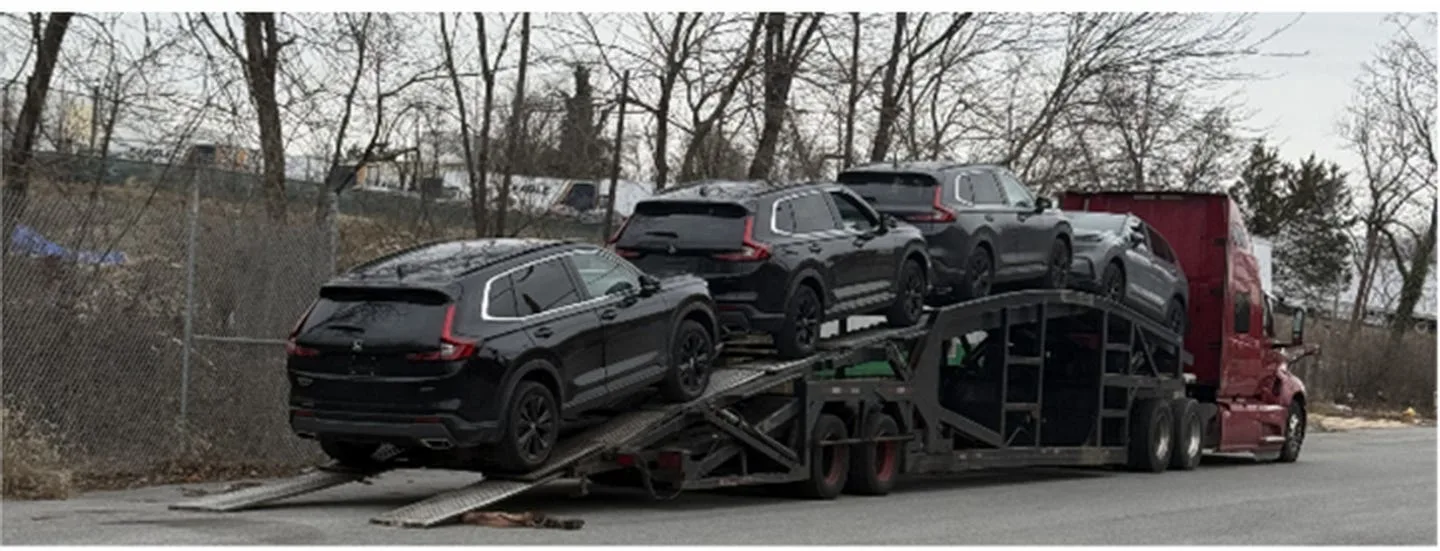
Car theft used to be messy. Loud. Risky. Now it’s quiet, fast, and in some cases, over before anyone even notices. Federal prosecutors say a newly exposed theft ring was pulling off steals in under a minute, grabbing everything from Hondas to Corvettes and sending them overseas like cargo.
And that’s where it starts to get serious.
More Stories Like This:
- Ford Quietly Drops Shelby Name on New Mustang and the Reason Might Come Down to Millions
- 100 MPH Police Chase Ends With Wrecked Lamborghini and One Arrest After Simple Tracking Device Gives It All Away
- Dodge Viper Pulled Down After 28 Years on a Pole — What They Found Inside Was Worse Than Expected
A 15-count federal indictment unsealed Wednesday lays out what authorities describe as a coordinated operation stretching across Washington, D.C., Maryland, and Pennsylvania. Six people are accused of being involved, though one remains unnamed for now. The group allegedly stole more than 130 vehicles, moving them through a system that looks more organized than most people would expect from car theft.
This wasn’t smash-and-grab. It was methodical.
According to investigators, the group didn’t rely on brute force or old tricks. Instead, they used electronic OBDII tools to reprogram vehicles. That allowed them to introduce new key fobs, essentially convincing the car that the thief was the rightful owner. No broken steering columns. No sparks from wires. Just access, ignition, and gone.
That’s where things change.
Related Incidents:
Because once you can do that, the entire timeline shrinks. Authorities say some vehicles were taken in less than 60 seconds. That’s barely enough time for anyone to react, let alone stop it. By the time an owner realizes something is wrong, the car is already moving.
The types of vehicles targeted weren’t random either. Late-model Hondas and Acuras were common picks, including CR-Vs, Civics, TLXs, and RDXs. Reliable, popular, and easy to move. But the group didn’t stop there. Prosecutors say higher-profile performance cars like Chevrolet Corvettes and Camaros were also part of the mix.
So it wasn’t just about volume. There was value in it too.
Once stolen, the vehicles didn’t go straight to ports. They were first taken to temporary holding spots. Investigators point to locations like a parking garage in Southeast Washington and another area near a Maryland Marriott hotel. These weren’t random drop-offs. They were part of the process.
Here’s the part that matters.
At these so-called cool-off locations, the cars were altered. License plates were swapped out. Vehicle identification numbers were obscured. GPS and Bluetooth systems were disabled. In other words, the vehicles were being scrubbed clean of anything that could help track them.
And that’s where it gets complicated.
Because once those systems are disabled and identifiers are changed, recovering a stolen vehicle becomes a lot harder. It’s not just missing anymore. It’s disguised, moved, and prepared for the next step.
That next step took things even further.
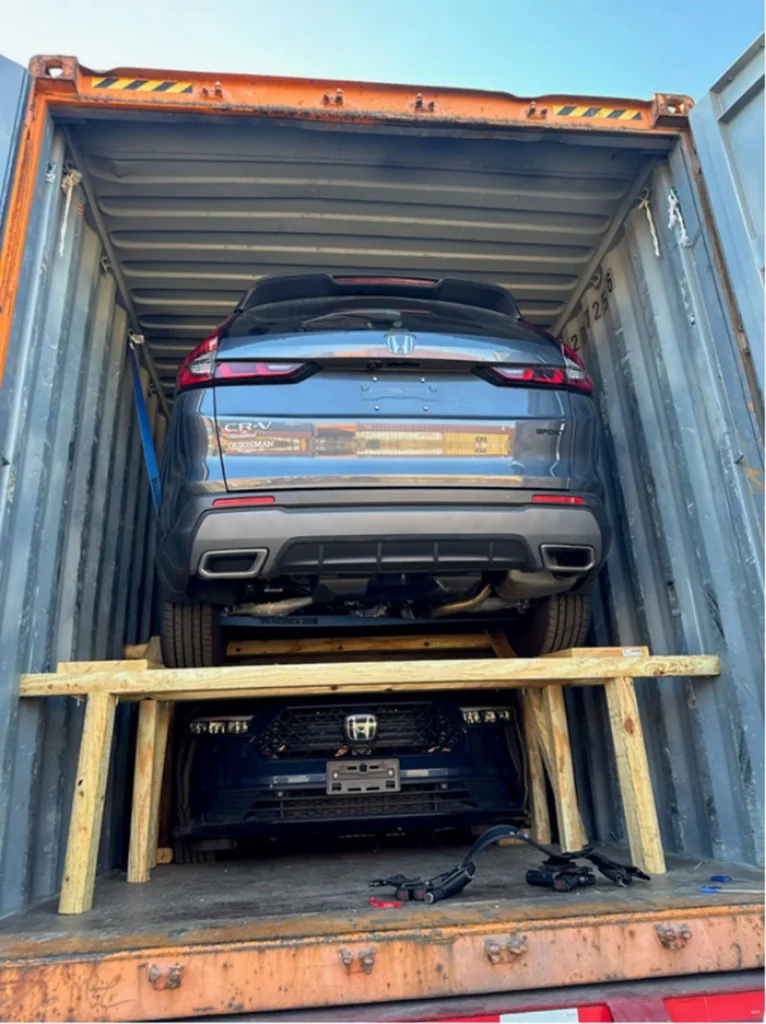
Authorities say the vehicles were transported to major ports, including Savannah, Georgia, and Baltimore, Maryland. From there, they were loaded into shipping containers. Not labeled as cars. Not flagged as anything suspicious. Instead, they were reportedly listed as furniture.
That detail alone tells you how deliberate this operation was.
Once inside those containers, the cars were shipped to Ghana. Investigators say that’s where they were sold, likely for significant profit. By that point, the connection back to the original theft was almost completely erased.
Federal agents have directly tied at least 20 vehicles, worth nearly $1 million, to the operation so far. But they don’t believe that’s the full picture. Not even close. Local law enforcement agencies think the same group could be responsible for more than 100 thefts in Washington, D.C., and another 30 in Prince George’s County.
That’s not a small operation. That’s a system.
The people named in the indictment include Jacob Hernandez, Dustin Wetzel, James Young, Khobe David, and Chance Clark. They’re facing charges tied to conspiracy involving stolen vehicles, along with additional counts for transporting those vehicles across state lines and theft-related offenses. A sixth individual is still unnamed, with details sealed for now.
And while the legal process is just getting started, the implications are already clear.
This kind of operation doesn’t happen by accident. It requires coordination, tools, and a clear understanding of how modern vehicles work. The fact that it allegedly ran across multiple states and reached international shipping routes says a lot about how car theft has evolved.
It’s not just local anymore.
And it’s not just about stealing a car for a quick ride or stripping it for parts. This is about supply chains, export routes, and turning stolen vehicles into global commodities.
That shift matters.
Because it means the problem isn’t as simple as locking your doors or parking in a well-lit area. When thieves can access a car electronically and move it across states in a matter of hours, the old assumptions don’t hold up the same way.
At the same time, it doesn’t mean drivers are powerless. But it does mean the stakes are higher than they used to be.
What stands out here isn’t just the number of vehicles or the money involved. It’s the efficiency. The speed. The fact that something as complex as stealing and exporting a car can be reduced to a process that runs this smoothly.
And that’s the hard truth.
Car theft didn’t just get faster. It got smarter.
 Shawn Henry
  Elizabeth Puckett