 By John Lloyd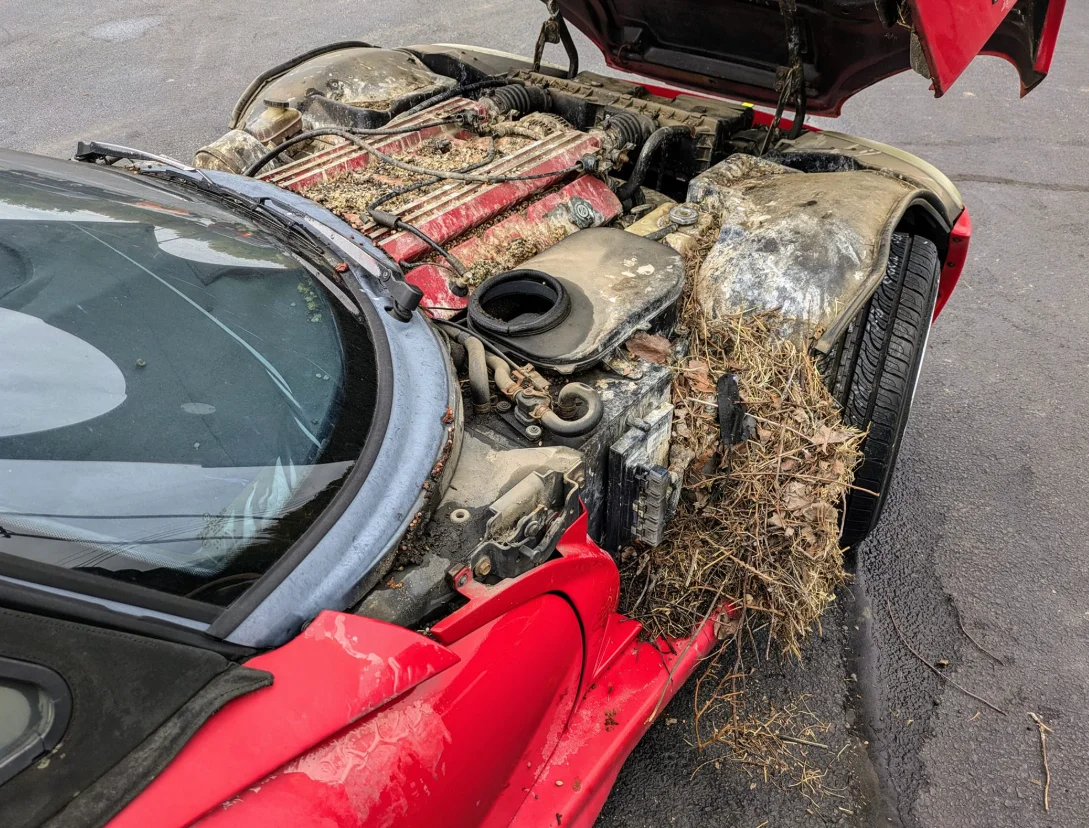
For nearly three decades, it just sat there without anyone really questioning it. Thirty feet in the air, bolted to a pole outside a Kentucky dealership, a bright red Dodge Viper became part of the background. People drove past it every day, and over time, most stopped noticing it altogether. It was just there, like a sign that never came down. Then someone finally decided to bring it back to the ground. What seemed like a simple move quickly turned into something far more revealing. Because once the car came down, it became clear that time hadn’t treated it the way people assumed. And what they found inside made things even worse.
Back in 1996, Audubon Chrysler made a decision that sounded clever and straightforward at the time. Instead of parking a new Dodge Viper RT/10 on the lot like everything else, they lifted it into the air and mounted it high above the dealership. The idea was simple visibility, and in the beginning, it absolutely worked. The car drew attention immediately and became something people talked about. What no one expected was how long it would stay there. The Viper didn’t come down after a season or even a few years—it stayed in place for decades. Aside from a brief removal in 2009 for light refurbishment, it remained exposed to the elements without real protection. Over time, that kind of exposure quietly started to change everything.
More Stories Like This
- Ford Quietly Drops Shelby Name on New Mustang and the Reason Might Come Down to Millions
- Canada Just Drew a Hard Line on Gas Cars and the Auto Industry Is Running Out of Time
- Porsche Pulls Out of Bugatti and Rimac After 93% Profit Collapse
On paper, the car sounded like a collector’s dream, at least at first glance. It had just 12 miles on the odometer, meaning it had barely been driven at all since new. For years, people even questioned whether it was real or just some kind of display shell meant to look like a Viper from a distance. The dealership eventually confirmed it was a complete, authentic car, not a replica. That detail is what made the situation more complicated once it came down. Low mileage usually signals preservation and value, especially for a car like this. But in this case, the odometer didn’t reflect what had actually happened to the vehicle over time. Because mileage tells one story, and exposure tells another.
When the Viper was finally taken down again in late 2024, expectations were already tempered. Most people assumed it would need cosmetic work after years of sitting outside. What they found went beyond simple wear and tear. The damage wasn’t just surface-level—it had worked its way deeper into the car. The exterior showed clear signs of deterioration, which wasn’t surprising given the conditions. But the bigger issue revealed itself once they looked closer. The inside of the car had been quietly breaking down in ways most people never considered while it was up there.
Related Incidents
- One of the Rarest Supercars Ever Built Just Showed Up on a California Highway and People Still Can’t Believe It
- Police Chase Storms Through Autocross Event, Sends Drivers Running and Turns Quiet Race Day Into Chaos
The interior had developed mold after years of exposure and trapped moisture. This wasn’t just minor aging or discoloration—it was the result of long-term neglect in an uncontrolled environment. At the same time, the engine bay had become something else entirely. It wasn’t just dirty or weathered. There was a full bird’s nest built inside it. At that point, the car stopped feeling like a preserved display piece and started looking more like something that had been left behind. It hadn’t just aged—it had been overtaken.
Leaving a car outside for a few years will cause problems, but this situation went far beyond that. The Viper wasn’t sitting in a driveway or even parked on a lot—it was elevated, exposed, and largely untouched for nearly 30 years. There was no consistent maintenance, no real protection, and no way to control what the environment was doing to it. Over time, that kind of neglect adds up in ways that don’t show immediately. From the ground, it still looked like a complete car, and that illusion held up for years. But once it came down and people got closer, the reality was impossible to ignore. What seemed preserved from a distance had quietly deteriorated in place.
Once the condition became clear, the plan changed quickly. This wasn’t going to be a simple cleaning or light repair situation anymore. The Viper was sent to Keen’s Auto Body and Paint for a more involved restoration effort. The goal shifted toward correcting as much damage as possible without completely erasing what the car had become. At the same time, there was a clear effort to preserve its identity. The dealership didn’t want to turn it into something unrecognizable or overly restored. Because by that point, the car’s history—including the damage—was part of what made it significant.
You Should Read This Next
- Feds Say High-Tech Car Theft Crew Stole Over 130 Vehicles and Shipped Them Overseas Before Anyone Knew What Happened
- GM Drops $40 Million on One Hire and It’s Not Who You Think
After the work was completed, the dealership made a decision that says a lot about how they view the car now. They didn’t sell it off or move it into storage. They didn’t try to cash in on it as a collector piece. Instead, they kept it tied to the place where it became known in the first place. They put it back on display. At this point, the Viper isn’t just a car sitting outside a dealership. It has become part of the dealership’s identity and local history. It represents something more than just the vehicle itself.
What makes this story stand out is the contradiction at the center of it. A car with almost no miles is usually seen as preserved and valuable in a traditional sense. In this case, that expectation didn’t hold up. The Viper didn’t wear out from being driven or used the way most cars do. It broke down from being ignored.
This also isn’t a typical hidden-car story. It wasn’t locked away in a barn or tucked into a forgotten garage. It was out in the open the entire time, visible to anyone who passed by. The change happened slowly enough that most people didn’t notice it happening at all. That’s what makes it different. Because sometimes the most unusual stories aren’t about what was hidden—they’re about what was right in front of everyone the whole time, just waiting for someone to finally take a closer look.
If you think this situation was unusual, the next one goes even further. 👉 Continue Reading: Georgia Wildfires Destroy Auto Shop, Wedding Chapel — Owner Says Losing 100 Cars ‘Hasn’t Sunk In’
Via Viper Club of America/Facebook
 Shawn Henry
  Eve Nowell