 By Eve Nowell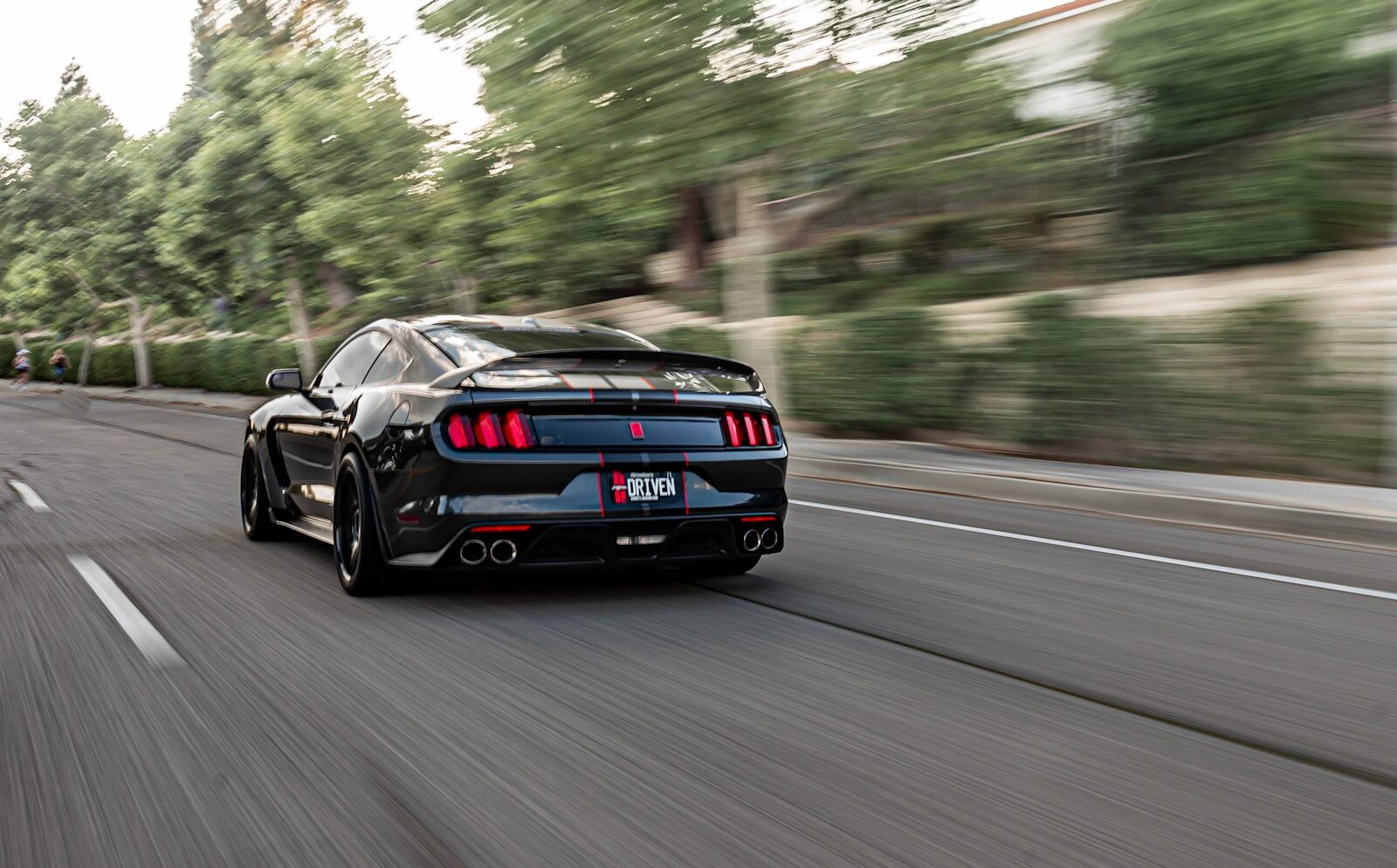
Ford didn’t make a big scene about it, but something important changed with the latest Mustang. The Shelby name, which has been tied to the car’s most aggressive versions for decades, is suddenly missing. In its place sits something new, something Ford clearly wants people to focus on instead. And the deeper you look, the less this feels like a simple branding decision.
Because this might not be about heritage at all. It might be about money.
More Stories Like This:
- GM Drops $40 Million on One Hire and It’s Not Who You Think
- Police Chase Storms Through Autocross Event, Sends Drivers Running and Turns Quiet Race Day Into Chaos
- GM’s AI Design Leap Turns Sketches Into Full Cars in Minutes
When the S650 Mustang showed up, it brought along the Dark Horse. That was already a shift in tone. Then came the supercharged Dark Horse SC, pushing nearly 800 horsepower and priced well into six figures. On paper, it checks every box you would expect from a modern Shelby GT500. Power, presence, performance, it’s all there.
But the name isn’t.
Ford’s official explanation leans toward identity. The company says it wants the Dark Horse SC to stand as a Ford Racing product. The idea is to tie it more closely to factory-backed motorsports programs, especially as Ford ramps up its involvement in areas like Formula One. From that angle, it makes sense. They’re building a direct connection between what happens on the track and what customers can buy.
Here’s the part that matters though. There’s another reason floating around, and it’s harder to ignore.
Reports suggest that every time Ford put the Shelby name on a Mustang, it had to pay for it. Not a small fee either. Around $800 per car, according to insider claims. That number hasn’t been officially confirmed, but even as an estimate, it adds up fast.
Think about it for a second. The previous generation Mustang produced over 24,000 Shelby GT350 and GT350R models combined. Multiply that by $800 and you’re already looking at nearly $20 million. Then factor in the GT500, which added more than 14,000 units over a few years. That’s another chunk pushing the total north of $30 million.
That’s not pocket change. That’s real money, even for a company the size of Ford.
So now the picture starts to shift. Dropping the Shelby name isn’t just about carving out a new identity. It’s about keeping more of that revenue in-house. When you’re building high-performance cars that already carry hefty development costs, saving millions on branding starts to look like a smart move.
And that’s where things change.
Because Ford didn’t just walk away from Shelby and leave a gap. It filled that space immediately with something designed to stand on its own. Dark Horse isn’t just a placeholder. It’s being positioned as a long-term performance sub-brand, something that can grow without relying on outside licensing.
At the same time, Shelby American isn’t disappearing. Not even close.
The company has already announced plans to get back into racing, specifically with a Mustang built for the Trans Am series. So while Ford is stepping back from the partnership on its factory models, Shelby is still pushing forward in its own lane. That creates a strange split. The name that once defined Ford’s most extreme Mustangs could start feeling more like an aftermarket label instead of a factory-backed one.
And that’s where it gets complicated.
Because the Shelby name still carries weight. Decades of history, iconic cars, a reputation that enthusiasts recognize instantly. Walking away from that isn’t something you do lightly. Even if the numbers make sense, there’s always a risk when you try to replace something that established.
Ford seems to be betting that it can build something new just as strong. And to be fair, this isn’t the first time the company has rotated through performance branding. Names like Boss, Mach 1, Bullitt, and Cobra have all come and gone over the years. Each one had its moment. Each one found its audience.
So maybe this is just another cycle.
We Think You’d Also Like:
- Flying Turkey Smashes Through Windshield on Highway, Strikes Driver With Kids in the Car
- Florida Woman Blames 125 MPH Supra Sprint on the Car, But a 0.23 BAC Changes Everything Fast
- Ford’s F-150 Recall Explodes to 1.4 Million Trucks After Sudden Downshift Risk Raises Crash Fears
There’s also the possibility that Shelby isn’t gone for good. People close to the situation suggest the door isn’t closed. The name could return at some point if the timing lines up or if demand pushes Ford in that direction. It wouldn’t be the first time a legendary badge disappeared and came back later.
But if it does return, it won’t be by accident. It’ll be because Ford decides the value of that name outweighs the cost of using it.
Right now, that equation seems to be leaning the other way.
Ford is clearly focused on controlling its own narrative. Building performance cars under its own banners. Keeping more profit tied directly to its own branding. It’s a shift that reflects where the company is heading, especially as it balances traditional performance with new technology and racing ambitions.
Still, there’s a trade-off here.
You can create new names, push new identities, and save money doing it. But you don’t instantly replace decades of recognition. That takes time, and it takes consistency. Dark Horse has the performance to back it up. The question is whether it can build the same kind of loyalty.
Because at the end of the day, enthusiasts don’t just buy horsepower numbers. They buy into stories, into legacy, into names that mean something.
Ford just walked away from one of the biggest names it had.
Whether that turns out to be a smart financial play or a mistake that costs them in other ways is still up in the air. But one thing is clear. This wasn’t just a branding tweak. It was a calculated move with real money behind it.
And now Ford has to prove it can carry that weight on its own.
 Shawn Henry