 By Shawn Henry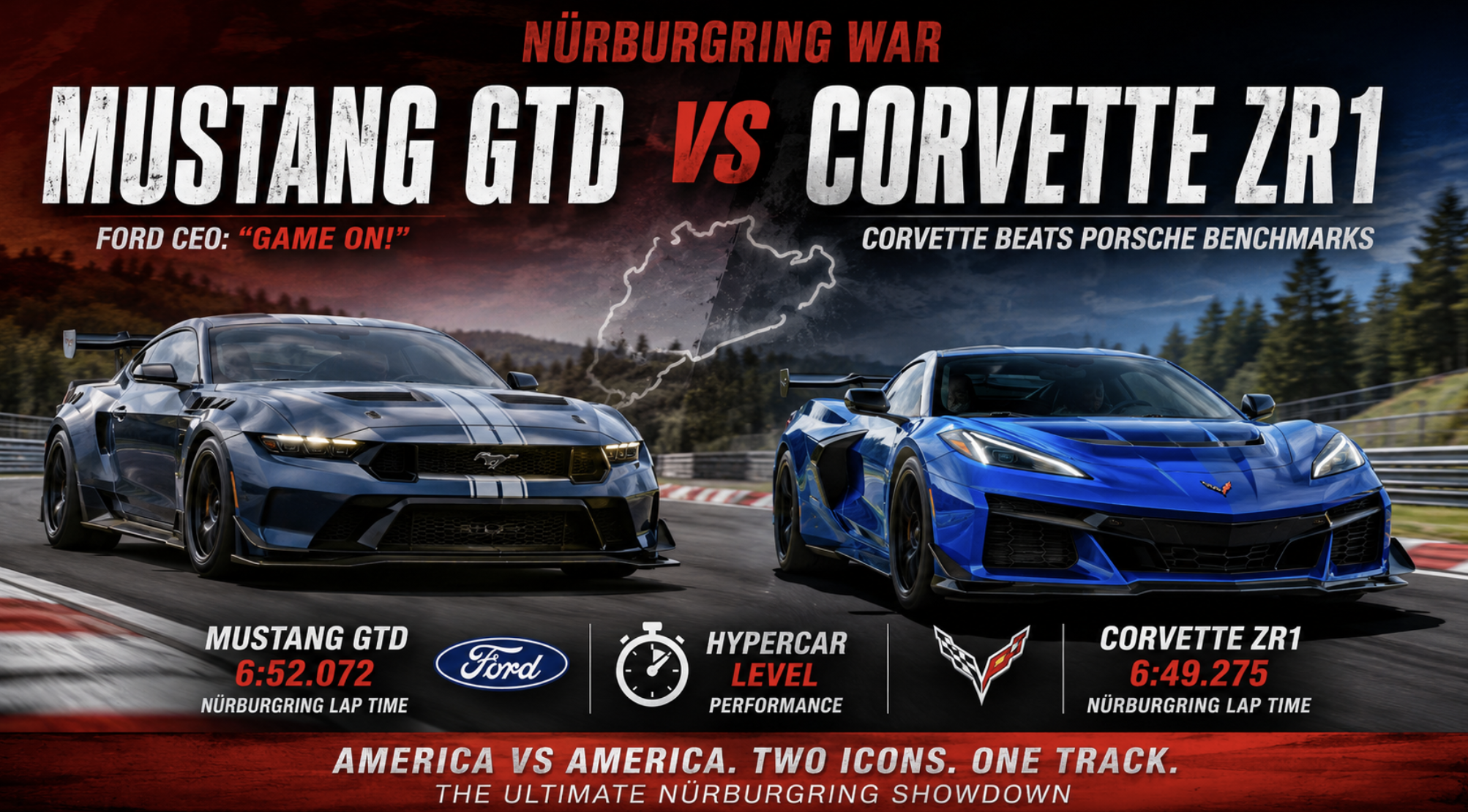
For years, American performance cars were treated like outsiders at the Nürburgring.
European brands dominated the conversation. Porsche set the benchmarks. Lamborghini chased lap records. Ferrari stayed in the supercar spotlight. American muscle cars were often dismissed as fast in a straight line but out of place on the world’s most demanding road course.
That narrative is officially collapsing.
More Stories Like This
- 140 MPH Chevy Malibu Chase Ends in Violent Highway Rollover After Driver Tries to Outrun Arkansas Trooper, Watch
- 14,000 SNAP Recipients Owned Luxury Cars Including Ferraris and Lamborghinis and Now the Backlash Is Exploding
- Revving is Illegal in California
What started as a battle for lap times has now turned into one of the biggest American-vs-American performance rivalries the Nürburgring has seen in years. Ford and Chevrolet are no longer chasing Europe quietly. They are going directly at each other in public, and enthusiasts are eating it up.
Because this stopped being just about lap times a while ago.
The Mustang GTD Changed Expectations Immediately
When Ford revealed the Mustang GTD, many enthusiasts assumed it would simply be another high-horsepower special edition wrapped in aggressive aero. Then the details started coming out.
Rear transaxle. Active aerodynamics. Motorsport-derived suspension. Carbon-heavy construction. Nürburgring development. Hypercar-level ambitions.
That changed the entire conversation.
Ford wasn’t trying to build a faster Mustang. It was trying to build something capable of embarrassing cars nobody expected an American muscle platform to compete against. Once Nürburgring performance became central to the GTD’s identity, expectations exploded overnight.
And Ford leaned directly into it.
Then Corvette Entered the Fight
At the same time, Chevrolet was reshaping what the Corvette represented globally.
The C8 platform already shattered decades of expectations when it moved to a mid-engine layout. Suddenly, Corvette was no longer fighting Camaros and Challengers for attention. It was entering conversations traditionally reserved for European exotics.
Then the ZR1 and ZR1X discussions pushed things even further.
As Nürburgring benchmarks started falling, Corvette enthusiasts realized something massive was happening. Chevrolet wasn’t just building a fast American sports car anymore. It was producing lap times capable of pressuring Porsche and other European heavyweights directly on their home turf.
That hit a nerve across the automotive world immediately.
The Rivalry Went Public Fast
What pushed this story beyond normal enthusiast coverage was how openly competitive it became.
Ford CEO Jim Farley publicly responded to the growing Nürburgring battle with a simple message. “Game on!”
Related Incidents
- Ohio Turnpike Speeding Crackdown Explodes as More Than 2,100 Drivers Get Hit in Work Zones
- Inside Detroit’s Airbag Theft Problem After Chevy Trailblazer Owner Gets Hit With $2,000 Repair Bill
- GM Pulls the Plug on Chevy’s Biggest Silverado Trucks as Sales Collapse and Factory Fallout Begins
- Minneapolis Car Theft Crisis Explodes Past 2,000 Stolen Vehicles as Crashes, Chases, and Court Fights Intensify
That line spread everywhere.
It transformed the rivalry from internet speculation into something much bigger because now the leadership of one of America’s largest automakers was openly acknowledging the fight. Enthusiasts immediately understood what that meant.
This was no longer quiet benchmarking behind closed doors.
This was America’s two biggest performance brands openly challenging each other in front of the entire automotive world.
Why People Became Obsessed With It
The Nürburgring itself matters, but the emotional layer matters more.
This rivalry exploded because it tapped directly into American muscle car tribalism. Mustang fans and Corvette fans have argued for generations already. The Nürburgring battle simply gave both sides a global stage and a modern scoreboard.
That detail matters.
Normally, American performance brands spend most of their energy fighting European perception. Here, they’re battling each other while simultaneously proving both cars belong in elite performance territory.
That combination created something internet audiences could not stop sharing.
Corvette Beating Porsche Changed the Entire Tone
For decades, Porsche represented the gold standard of precision performance. Corvette beating established Porsche benchmarks at the Nürburgring immediately changed how many enthusiasts viewed the platform.
Suddenly, the old stereotypes stopped working.
People could no longer dismiss Corvette as just brute-force horsepower or Mustang as merely traditional muscle. These cars were posting serious world-class numbers at one of the most technically brutal circuits on Earth.
And Ford clearly saw the opportunity.
Instead of avoiding the comparison, the Mustang GTD project leaned into it aggressively. Ford positioned the car almost like an American-built answer to European track-focused exotics, which made the rivalry feel even bigger.
This Story Escaped Traditional Car Culture
One reason the Nürburgring battle spread so aggressively online is because it stopped being just a “car guy” story.
It became about national pride.
You Should Read This Next
- Wild U-Haul Police Chase Ends With Truck Flipping Into Church Parking Lot, Watch
- 100-Car Houston Takeover Ended in a 100 MPH Police Chase and a Dodge Charger Dying at Popeyes
- Why This 2,000-Mile 1981 Chevy Caprice Just Shocked the Collector Car Market With a $35,000 Sale
American manufacturers were suddenly taking direct aim at the world’s most respected performance benchmarks instead of sitting outside the conversation. That angle pulled in casual audiences who normally would not care about lap times or suspension geometry.
People understood the larger message immediately.
Ford and Chevrolet were no longer asking for respect. They were trying to take it.
The Nürburgring Became a Battlefield
At this point, the Nürburgring is no longer just a testing ground for these companies. It has become a public battlefield where bragging rights, engineering credibility, and brand identity all collide.
That’s why every update spreads so quickly.
Every lap time. Every teaser. Every executive comment. Every benchmark comparison immediately turns into fuel for another round of Mustang-versus-Corvette warfare online.
And honestly, both brands benefit from it.
Because whether someone roots for Ford or Chevy, the bigger reality is impossible to ignore. American performance cars are no longer chasing the world from behind.
They’re forcing the rest of the world to respond.
Continue Reading: GM Hit With $12.75 Million Settlement After Drivers’ Data Was Secretly Collected Through OnStar
 Elizabeth Puckett