 By Shawn Henry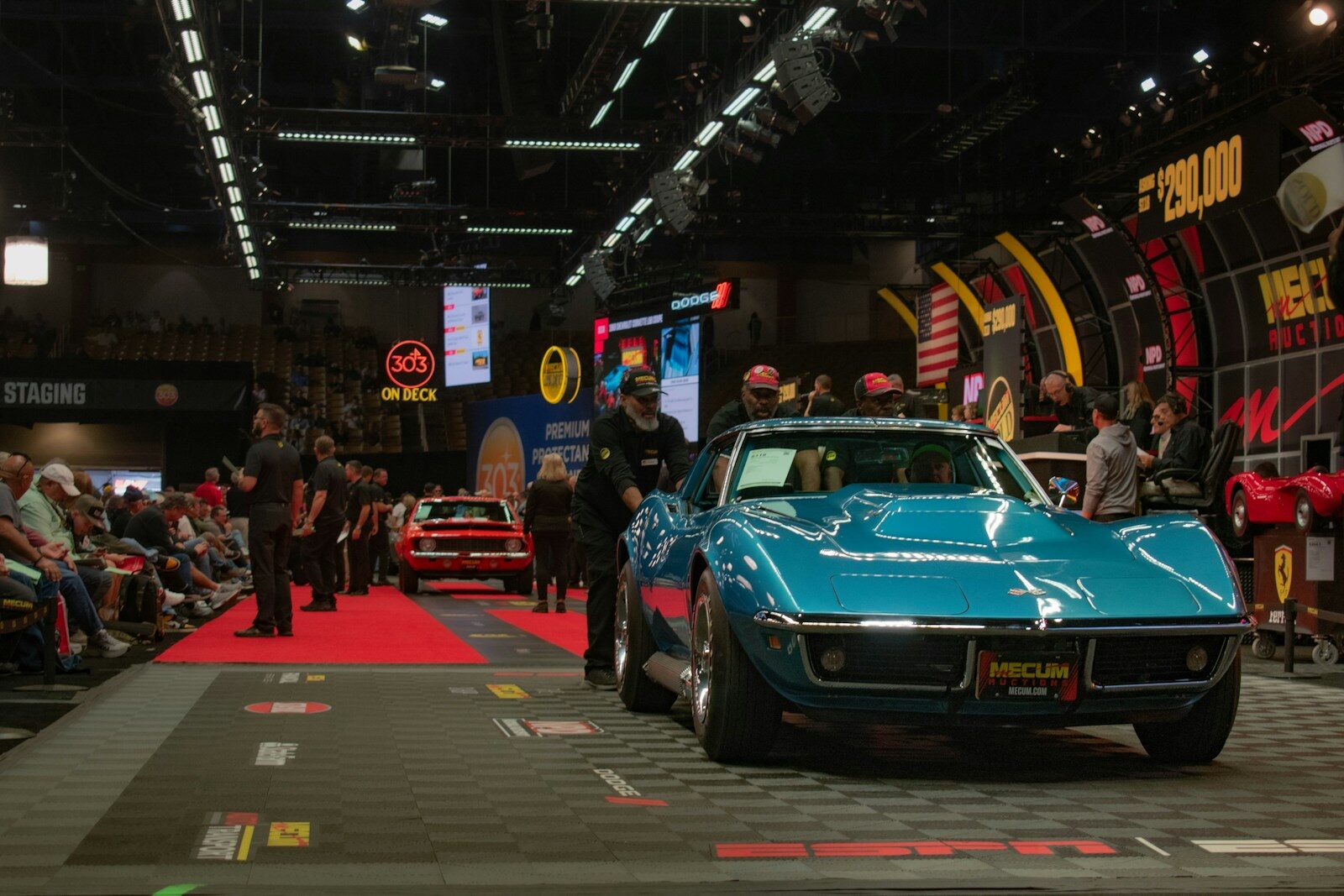
For a while, it felt like every old muscle car suddenly became an investment-grade asset.
Fox Body Mustangs exploded. Square-body trucks went crazy. Driver-quality Corvettes started carrying price tags that would have sounded insane just a few years earlier. During the peak of the 2021–2022 collector frenzy, almost anything with V8 power and nostalgia attached to it seemed capable of pulling huge money at auction.
That atmosphere is disappearing fast.
More Stories Like This
- Teen Shot at Massachusetts Car Meet as Burning Stolen Car Full of Bullet Holes Sends Crowd Running
- Hellcat Murder Case Takes Dramatic Turn After Suspect Rejects Plea Deal in Deadly AirTag Tracking Confrontation
Walk through Mecum Indy right now and the signs are everywhere. “Bid Goes On” tags are stacking up across the middle of the market as sellers continue chasing pandemic-era prices while buyers have clearly shifted into a different mindset.
And honestly, the correction was probably inevitable.
The Market Didn’t Collapse — It Split in Half
The important thing people need to understand is that the collector market is not crashing evenly.
Ultra-rare seven-figure cars are still operating in a completely different universe. Ferrari 250 GTOs, Enzos, top-tier Shelby cars, and blue-chip investment-grade machines continue pulling enormous money because wealthy collectors still view them as long-term trophy assets.
That side of the market barely slowed down.
A 1962 Ferrari 250 GTO reportedly brought $38.5 million earlier this year at Mecum Kissimmee. Multiple Ferrari Enzos crossed into eight-figure territory as well. Those cars live in rarefied air where economic pressure simply works differently.
But the middle of the market? That’s where things are getting ugly.
Bread-and-Butter Cars Are Sitting
The real weakness is happening between roughly $30,000 and $150,000, which happens to be where most actual enthusiasts shop and sell.
That’s the segment flooding Mecum with unsold inventory.
Auction sell-through rates have reportedly dropped noticeably compared to recent years, and anyone watching Mecum Indy can feel the shift immediately. Cars that would have sparked bidding wars in 2022 are suddenly stalling under reserve while sellers stare at numbers they refuse to accept.
This is where the story turns.
Because buyers are no longer paying fantasy prices for average-condition cars just because the market was hot a few years ago.
Condition Suddenly Matters Again
One of the biggest changes happening right now is that condition and originality are becoming brutally important again.
During the peak frenzy, buyers overlooked flaws because people were terrified of missing out. Projects, driver-quality cars, mediocre restorations, and heavily modified builds all rode the same upward wave together.
That’s over now.
Related Incidents
- Classic Car Buyers Lose Thousands After Scammers Hijack Real Auto Shops in Multi-State Fraud Scheme
- Stellantis’ Stunning Comeback: Hemi V8 Demand Helps Reverse $26 Billion Collapse as Massive Cost Cuts Begin
- The Real Story Behind a 1966 Mustang Running Tesla Full Self-Driving and Why It’s Exposing a Major Industry Standoff
Today, buyers want clean, turnkey cars that need nothing. Anything rough, incomplete, or needing restoration work is getting punished hard at auction. That shift is especially visible in the Mustang and Corvette world where average-condition cars are starting to separate dramatically from true top-tier examples.
And the price gap keeps widening.
Mustangs Are Feeling It
The Mustang market is showing clear signs of softness outside the rarest cars.
Fox Body Mustangs that exploded during the RAD-era nostalgia boom are no longer carrying automatic hype premiums unless they’re pristine low-mile examples. A 1983 Mustang GT reportedly failed to sell at Mecum Indy, something that would have been almost unthinkable during the peak of the frenzy.
Even Boss 429s are showing cracks.
Top concours-level cars still command serious money, but driver-quality examples have softened noticeably. One 1969 Boss 429 reportedly sold below current auction averages earlier this year, reinforcing the growing divide between elite-condition cars and everything else.
The sub-$75,000 Mustang market looks especially shaky right now.
Corvettes Aren’t Immune Either
Corvette owners are dealing with the same reality.
C3 Corvettes under roughly $50,000 have become increasingly sluggish unless they carry something unusually rare or desirable. Multiple C3s reportedly went unsold at Mecum Indy, reinforcing what many collectors have quietly suspected for months.
Even midyear C2 Corvettes are splitting hard by condition.
Museum-quality examples still bring massive attention and strong bidding. Cars needing restoration work or carrying average presentation are getting hit with far lower offers than sellers expected. Buyers are simply no longer willing to pay premium money for “good enough” cars.
That’s a huge psychological change from just a few years ago.
The Truck Boom Is Cooling Fast
Perhaps nowhere is the correction more obvious than in the truck market.
Square-body Chevy trucks and K5 Blazers became some of the hottest collector vehicles during the pandemic surge. Prices climbed aggressively as nostalgia and social media hype collided all at once.
Now many of those same trucks are struggling to sell.
Several square-body examples reportedly hit Mecum Indy and stalled under reserve, suggesting the market may finally be correcting after years of runaway enthusiasm. That doesn’t mean the trucks suddenly became undesirable. It simply means buyers no longer feel pressured to pay whatever sellers ask.
And financing costs are part of that equation too.
Interest Rates Changed the Entire Mood
Cheap money helped fuel a huge part of the collector boom.
When borrowing costs were low and speculative money flooded the market, people stretched harder for toys, investments, and nostalgia purchases. Once rates climbed and economic uncertainty increased, the psychology changed almost overnight.
Now buyers are calculating risk differently.
People willing to finance six figures for a driver-quality muscle car in 2022 are suddenly hesitating in 2026. Meanwhile, pandemic-era speculators who bought aggressively hoping for endless appreciation are starting to exit the market all at once.
That creates inventory pressure immediately.
The Ultra-Rare Cars Keep Defying Gravity
The strange part is how disconnected the very top of the market remains.
A rare Shelby GT350 reportedly crossed the million-dollar mark recently while Ferrari Enzos continue climbing aggressively in value. Those cars operate almost independently from the broader collector world because supply remains microscopic and wealthy buyers continue competing for the best examples.
That split matters.
It creates the illusion that the collector market remains healthy overall when in reality much of the mainstream enthusiast segment is cooling significantly underneath.
So Is the Market Dead?
Not even close.
What’s really happening is a reset back toward reality after one of the wildest collector surges the hobby has ever seen. The cars getting punished hardest are mostly average-condition examples that became overpriced during the frenzy years.
The truly special cars are still thriving.
And honestly, that’s probably healthier long term for the hobby than watching every ordinary driver-quality muscle car suddenly become treated like a retirement account.
Right now, buyers are simply becoming selective again.
Which means if you own a Mach 1, a midyear Corvette, a Chevelle, or a Fox Body Mustang, the message from Mecum Indy is becoming painfully clear.
Condition matters more than ever.
Continue Reading: The Real Story Behind the $70K Honda S2000 With 835 Miles and Why This Auction Is Shaking the Collector Car Market
 Elizabeth Puckett