 By Eve Nowell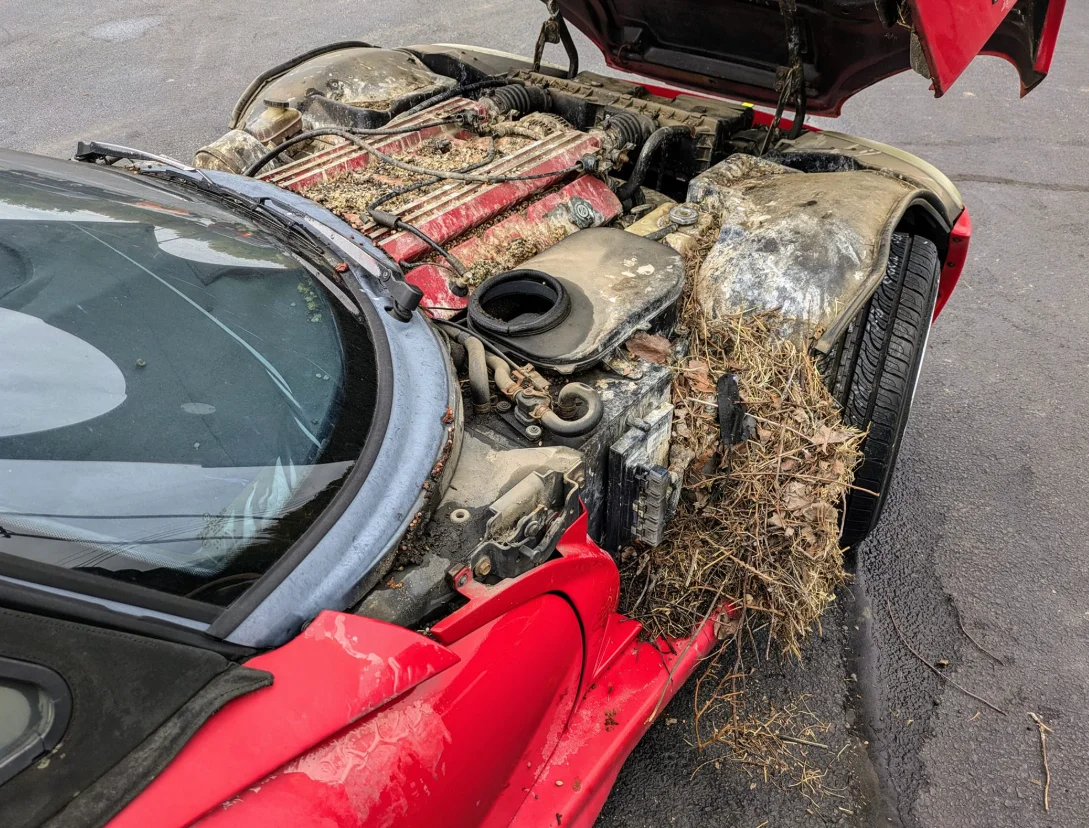
For almost three decades, a bright red Dodge Viper sat high above a Kentucky dealership like a permanent monument to the 1990s horsepower era. People passed it every day. Some barely noticed it anymore. Others wondered if the car was even real. Then the dealership finally brought it down, and what looked like a preserved low-mileage collector car turned into something far uglier once people got close enough to see the damage.
More Stories Like This
- Teen Shot at Massachusetts Car Meet as Burning Stolen Car Full of Bullet Holes Sends Crowd Running
- Hellcat Murder Case Takes Dramatic Turn After Suspect Rejects Plea Deal in Deadly AirTag Tracking Confrontation
That’s where this story changes completely.
The Viper in question was mounted roughly 30 feet in the air outside Audubon Chrysler back in 1996. Instead of leaving the RT/10 parked on the showroom floor or buried somewhere inside the building, the dealership used it as a giant attention-grabbing display piece. At the time, it made sense. The Dodge Viper was one of the wildest American performance cars on the road, and putting one in the sky guaranteed people would notice it.
The problem is nobody expected it to stay there for nearly 30 years.
Aside from a temporary removal in 2009 for light refurbishment work, the Viper remained exposed to Kentucky weather year after year with no meaningful protection from moisture, temperature swings, or environmental wear. Sun, rain, humidity, debris, and wildlife slowly worked against the car while it sat untouched above the dealership.
From the ground, though, the illusion held together surprisingly well.
The car still looked complete. It still looked iconic. And because it only had 12 miles on the odometer, many people assumed it had to be incredibly valuable. Some even questioned whether it was a real Viper at all or just a fiberglass shell bolted to the pole for appearances.
Eventually, the dealership confirmed the truth. It was a genuine Dodge Viper RT/10 the entire time.
That detail matters because ultra-low mileage cars are usually treated like automotive gold. In the collector world, untouched examples command serious money, especially when the car is something as recognizable as a first-generation Viper. Low mileage often signals preservation. It suggests careful ownership, controlled storage, and long-term value.
But this Viper exposed a reality many enthusiasts already understand deep down. Mileage alone means absolutely nothing if a car is slowly being destroyed in other ways.
When the dealership finally lowered the car again in late 2024, expectations were already cautious. Most people figured the paint would need help. Rubber seals were probably dry-rotted. Exterior trim was likely weathered after decades outdoors.
What they found was far worse.
The deterioration wasn’t limited to cosmetic damage. Years of exposure and trapped moisture had quietly attacked the inside of the car. The interior developed mold from sitting in an uncontrolled environment for decades. This wasn’t simple fading or cracked leather from age. The cabin had become contaminated after years of moisture buildup inside a sealed car that rarely received proper attention.
Then came the engine bay.
Instead of a clean preserved V10 sitting untouched like a museum piece, workers discovered a full bird’s nest built inside the engine compartment. At that point, the Viper stopped looking like a collector car frozen in time. It looked abandoned.
And that’s what makes this story so strange compared to other forgotten performance car discoveries.
Usually, stories like this involve dusty barns, hidden warehouses, or locked garages where cars disappear for decades. This Viper wasn’t hidden at all. It was sitting in public view the entire time. Thousands of people likely saw it over the years. Yet almost nobody realized what was happening to it because the decline happened slowly enough to go unnoticed from a distance.
This is where the mythology around low-mileage collector cars runs into reality.
Cars are machines. They need maintenance. They need controlled environments. They need movement and care. Leaving a vehicle untouched for decades, especially outdoors, can destroy it just as effectively as abuse or high mileage. Rubber breaks down. Moisture spreads. Metal corrodes. Interiors trap humidity. Wildlife moves in.
A 12-mile odometer reading does not stop any of that from happening.
Related Incidents
- Classic Car Buyers Lose Thousands After Scammers Hijack Real Auto Shops in Multi-State Fraud Scheme
- Stellantis’ Stunning Comeback: Hemi V8 Demand Helps Reverse $26 Billion Collapse as Massive Cost Cuts Begin
- The Real Story Behind a 1966 Mustang Running Tesla Full Self-Driving and Why It’s Exposing a Major Industry Standoff
Once the dealership understood how serious the damage had become, the plan changed fast. What could have been a light cleanup turned into a much larger restoration effort. The Viper was sent to Keen’s Auto Body and Paint to undergo more extensive work aimed at correcting years of deterioration without completely erasing the car’s unusual history.
That balancing act matters.
Over-restoring the car would strip away the story that made it famous in the first place. The dealership apparently understood that the damage itself had become part of the Viper’s identity. This was no longer just a low-mileage Dodge Viper. It had become a rolling piece of local automotive history tied directly to the dealership and the bizarre decision to leave it mounted in the air for nearly 30 years.
And that’s the part many collectors will probably debate.
Normally, preservation means protecting originality at all costs. But this Viper challenges that idea because its originality includes decades of neglect and environmental damage. The mold, the weathering, the nest inside the engine bay, all of it became part of the car’s story whether enthusiasts like it or not.
After restoration work was completed, the dealership made another decision that surprised people. Instead of selling the Viper or hiding it away, they kept it connected to the place where it became famous. The car went back on display.
That says a lot about how the dealership now views the Viper. It is no longer just inventory or a collectible asset. It has become a symbol tied directly to the dealership’s identity.
Still, the story leaves behind a bigger question about how the automotive world defines preservation in the first place.
For years, this Viper looked like the perfect survivor from a distance. Almost no miles. Original condition. Untouched history. But once somebody finally examined it closely, the reality was completely different. The car had not been preserved at all. It had simply been ignored in plain sight while time quietly dismantled it piece by piece.
And honestly, that may be the most unsettling part of the entire story.
Continue Reading: The Real Story Behind the $70K Honda S2000 With 835 Miles and Why This Auction Is Shaking the Collector Car Market
 Shawn Henry