 By Shawn Henry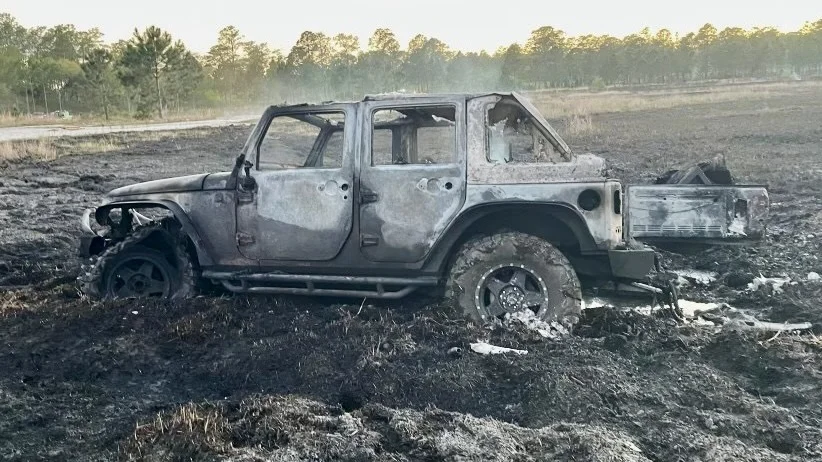
What started as a routine off-road outing ended with flames tearing through part of a Florida forest and a Jeep reduced to ash. That’s not exaggeration. A single mistake, just drifting off the trail, turned into a wildfire that scorched more than 20 acres in Ocala National Forest.
And here’s the part that matters. This wasn’t some extreme drought situation or lightning strike out of nowhere. It was a vehicle. A Jeep Wrangler. The kind built specifically for this kind of terrain.
More Stories Like This:
- Ford Quietly Drops Shelby Name on New Mustang and the Reason Might Come Down to Millions
- Dodge Viper Pulled Down After 28 Years on a Pole — What They Found Inside Was Worse Than Expected
- Canada Just Drew a Hard Line on Gas Cars and the Auto Industry Is Running Out of Time
According to officials, the Wrangler was being driven near Paisley Road when it left a designated trail and got stuck. That alone isn’t unusual in off-roading. It happens all the time. But what came next is where things change.
With the vehicle immobilized, its hot exhaust system sat close to dry grass underneath. That heat had nowhere to go. It transferred directly into the vegetation. Before long, the grass ignited. Once that happened, the fire didn’t wait around.
Despite recent rainfall, the forest floor wasn’t as safe as it looked. Fine fuels like grass had already dried out again, which made them dangerously easy to burn. That’s where it gets complicated, because a lot of drivers assume wet conditions mean low fire risk. In reality, it doesn’t take long for surface-level vegetation to dry out enough to ignite.
From there, the fire spread quickly through surrounding brush and grass. What started as a small ignition point turned into a wildfire covering roughly 20 and a half acres. That’s not a small patch. That’s a serious burn area, especially in a national forest.
Fire crews from the U.S. Forest Service and Lake County Fire Rescue responded and worked into the evening to stop the fire from moving further. By the next morning, they were still out there, tracking down hot spots and making sure it didn’t flare back up. They managed to contain it, but not before significant damage was done.
Related Incidents:
- Feds Say High-Tech Car Theft Crew Stole Over 130 Vehicles and Shipped Them Overseas Before Anyone Knew What Happened
- 100 MPH Police Chase Ends With Wrecked Lamborghini and One Arrest After Simple Tracking Device Gives It All Away
The driver walked away without injuries. That part could have been worse. But the Jeep itself didn’t survive. It was completely destroyed in the fire it unintentionally started.
And that raises a bigger issue that a lot of people don’t think about. Vehicles themselves can start wildfires. Not just modified rigs or abused machines. Even factory-built off-road vehicles can become ignition sources under the right conditions.
Exhaust systems and catalytic converters operate at extremely high temperatures. That’s normal. But when those components come into direct contact with dry grass or debris, things can go sideways fast. Add in a stuck vehicle situation where there’s no airflow or movement, and you’ve got sustained heat sitting in one place. That’s a recipe for ignition.
There’s also the issue of spinning tires. When drivers try to free a stuck vehicle, those tires can generate friction and kick up debris. If that debris gets lodged under the vehicle and touches hot metal, it can catch fire. It’s not rare. It’s just not talked about enough.
Off-road environments make all of this worse. Trails often cut through areas full of combustible material like leaves, brush, and grass. When drivers stay on designated paths, those risks are somewhat managed. The terrain is known. The hazards are more predictable.
Step off those trails, and it’s a different story.
In this case, officials said the driver moved into an area that looked stable but wasn’t. The ground gave way, the Jeep got stuck, and the undercarriage ended up sitting directly on dry grass. With no quick way out, the heat built up and eventually sparked the fire.
That decision to leave the trail is where everything started to unravel.
And it’s not just about damage anymore. Driving off designated trails in national forests isn’t just discouraged. It’s illegal. That means incidents like this don’t just end with a burned vehicle. There can be fines. There can be liability for the cost of putting the fire out. And those costs can climb fast when multiple agencies are involved.
That’s the part people tend to overlook. Recovery bills for wildfire suppression aren’t small. They can reach into the tens or hundreds of thousands depending on the situation. One wrong move off-trail can turn into a financial disaster on top of everything else.
Zoom out a bit, and this isn’t just about one Jeep or one driver. It’s about how quickly things can escalate when conditions aren’t fully understood. Even experienced drivers can misjudge terrain. Even after rain, vegetation can dry out faster than expected. And once a fire starts in a remote area, it doesn’t take much for it to spread.
Off-roading is still about freedom and capability. That hasn’t changed. But it comes with responsibility, especially in environments like national forests where the stakes are higher.
You Should Read This Next…
- GM Drops $40 Million on One Hire and It’s Not Who You Think
- Georgia Wildfires Destroy Auto Shop, Wedding Chapel — Owner Says Losing 100 Cars ‘Hasn’t Sunk In’
The takeaway is pretty simple, even if it’s not what everyone wants to hear. Stay on designated trails. Pay attention to what’s under your vehicle, not just what’s in front of it. And understand that your rig isn’t just a machine. Under the wrong conditions, it can become a fire starter.
Because as this situation proved, it doesn’t take much. One stuck Jeep, one patch of dry grass, and suddenly you’re looking at 20 acres of burned forest.
Via U.S. Forest Service and WESH 2 News
 Eve Nowell