 By Eve Nowell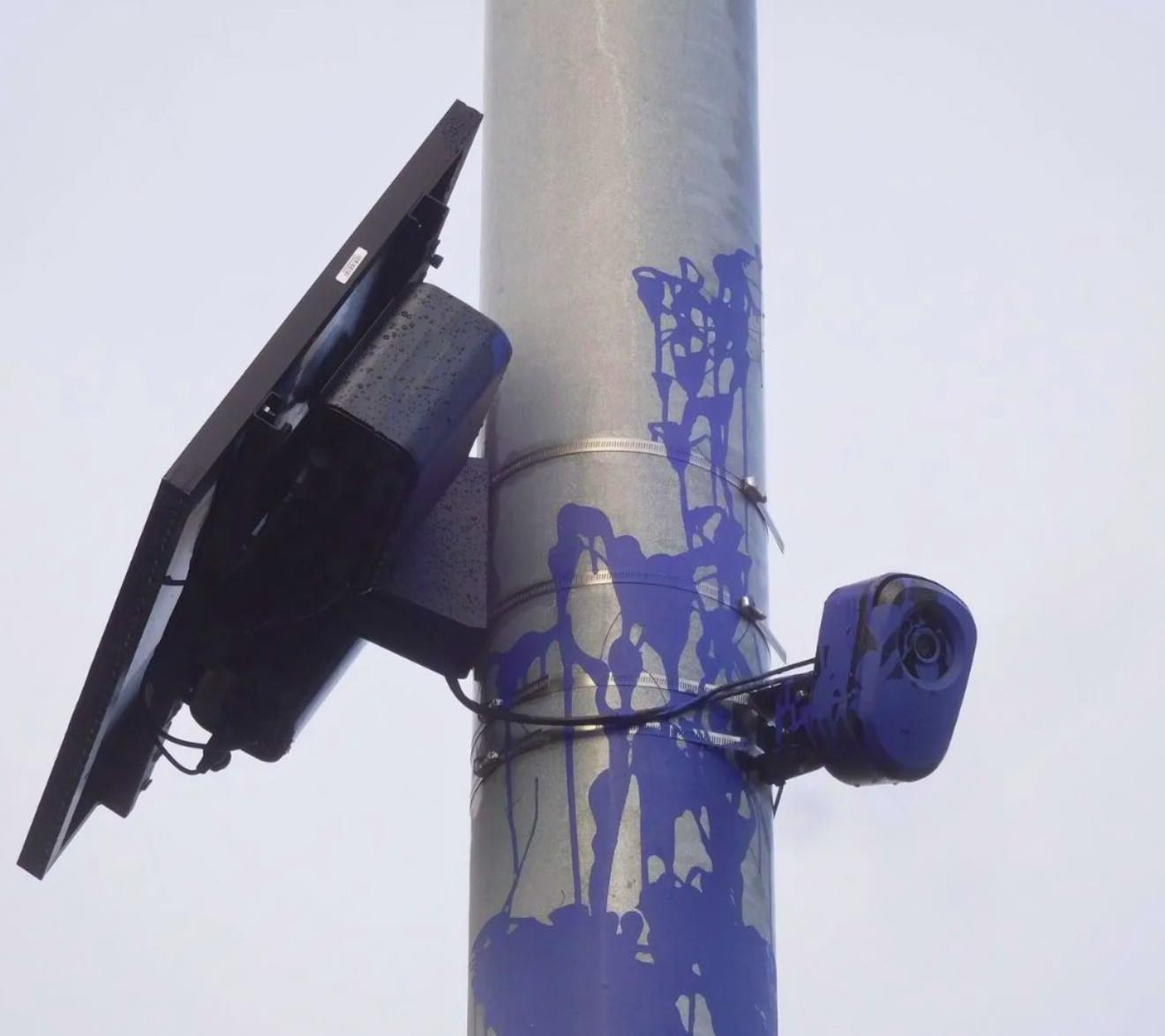
Someone is deliberately taking aim at the eyes watching Oakland’s streets, and they are not being subtle about it. Multiple police-linked surveillance cameras have been found splattered with paint, effectively blinded in broad daylight. That is not random vandalism. That is a direct hit on how the city tracks crime, and it is already raising bigger questions about who benefits when those cameras go dark.
Surveillance Cameras Hit Across Oakland
More Stories Like This
- 20K Vehicle Recall: Jeep Wagoneer, Dodge Charger EV
- The Classic Car Mistake That Can Cost Owners Thousands Overnight
- GWM Targets Ferrari With V8 Supercar as China’s Trend Breaker Doubles Down on Big Engines
The latest incidents involve Flock cameras, a system widely used by law enforcement to monitor traffic and track vehicles. These are not hidden devices. They are mounted in visible locations and play a key role in identifying cars linked to crimes.
One camera spotted on Fruitvale Avenue had already drawn attention after being covered in paint. But that was not an isolated case. Another camera at the intersection of West MacArthur Boulevard and Martin Luther King Jr. Way appears to have been hit in a similar way, coated with paint that renders it useless.
That detail matters. This is not a one-off act of vandalism. It is a pattern.
And it does not stop there.
Residents Are Starting to Notice
People living in Oakland are picking up on what is happening. Earlier this month, a local resident shared an image of another Flock camera covered in gray paint in a neighborhood group online. The exact location of that camera has not been confirmed, but the message is clear.
These attacks are spreading.
Related Incidents
- Brand-New Ram 1500 Triggers Airbags on the Highway—Now Owner Is Stuck With a $20K Shock
- GM’s EV Truck Future Suddenly Looks Uncertain as Reports Clash With Company Denials
There is no confirmed timeline for when the paint bombings happened, which only adds to the concern. If cameras are being disabled without immediate detection, that opens a gap in monitoring that could be exploited.
That is where things get complicated.
Police Acknowledge Damage, Investigation Underway
The Oakland Police Department has confirmed it is aware of the damage and is investigating. That response signals this is being taken seriously, but it also highlights the challenge. These cameras are supposed to provide visibility into crime. When they are taken offline, even temporarily, that visibility disappears.
There are no details yet on who is responsible or how widespread the damage is across the city. But the fact that multiple cameras in different areas show similar paint damage suggests coordination, or at the very least, imitation.
Here’s the part that matters.
When surveillance infrastructure becomes a target, it shifts the balance between enforcement and those trying to avoid it.
Why Drivers Should Pay Attention
Flock cameras are not just about tracking stolen cars or suspects fleeing a scene. They are deeply tied to how modern policing monitors vehicle movement. For drivers, that means these systems can play a role in recovering stolen vehicles or identifying cars involved in hit-and-run incidents.
When those cameras are disabled, even briefly, it can create blind spots.
That impacts more than law enforcement. It affects everyday drivers who rely on some level of accountability on the road. If a car is stolen or used in a crime, these cameras can be part of the chain that leads to recovery or identification.
Take that away, and the process becomes harder.
A Direct Challenge to Surveillance Systems
This is not accidental damage. Paint splattered directly onto camera lenses is a deliberate attempt to block their function. It is low-tech, but effective.
And that raises a bigger issue. If disabling a camera is as simple as throwing paint, it exposes a vulnerability in the system itself. These are fixed, visible targets. Anyone who knows where they are can potentially take them out with minimal effort.
That is where the story turns.
You Should Read This Next
Volkswagen Walks Away From Bugatti After 28 Years, Leaving the Hypercar Icon Facing an Uncertain Future
Toyota’s $200K GR GT Supercar Might Reject Buyers—And That’s Exactly the Point
Technology is only as strong as its weakest point, and in this case, the weak point is physical access.
The Broader Impact on Street-Level Crime Monitoring
When multiple cameras go offline, even in different neighborhoods, the effect can add up. Surveillance systems rely on coverage. Break that coverage, and tracking becomes fragmented.
For a city already dealing with crime challenges, that fragmentation can make enforcement more difficult. It can also embolden those who see an opportunity to operate without being recorded.
At the same time, it puts pressure on the agencies responsible for maintaining and protecting this infrastructure. If cameras can be disabled faster than they can be repaired, the system starts to lose its effectiveness.
Who Benefits When Cameras Go Dark
That question is unavoidable.
Who gains from a city with fewer working surveillance cameras? It is not the average driver. It is not someone trying to recover a stolen vehicle or report a hit-and-run.
The advantage shifts toward anyone looking to avoid being identified.
That does not mean every incident is tied to organized activity, but the pattern suggests intent. Whether it is coordinated or not, the result is the same. Reduced visibility.
What This Situation Reveals
There is a gap between deploying technology and protecting it. Installing cameras is one step. Keeping them operational in the real world is another challenge entirely.
Oakland is now dealing with both.
These paint attacks may seem simple, but they expose a deeper issue about how fragile some enforcement tools can be when they are left exposed. If a key part of crime monitoring can be neutralized this easily, it forces a harder conversation about what comes next.
Because if the people trying to avoid detection can take out the cameras this quickly, the question is not just who did it.
It is how long before it happens again.
Continue Reading: $3 Million Lawsuit Hits Delaware Dealership Over Alleged Double Financing Scheme
 Shawn Henry