 By John Lloyd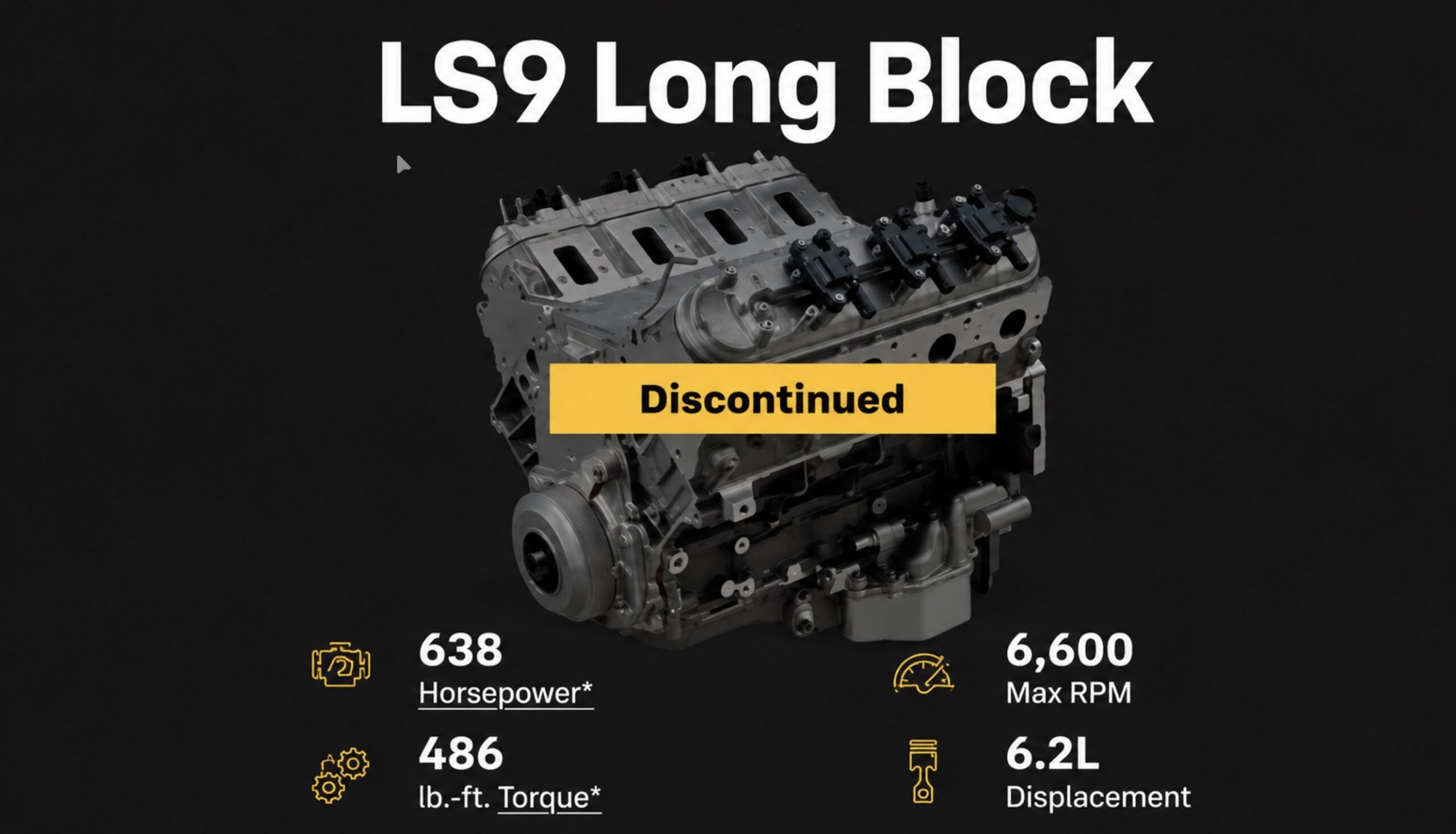
Some engines become famous. Others become untouchable. The LS9 V8 sitting under the hood of the C6 Corvette ZR1 managed to do both, and now Chevrolet has officially killed it off.
More Stories Like This
- Teen Shot at Massachusetts Car Meet as Burning Stolen Car Full of Bullet Holes Sends Crowd Running
- Hellcat Murder Case Takes Dramatic Turn After Suspect Rejects Plea Deal in Deadly AirTag Tracking Confrontation
Chevrolet Performance has discontinued the LS9 Long Block, closing the chapter on one of the most respected American performance engines of the modern era. For Corvette enthusiasts, this is not just another parts catalog update. This is the end of the engine that transformed the C6 ZR1 into a genuine supercar threat during a time when American performance still felt raw, unapologetic, and almost reckless in the best possible way.
That’s why this announcement lands harder than people outside the enthusiast world might expect.
The LS9 was never just a variation of GM’s small-block formula. It was the nuclear version. Chevrolet built it specifically to survive boost, abuse, heat, and punishment at levels most production V8s never come close to handling. Everything about the engine was engineered with forced induction in mind, from the forged internals to the reinforced structure underneath it all.
And the numbers still matter today.
The supercharged 6.2-liter V8 produced 638 horsepower at 6,500 rpm and 604 lb-ft of torque at just 3,800 rpm. Even by current standards, those figures remain serious. More importantly, the LS9 delivered that power with the kind of brutal linear pull enthusiasts still obsess over years later.
Now it is gone.
The Engine That Defined the C6 ZR1
The C6 Corvette ZR1 arrived during a different era of performance cars. Automakers were locked in a horsepower war, but many modern electronic layers that dominate current high-performance cars had not fully taken over yet. The ZR1 still felt mechanical, demanding, and occasionally intimidating.
The LS9 sat at the center of all of it.
Chevrolet engineered the engine to withstand extreme loads without losing composure. The cast-aluminum block used six-bolt main caps to keep everything stable under pressure. That detail matters because the LS9 was designed to live under serious stress for extended periods, not just produce flashy dyno numbers.
The cylinder heads were also special L92-style aluminum units designed to maximize airflow and combustion efficiency. Combined with the supercharged setup, the result was an engine that delivered violent acceleration while still revving cleanly to 6,600 rpm.
Here’s the part enthusiasts understand immediately.
The LS9 did not feel synthetic. It did not rely on artificial sound, complicated drive modes, or layers of electronic filtering to create excitement. It simply made massive power and delivered it with force.
Why This Engine Mattered Beyond the Numbers
Horsepower alone does not create legends. Plenty of engines make impressive numbers and disappear without leaving much behind. The LS9 became iconic because it represented something bigger for American performance cars.
It proved Chevrolet could build a legitimate world-class performance engine without abandoning the muscle car identity enthusiasts actually cared about. The C6 ZR1 was brutally fast, but it still felt unmistakably American. Loud. Aggressive. Slightly unhinged.
That combination created a loyal following that still exists today.
Related Incidents
- Classic Car Buyers Lose Thousands After Scammers Hijack Real Auto Shops in Multi-State Fraud Scheme
- Stellantis’ Stunning Comeback: Hemi V8 Demand Helps Reverse $26 Billion Collapse as Massive Cost Cuts Begin
- The Real Story Behind a 1966 Mustang Running Tesla Full Self-Driving and Why It’s Exposing a Major Industry Standoff
Enthusiasts respected the LS9 because it was overbuilt from the start. Chevrolet clearly expected owners to push the engine hard. Forged internals were not included for marketing purposes. They were there because the LS9 was meant to survive serious abuse under boost.
And that’s where things change compared to many modern performance discussions.
A lot of current performance cars chase refinement first. The LS9 era prioritized mechanical aggression. The engine delivered huge torque early, revved hard, and felt alive in ways many enthusiasts argue are becoming increasingly rare.
Chevrolet Performance Pulls the Plug
The discontinuation of the LS9 Long Block officially shuts the door on factory availability through Chevrolet Performance. For collectors, builders, and Corvette loyalists, that carries real weight.
The LS9 is not just another crate engine disappearing quietly from inventory. It is one of the defining engines of the modern Corvette era. Losing factory support availability changes the landscape for owners and enthusiasts who viewed the LS9 as one of the crown jewels of GM performance engineering.
This is where the story turns.
The C6 ZR1 already carried legendary status among Corvette fans. The removal of the LS9 from Chevrolet Performance only reinforces the engine’s place in that history. Once iconic engines disappear from factory production pipelines, their reputation tends to grow even larger.
And unlike some modern engines that feel replaceable within broader corporate performance strategies, the LS9 always stood apart.
A Different Kind of American Performance
Part of the reason enthusiasts react emotionally to news like this is because engines such as the LS9 represent a disappearing style of performance engineering.
The LS9 was straightforward in concept even if the engineering itself was highly advanced. Massive supercharged V8 power. Rear-wheel drive. Minimal filtering between driver and machine. Chevrolet built the engine to dominate through brute force backed by serious engineering discipline.
That formula created a car people still talk about with genuine respect.
Modern performance vehicles often arrive wrapped in software layers, complex hybrid systems, and heavily managed power delivery. The LS9 belonged to a time when the primary goal still seemed centered around making drivers grin in complete disbelief every time they buried the throttle.
That raw personality became part of the engine’s identity.
Why Enthusiasts Feel the Loss
For many Corvette fans, the LS9 represented the peak of a certain GM philosophy. It was ambitious without becoming detached from enthusiast culture. The engine did not try to sanitize performance or soften its personality for broader audiences.
It existed to hit hard and survive it.
That’s why the discontinuation feels bigger than a normal production update. The LS9 was one of those rare engines that managed to earn respect across nearly every corner of performance culture. Corvette owners loved it. Muscle car fans respected it. Even people loyal to rival brands acknowledged what Chevrolet achieved with the engine.
And now the factory chapter is over.
The C6 ZR1 will continue living on as one of the most feared American performance cars ever built, but the end of the LS9 Long Block still feels like a warning sign for enthusiasts who value raw mechanical character over polished digital performance experiences. Engines like this do not come around often, and once they disappear, the industry rarely replaces them with something that feels quite the same.
Continue Reading: The Real Story Behind the $70K Honda S2000 With 835 Miles and Why This Auction Is Shaking the Collector Car Market
 Shawn Henry