 By John Lloyd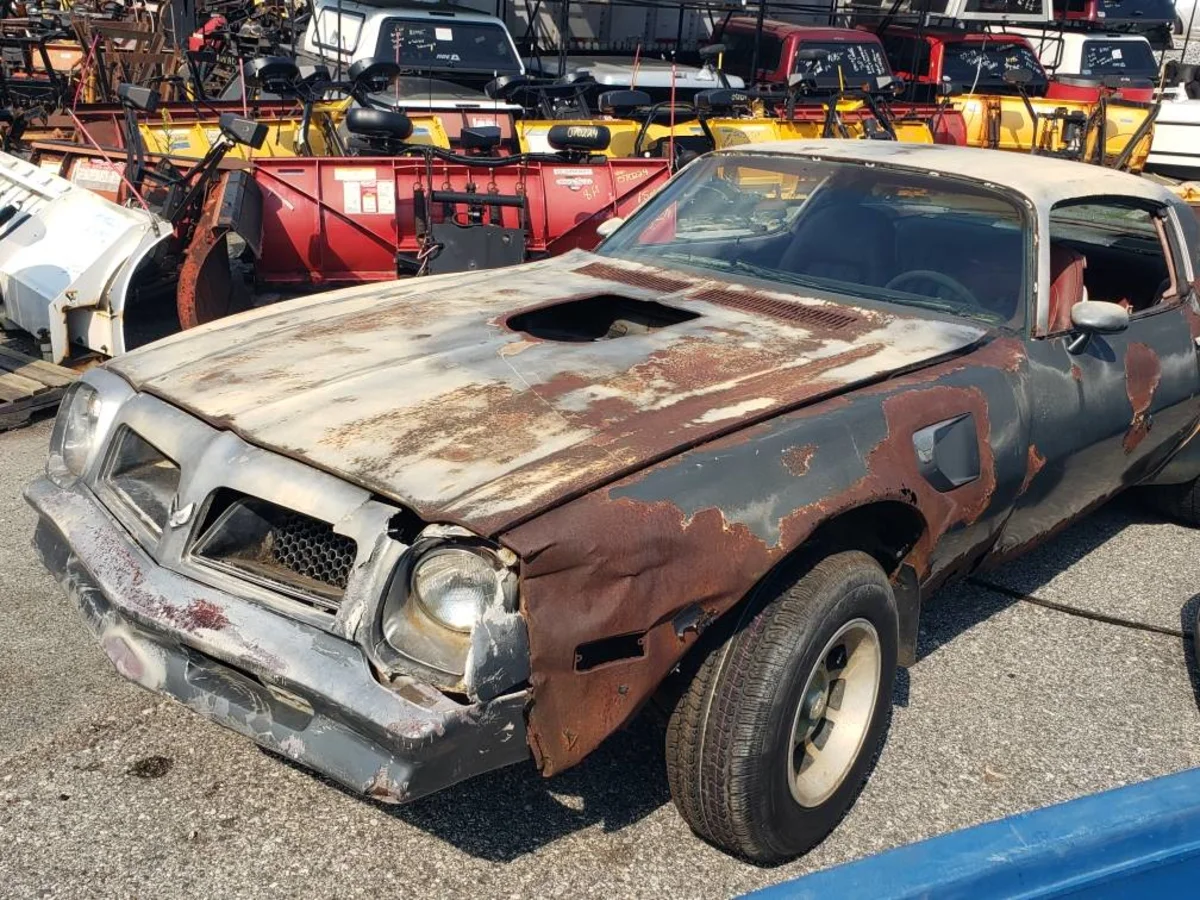
A rust-covered 1976 Pontiac Trans Am sitting abandoned in a Pennsylvania junkyard is triggering the kind of argument muscle car fans know all too well. Some see a rare factory 455 four-speed car that deserves saving at any cost. Others see a stripped shell that already lost the battle years ago. And honestly, both sides have a point.
More Stories Like This
- Teen Shot at Massachusetts Car Meet as Burning Stolen Car Full of Bullet Holes Sends Crowd Running
- Hellcat Murder Case Takes Dramatic Turn After Suspect Rejects Plea Deal in Deadly AirTag Tracking Confrontation
At first glance, the Pontiac looks rough enough to discourage almost anyone from even thinking about restoration. The body is hammered by rust. The drivetrain is gone. Years of outdoor exposure have clearly taken a serious toll on the car. It looks less like a future showpiece and more like something waiting for a crusher.
But this is not just another worn-out Firebird forgotten behind a fence.
According to the VIN decoding tied to the car, this Trans Am originally left the factory equipped with Pontiac’s desirable 455 cubic-inch engine paired with a manual transmission. That immediately changes how enthusiasts view the car because factory 455 four-speed Trans Ams from 1976 are not common.
That detail matters.
The Pontiac is reportedly sitting in York, Pennsylvania, carrying a $2,900 asking price along with a title. On paper, that sounds cheap for a genuine 455 Trans Am. The problem is what comes next. Anyone buying this car is not purchasing an easy project. They are buying years of labor, major fabrication work, expensive missing parts, and a restoration bill that could spiral quickly.
Still, enthusiasts keep talking about it because rare muscle cars create emotional reactions that logic alone cannot kill.
Why the 1976 Trans Am Still Matters
The timing of this particular car matters because 1976 turned into a major year for Pontiac’s Firebird lineup. Pontiac sold more Firebirds in 1976 than it had during its previous high point in 1968. The Trans Am became the clear star of the lineup.
Pontiac delivered 46,704 Trans Ams that year, easily outpacing the rest of the Firebird family. The Esprit followed behind, while the Formula and base Firebird filled out the remaining production totals.
Here’s the part that changes the story.
While nearly 47,000 Trans Ams sounds massive today, only a fraction received the optional 455 engine. Most buyers selected the standard L78 400 cubic-inch setup. More than 39,000 orders went that direction.
Only 7,528 Trans Ams received the L75 455 engine package.
Every one of those 455-equipped cars also came with a manual transmission. Decades later, that combination carries serious weight with collectors because it represents one of the last true big-cube Pontiac performance setups from the era.
That is why people are paying attention to this junkyard car despite its condition.
The Missing Drivetrain Changes Everything
Unfortunately, the heart of the car is gone.
The original engine and transmission no longer sit under the hood, leaving behind an empty engine bay and a massive problem for anyone hoping to restore the Pontiac correctly. No explanation has reportedly been given regarding where the drivetrain ended up.
Still, longtime muscle car enthusiasts already know how these stories usually go.
Rare engines and factory manual setups tend to disappear quickly once cars end up abandoned in salvage yards. Valuable drivetrains often get pulled and transplanted into cleaner projects while the original shell slowly deteriorates outside.
That seems to be exactly what happened here.
And this is where many Pontiac fans get frustrated. Genuine factory 455 Trans Ams are becoming increasingly difficult to find untouched. Once the original drivetrain disappears, a large part of the collector value disappears with it.
Yes, the VIN still proves authenticity. But authenticity alone does not rebuild an engine bay.
Rust Is the Real Enemy
Oddly enough, the missing engine may not even be the worst part of this car.
The bigger issue appears to be the body itself. Photos reportedly show extensive rust damage throughout the metal. Years sitting outdoors in Pennsylvania weather did the Pontiac no favors, and anyone familiar with northeastern project cars understands how brutal long-term moisture exposure can become.
This is where the debate gets serious.
Some enthusiasts believe the car deserves a closer inspection before being dismissed completely. Old project cars often look worse in photographs than they do in person. Dirt, surface corrosion, faded paint, and junkyard neglect can exaggerate the appearance of damage.
But experienced builders also understand the danger of false optimism.
A heavily rusted Trans Am missing its original drivetrain is not a casual restoration. It requires structural repair work, replacement panels, drivetrain sourcing, suspension rebuilding, paint, interior restoration, and endless labor hours. Costs add up fast, especially once hidden rust starts revealing itself underneath floors and body panels.
That reality forces buyers into a difficult calculation. Are they restoring the car because it makes financial sense, or because they simply cannot stand watching a rare Pontiac disappear?
One Surprising Detail Survived
Despite everything working against the Trans Am, one important area reportedly survived better than expected.
Related Incidents
- Classic Car Buyers Lose Thousands After Scammers Hijack Real Auto Shops in Multi-State Fraud Scheme
- Stellantis’ Stunning Comeback: Hemi V8 Demand Helps Reverse $26 Billion Collapse as Massive Cost Cuts Begin
- The Real Story Behind a 1966 Mustang Running Tesla Full Self-Driving and Why It’s Exposing a Major Industry Standoff
The red interior still appears relatively intact considering the car’s condition and how long it sat abandoned. More importantly, valuable pieces like the seats remain inside the vehicle instead of being stripped and sold years ago.
That is genuinely unusual for a junkyard muscle car.
Rare interiors often disappear quickly once enthusiasts discover a desirable project sitting unattended. Seats, trim components, dashboards, and factory consoles usually vanish piece by piece. The fact that key interior components remain may actually strengthen the Pontiac’s value either as a restoration candidate or as a donor vehicle for another build.
And that is where opinions start dividing sharply.
Restore It or Use It to Save Another Trans Am?
Some enthusiasts look at this Pontiac and see a rare factory muscle car worth saving no matter the expense. Others believe the smartest move is using the remaining parts to help complete another Trans Am restoration.
Honestly, neither argument sounds unreasonable.
The VIN confirms this was born as a genuine 455 Trans Am assembled in Norwood, Ohio, where all Trans Ams from that era were built. Factory authenticity still matters in the collector world even when major components are missing.
But authenticity does not magically erase restoration math.
Most experienced restoration builders would probably evaluate the car carefully before committing to a full rebuild. The surviving interior pieces, identification tags, and factory-specific components may hold more value helping another project survive.
At the same time, rough cars like this continue attracting dreamers for a reason. Somebody with fabrication skills, storage space, spare Pontiac parts, and enough patience may still view this as a worthwhile project.
That possibility is what keeps old muscle cars alive long after common sense says they should be gone.
The Bigger Problem Facing Muscle Car Enthusiasts
This battered Trans Am also reflects a larger issue spreading through the collector car world. Genuine American muscle cars from the 1970s are becoming increasingly expensive and difficult to restore, even when the cars themselves are barely hanging together.
Years ago, a rusted, engineless Trans Am sitting abandoned in a junkyard might have been ignored completely. Today, enthusiasts still argue over whether a shell like this deserves saving because factory performance cars from the era carry emotional and financial weight that keeps growing.
That changes everything.
The $2,900 asking price feels affordable right up until restoration begins. Then reality hits hard. Rare muscle cars are no longer cheap hobbies. They demand money, time, storage, parts sourcing, and patience most people simply do not have anymore.
Still, enthusiasts keep chasing cars like this because modern performance machines often fail to deliver the same raw mechanical identity. Old Trans Ams were loud, imperfect, simple, and full of character. That connection still matters to people.
This particular Pontiac may never return to the road. It may end up sacrificed piece by piece to help another Trans Am survive. But even rotting away in a Pennsylvania junkyard with an empty engine bay, this battered 455 car still has enough presence to stop enthusiasts in their tracks.
That says everything about why old-school American muscle still refuses to die.
Continue Reading: The Real Story Behind the $70K Honda S2000 With 835 Miles and Why This Auction Is Shaking the Collector Car Market
 Shawn Henry