 By Shawn Henry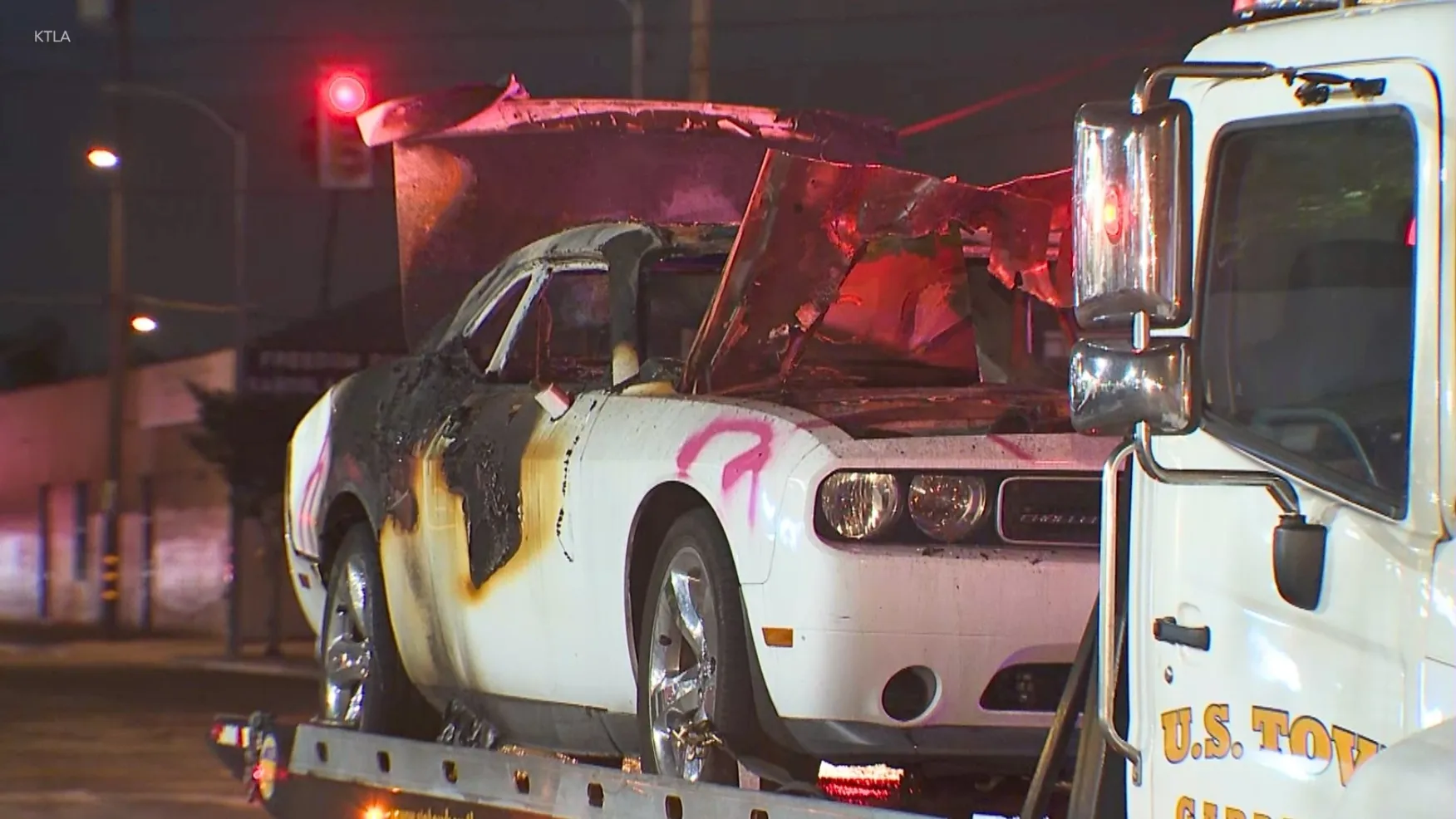
It’s happening again, and it’s getting worse. Another Los Angeles area street takeover turned violent in the early morning, ending with a shooting victim in the hospital and a car left burning in the middle of the road. This wasn’t some isolated flare-up either. It came barely a day after a separate takeover ended with four people shot. That kind of timing isn’t coincidence. It’s escalation.
This latest incident unfolded around 3 a.m. at Compton and Gage avenues in the Florence-Firestone area. Deputies were called out for what initially sounded like a typical street takeover report. Cars blocking intersections, crowds gathering, drivers spinning donuts in the street. The kind of thing that’s become almost routine in parts of Southern California. But routine doesn’t mean safe, and it doesn’t stay contained for long.
By the time responders got there, things had already gone sideways. A car was on fire in the middle of the street, forcing firefighters to step in just to get the situation under control. And that’s where things change. What started as another takeover quickly turned into a crime scene.
Authorities then updated the call after finding someone suffering from a gunshot wound. That person was rushed to a hospital, though details about their condition haven’t been released. No arrests were immediately confirmed, and deputies shut down the entire intersection while they tried to piece together what actually happened.
Here’s the part that matters. This wasn’t a one-off. Just over 24 hours earlier, another takeover in Rosemead ended with four people shot. That one took place at Del Mar and Garvey avenues early Sunday morning. The victims were young, between 17 and 22 years old, and while they were reported in stable condition, the situation could have easily been worse.
Video from that earlier scene shows exactly how chaotic these gatherings have become. A livestream captured the moment everything unraveled, with crowds packed tightly around cars, engines revving, people moving unpredictably. It doesn’t take much for something like that to tip over into violence. One bad decision, one argument, one person bringing a weapon into the mix. That’s all it takes.
And that’s where it gets complicated. Street takeovers didn’t start as something this dangerous. For a lot of drivers, it’s about showing off skill, building a scene, pushing machines to their limits in a way that feels raw and unfiltered. There’s a culture behind it, and it’s not going away anytime soon. But when the crowd grows and control disappears, the risk multiplies fast.
In both incidents, the pattern feels familiar. A group gathers, cars flood an intersection, the energy builds, and then something snaps. Whether it’s reckless driving, confrontations in the crowd, or something more deliberate, the result is the same. People get hurt. Sometimes worse.
The burning car in Monday’s incident adds another layer to the story. Fires don’t just happen in these situations without cause. It suggests damage, chaos, maybe even intentional destruction. Either way, it turns what’s already a dangerous situation into something even more unpredictable. Fire spreads. Crowds panic. Emergency crews have to fight their way into an already unstable scene.
From a law enforcement standpoint, these events are getting harder to manage. By the time deputies arrive, the takeover has often already peaked or collapsed into disorder. Participants scatter, evidence gets lost in the confusion, and identifying suspects becomes a challenge. That’s part of why it’s still unclear whether anyone was taken into custody in either of these shootings.
Zoom out for a second, and the bigger picture starts to come into focus. Two shootings in two days tied to the same kind of activity isn’t just bad luck. It points to a growing problem that isn’t being contained. The gatherings are bigger. The stakes are higher. And the consequences are becoming harder to ignore.
There’s also the reality that these takeovers draw attention fast. Social media plays a role, with livestreams and clips spreading quickly, pulling in more people and amplifying the chaos. What might have once been a small local gathering now turns into something much larger, much faster. And once it reaches that point, control is basically gone.
For drivers and enthusiasts, this is a tough spot. The passion for cars isn’t the issue. It’s what happens when that passion spills into uncontrolled environments with no boundaries. When the focus shifts from driving to spectacle, and from spectacle to confrontation, things can go bad in a hurry.
And right now, that’s exactly what’s happening.
Two incidents. Five people shot. One burned car sitting in the middle of a street as a reminder of how quickly things can spiral. It doesn’t feel like the peak of anything. It feels like a warning.
If this pattern keeps up, it’s not just about shutting down intersections anymore. It becomes about preventing the next situation where someone doesn’t make it to the hospital at all.
 Eve Nowell