 By Shawn Henry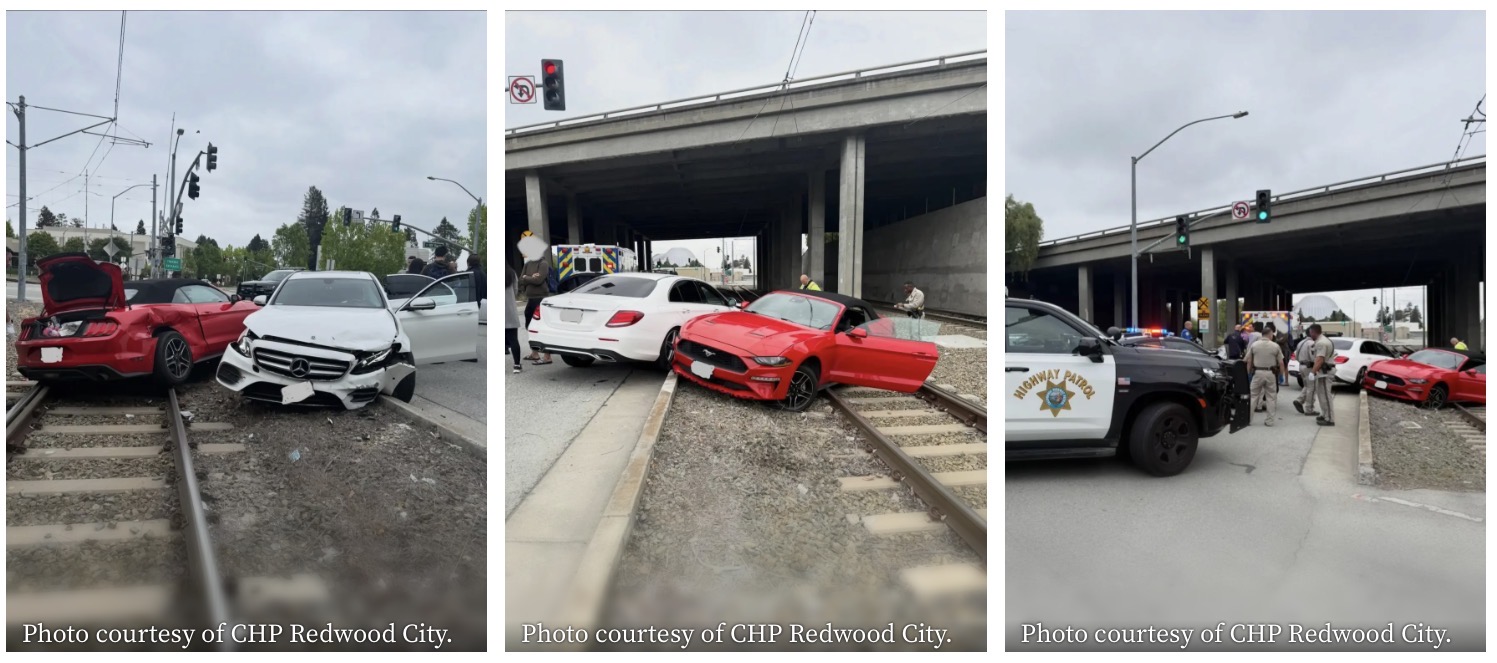
A high-speed run that should never have happened ended with a wrecked car sitting on active railroad tracks and a driver in handcuffs. That is the kind of outcome that makes people stop and ask how it got that far.
According to the California Highway Patrol Redwood City office, a driver behind the wheel of a red Ford Mustang was clocked at 120 mph before things spiraled out of control. The incident unfolded last weekend and quickly escalated from reckless driving into a dangerous chain of events that could have ended far worse.
More Stories Like This
- 20K Vehicle Recall: Jeep Wagoneer, Dodge Charger EV
- The Classic Car Mistake That Can Cost Owners Thousands Overnight
- GWM Targets Ferrari With V8 Supercar as China’s Trend Breaker Doubles Down on Big Engines
Authorities say the Mustang driver was not just speeding but using the highway shoulder to move past traffic. That decision alone puts other drivers in a blind spot they do not expect to defend against. It also signals intent. This was not a brief lapse in judgment. It was a sustained attempt to outrun both traffic and law enforcement.
Officers attempted to stop the vehicle, but the driver chose to flee. The chase did not stay contained to the freeway. The suspect exited onto city streets multiple times, weaving between different environments where traffic patterns, pedestrians, and intersections make high-speed driving even more dangerous. That is where things change.
CHP officers eventually made a call that often frustrates people who want to see immediate consequences. They terminated the pursuit. The reason was simple and hard to argue with. The risk to the public had become too great. At 120 mph, a Mustang is not just fast. It becomes a projectile. Continuing a chase at that speed through mixed traffic and city exits increases the chance of innocent people getting hurt. But calling off the pursuit did not end the danger. It just removed the immediate pressure from law enforcement. The driver kept pushing.
While attempting to get away, the Mustang exited the freeway at a speed that was clearly too high to control. That decision set off the final sequence. The driver lost control and struck another vehicle. The force of that impact was enough to push both vehicles onto an active railroad track. That detail matters.
Crashing is one thing. Ending up on a live set of tracks introduces a completely different level of risk. It is no longer just about the two vehicles involved. It brings in the possibility of a train collision, which would multiply the consequences instantly. There is no margin for error when steel meets steel at speed.
The other driver was fortunate. CHP reported only minor injuries, which feels almost unbelievable given the circumstances. A high-speed collision followed by being pushed onto train tracks is not a scenario that usually ends without serious harm.
Related Incidents
- Brand-New Ram 1500 Triggers Airbags on the Highway—Now Owner Is Stuck With a $20K Shock
- GM’s EV Truck Future Suddenly Looks Uncertain as Reports Clash With Company Denials
The Mustang driver was arrested at the scene and booked into jail. The explanation offered afterward did not do much to soften the situation. According to CHP, the driver claimed he was late for work. That is where the story turns from reckless to absurd.
Being late is something every driver understands. It is part of daily life. But using that as justification for driving at 120 mph, evading officers, and ultimately causing a crash that put another person in danger crosses a line that is hard to defend.
Here’s the part that matters.
This was not just about speed. It was about a series of decisions that stacked on top of each other. Driving on the shoulder. Ignoring law enforcement. Exiting at unsafe speeds. Each step increased the risk until the outcome was almost inevitable. The crash was not random. It was the result of choices.
There is also a bigger point about how these situations are handled. CHP’s decision to call off the pursuit highlights a difficult balance. Letting a suspect go in the moment can feel like giving them a pass, but continuing a high-speed chase through populated areas can create even more victims. In this case, even without active pursuit, the driver still caused a crash. That underscores how dangerous the situation already was.
And that raises a hard truth about high-performance cars in the wrong hands. A Mustang is built to handle speed, but it does not make the driver immune to consequences. When someone pushes that kind of power without control or judgment, the car becomes part of the problem instead of the solution.
You Should Read This Next
Volkswagen Walks Away From Bugatti After 28 Years, Leaving the Hypercar Icon Facing an Uncertain Future
Toyota’s $200K GR GT Supercar Might Reject Buyers—And That’s Exactly the Point
There is also the question of accountability after the fact. The driver now faces the legal consequences, but the damage is already done. Another driver was put at risk. Public roads were turned into a racetrack. A railroad track became part of a crash scene. That ripple effect goes far beyond a single arrest.
This is not about blaming the car or the culture around it. It is about the choices made behind the wheel. Speed itself is not the issue. Misusing it is.
The outcome could have been far worse. That is the only real takeaway here. A train could have been involved. The injuries could have been severe. More vehicles could have been caught in the crash.
Instead, it ends with minor injuries, a wrecked Mustang, and a driver who now has to answer for a string of decisions that never should have happened in the first place.
That is the reality. And it is one that does not need much interpretation.
Continue Reading: $3 Million Lawsuit Hits Delaware Dealership Over Alleged Double Financing Scheme
 John Lloyd