 By Shawn Henry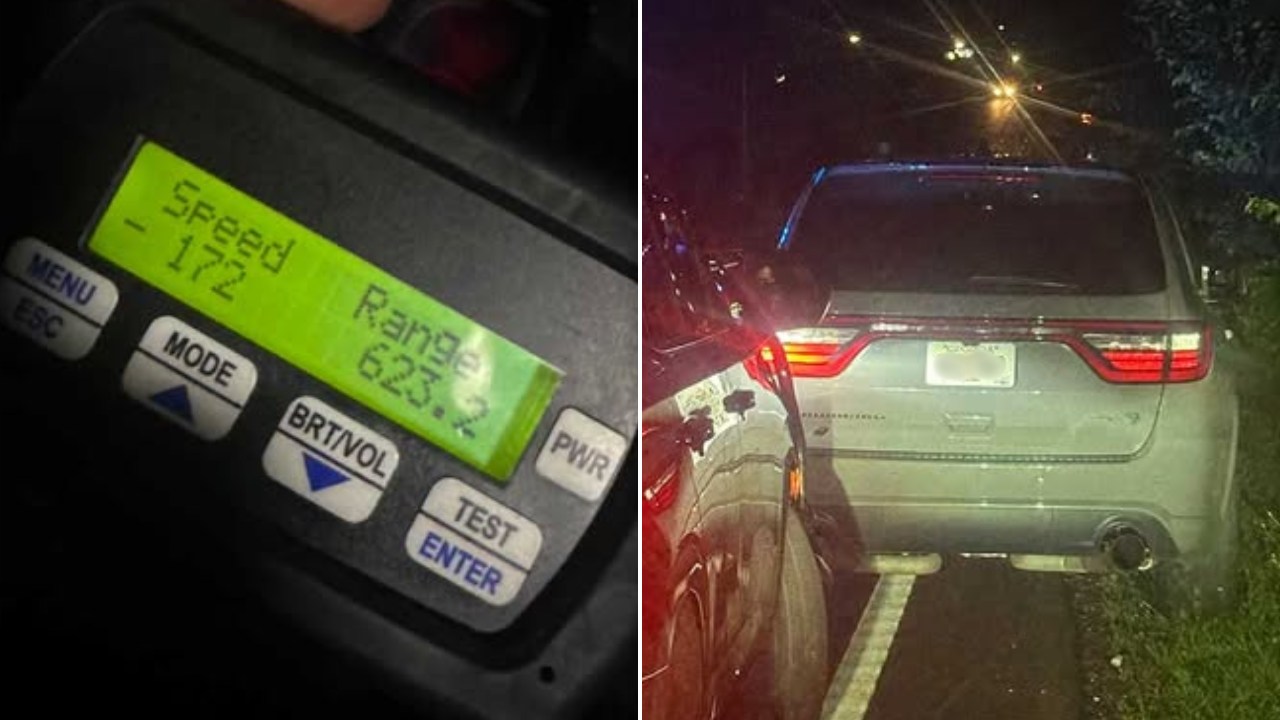
A driver flying through metro Atlanta at 172 mph has triggered a fresh warning from Georgia law enforcement during one of the busiest travel weekends of the year. And no, that number was not a radar glitch.
More Stories Like This
- Teen Shot at Massachusetts Car Meet as Burning Stolen Car Full of Bullet Holes Sends Crowd Running
- Hellcat Murder Case Takes Dramatic Turn After Suspect Rejects Plea Deal in Deadly AirTag Tracking Confrontation
The Douglas County Sheriff’s Office posted an image of the radar reading on social media after deputies clocked the vehicle at the staggering speed. Authorities made it clear they were just as shocked as everyone else seeing the number for the first time. In a region already packed with Memorial Day traffic, a car moving that fast changes a reckless speeding stop into something much more dangerous.
At 172 mph, a vehicle covers ground so quickly that even a minor mistake can turn catastrophic before anyone nearby has time to react. That’s the part that matters here. This was not somebody drifting a little over the speed limit on an empty highway late at night. According to the sheriff’s office, this happened during one of the heaviest travel periods of the year, when roads are filled with families, vacation traffic, and drivers trying to get home safely.
Authorities said a driver at that speed can cross the length of a football field in well under a second. That leaves almost no reaction time for debris, slowing traffic, lane changes, or sudden braking ahead. It also means surrounding drivers have virtually no chance to anticipate or avoid the speeding vehicle if something goes wrong.
And that’s where things change from simple speeding into a much bigger public safety issue.
Modern performance cars are faster than ever. A growing number of factory-built vehicles can reach speeds that used to belong exclusively to exotic supercars and race machines. But public roads are not racetracks, especially not crowded interstate systems around Atlanta during a holiday weekend. Even experienced drivers can run out of skill long before a car runs out of speed.
The sheriff’s office used the incident to push a broader safety message ahead of Memorial Day travel. Deputies urged motorists to slow down, wear seat belts, drive sober, and hand over the keys if they are impaired. The agency emphasized that the goal is getting people home safely during one of the busiest traffic stretches of the year.
Still, the 172 mph number is what grabbed attention across social media, and for good reason. Triple-digit speeding cases happen more often than many drivers realize, especially in areas with wide interstates and high-performance cars. But crossing into the 170 mph range pushes things into territory most people only associate with professional motorsports.
That detail matters because reaction time and stopping distance change dramatically as speed climbs. At highway speeds, drivers already have limited time to respond to sudden traffic changes. At 172 mph, the margin for error basically disappears. Tire failure, road imperfections, another driver merging unexpectedly, or even slight steering input can become deadly instantly.
This is where the story turns into something larger than one speeding incident in Georgia.
Across the country, law enforcement agencies have increasingly highlighted extreme speeding as a growing problem after the pandemic-era spike in reckless driving behavior. Empty roads during lockdown periods created a wave of drivers becoming comfortable at dangerously high speeds. Even after traffic volumes returned, some of that behavior stayed behind.
Metro Atlanta has dealt with its share of aggressive driving concerns over the past several years. Congested highways mixed with high-speed traffic create a dangerous combination, especially during holidays when road volume surges. Memorial Day weekend consistently ranks among the deadliest travel periods in the United States because of increased traffic, impaired driving, and risky behavior behind the wheel.
And while enthusiasts often push back against blanket anti-speed narratives, incidents like this create problems for everybody who genuinely loves cars and driving culture. That’s because extreme cases hand regulators, insurance companies, and lawmakers more ammunition for tighter enforcement and broader restrictions that affect ordinary drivers too.
Most enthusiasts understand the difference between appreciating performance cars and using public highways like unrestricted race circuits. The problem is that one driver making national headlines at 172 mph can shape public perception far more than thousands of responsible owners ever will.
There’s also the reality that modern cars can make extreme speeds feel deceptively manageable. Today’s high-horsepower sedans, muscle cars, and SUVs are quieter, smoother, and more stable than older vehicles. A speed that once felt terrifying can now feel strangely controlled inside the cabin. But physics does not care how refined the interior feels or how advanced the traction systems are.
Once something goes wrong at 172 mph, technology stops being a safety net.
The Douglas County Sheriff’s Office did not release additional details about the vehicle or driver involved, but the radar image alone was enough to spark widespread reaction online. For many drivers, it served as a reminder of just how dangerous holiday traffic periods can become when one person decides speed limits no longer apply to them.
Related Incidents
- Classic Car Buyers Lose Thousands After Scammers Hijack Real Auto Shops in Multi-State Fraud Scheme
- Stellantis’ Stunning Comeback: Hemi V8 Demand Helps Reverse $26 Billion Collapse as Massive Cost Cuts Begin
- The Real Story Behind a 1966 Mustang Running Tesla Full Self-Driving and Why It’s Exposing a Major Industry Standoff
And honestly, that’s the bigger issue hanging over this story. Public roads are shared spaces. Every driver around that speeding vehicle becomes part of the risk whether they signed up for it or not.
Car culture has always celebrated speed, engineering, and performance. But there is a massive difference between respecting what a machine can do and gambling with everybody else’s life on a crowded interstate. At 172 mph, there is almost no room left for luck, skill, or second chances.
Continue Reading: The Real Story Behind the $70K Honda S2000 With 835 Miles and Why This Auction Is Shaking the Collector Car Market
 Eve Nowell