 By Eve Nowell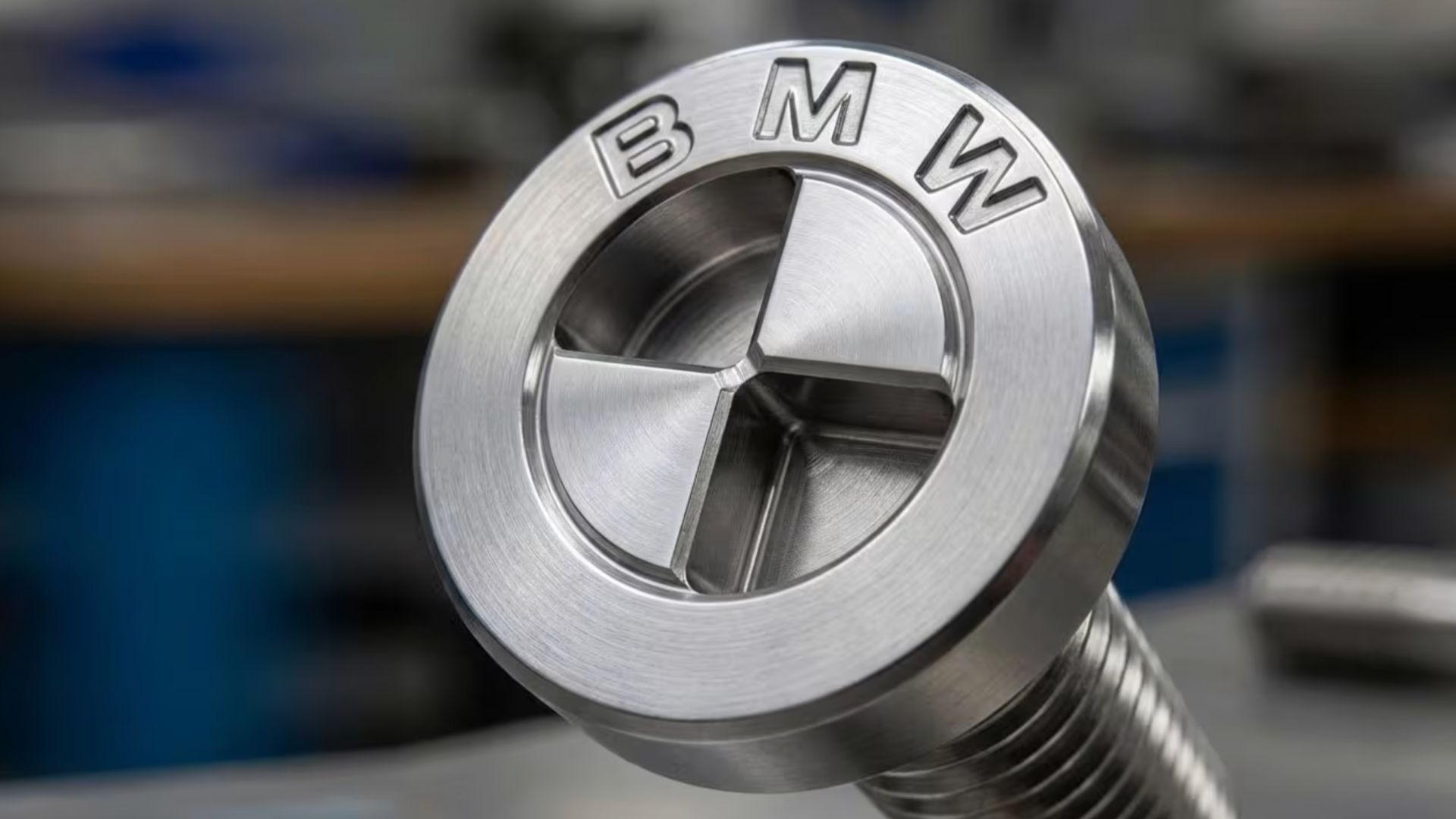
BMW has filed a patent for a new fastener design that underscores the automaker’s long-standing willingness to chart its own path, even when that path complicates ownership. The newly revealed screw head is shaped like BMW’s roundel, creating a proprietary design that standard tools cannot engage.
Unlike familiar Torx or hex fasteners, the patented screw uses a circular head divided into four quadrants. Two of those quadrants are recessed to accept a matching driver, while the remaining sections remain flush. The BMW logo is embossed around the perimeter, leaving little doubt about the fastener’s origin or intended exclusivity. From a visual standpoint, the design aligns with BMW’s focus on aesthetics, a philosophy that extends even to components typically hidden from view.
According to the patent details, the screw is intended for structural and semi-structural uses. Potential applications include seat mountings and areas where the interior connects to the vehicle body. These are locations that already require high torque and proper equipment, placing them beyond casual maintenance even before introducing a proprietary fastener. The patent also outlines multiple variations of the design, including socket, flat, and round head configurations, suggesting the concept could be expanded to other areas of future vehicles.
BMW’s stated goal for the design is to prevent tightening or loosening with common tools by unauthorized individuals. In practice, that approach limits access for owners, independent repair shops, and smaller garages unless they invest in specialized, BMW-specific tools. As a result, routine tasks could increasingly require dealership visits.
The move stands in contrast to trends elsewhere in the industry. Mercedes-Benz has publicly discussed redesigning future vehicles to improve repairability rather than restrict it. Meanwhile, innovation at other brands, such as Ferrari exploring unconventional engine concepts, has focused on performance and efficiency rather than service access.
For now, BMW’s screw remains a patent rather than a production reality. Not all patented ideas reach the assembly line. Still, the filing highlights an ongoing shift that places more control over vehicle service firmly in manufacturers’ hands. If adopted, the design would further distance owners from hands-on maintenance, reinforcing a growing divide between modern cars and the people who drive them.
 Shawn Henry
  John Lloyd