 By Shawn Henry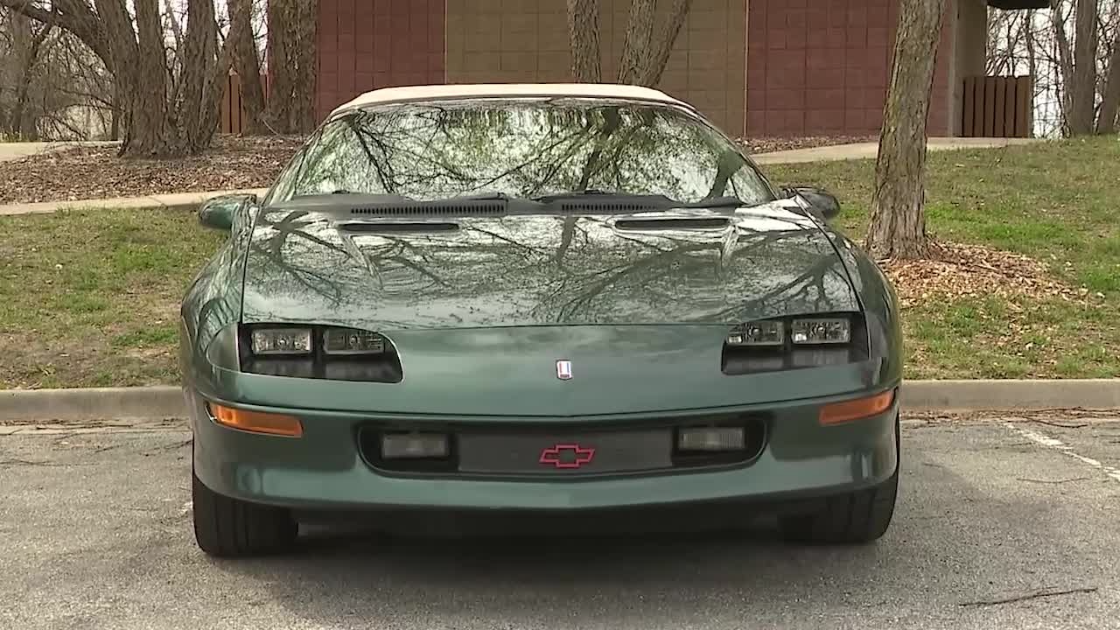
A father and son set out to build something together, the kind of project that sticks for years. A mid-90s Camaro, a little rough around the edges, but full of potential. What they didn’t expect was to lose control of it for months, only to stumble across it parked outside a downtown Kansas City bar like it had a completely different life.
That’s where things change.
Scott Levich and his 17-year-old son Paul had been hunting for a project car, something they could bring back to life side by side. Paul had his eye on a Mustang at first, but Scott nudged him toward a Camaro instead. It didn’t take much convincing. A green 1995 Camaro convertible caught Paul’s attention, and that was it. The plan was simple. Fix it up, get it running right, maybe even show it off when it was done.
But like most older cars, it needed work. And that’s where things started to slip.
While they were already dealing with a dealership for some repairs, a mechanic named David Leahy approached them with an offer. He said he could handle additional work on the side, cheaper than going through the shop. It sounded like a shortcut. For a family already investing time and money into the car, that kind of offer is tempting.
So they agreed.
Months passed. Then more months. According to Scott, the work they paid for never got done. Six months went by, and the total hit around $5,400. No finished car. No clear answers. Just delays and frustration stacking up.
That alone would be enough to push most people over the edge. But this didn’t end there.
The real shock came in downtown Kansas City during an event. Scott and Paul were walking near a bar when Paul suddenly stopped. He recognized something instantly. Sitting there, parked outside, was his Camaro.
Not in a shop. Not in a garage. Out on the street.
Here’s the part that matters. They didn’t have the keys. They weren’t the ones driving it. And the car clearly hadn’t been sitting idle. Inside, they noticed items that didn’t belong to them. There were signs it had been driven, including exposure to salted roads. For a car they were trying to restore and preserve, that’s not a small detail.
The situation escalated quickly. The person who had been driving the Camaro came out from the bar, and according to Scott, gave an explanation. She said she had paid the same mechanic to repair her own vehicle, and in the meantime, had been given the Camaro to use.
That’s where it gets complicated.
Scott immediately reached out to Leahy, demanding an explanation. Not just for the car being used, but for the missing work, the time lost, and now the additional wear and tear on a vehicle they were trying to fix, not rack up miles on. They also pushed for their money back, along with compensation for what the car had gone through.
When asked about the situation, Leahy denied loaning the car out directly. He said the vehicle had been taken to another shop for exhaust work and that a friend was involved in picking it up. He admitted he didn’t inform the Levich family, saying he didn’t think it was necessary at the time.
That explanation didn’t exactly calm things down.
Even Leahy acknowledged he would be concerned if his own car ended up out on the street when it was supposed to be in a shop. He expressed regret about how things played out but indicated that repaying the family wouldn’t happen immediately. The situation has since drawn police attention, and Leahy says he is cooperating.
For Scott and Paul, the damage goes beyond money. This was supposed to be a father-son project, something meaningful. Instead, it turned into months of uncertainty, followed by a moment that raised more questions than answers.
And this isn’t some rare, one-off situation.
Local shop owners say cases like this do happen, especially when people step outside established businesses and rely on informal agreements. It’s not always about bad intentions at the start. Sometimes it’s shortcuts, side jobs, or poor communication that spiral into bigger problems.
Reputable shops, the kind backed by organizations like the Better Business Bureau or AAA, operate differently. They offer warranties. They track the work. They build long-term relationships because they expect customers to come back. That structure adds a layer of protection that’s easy to overlook until something goes wrong.
Scott and his son learned that the hard way.
They’ve since decided they won’t be taking chances again. The Camaro, once a symbol of a shared project, now carries a different kind of story. One that includes frustration, unexpected miles, and a lesson that came at a cost.
The takeaway here isn’t complicated. When you hand over your car, you’re trusting someone with more than just a machine. You’re trusting them with your time, your money, and in this case, a piece of something personal. And if that trust breaks, getting it back isn’t nearly as simple as fixing an engine.
Source
 Eve Nowell