
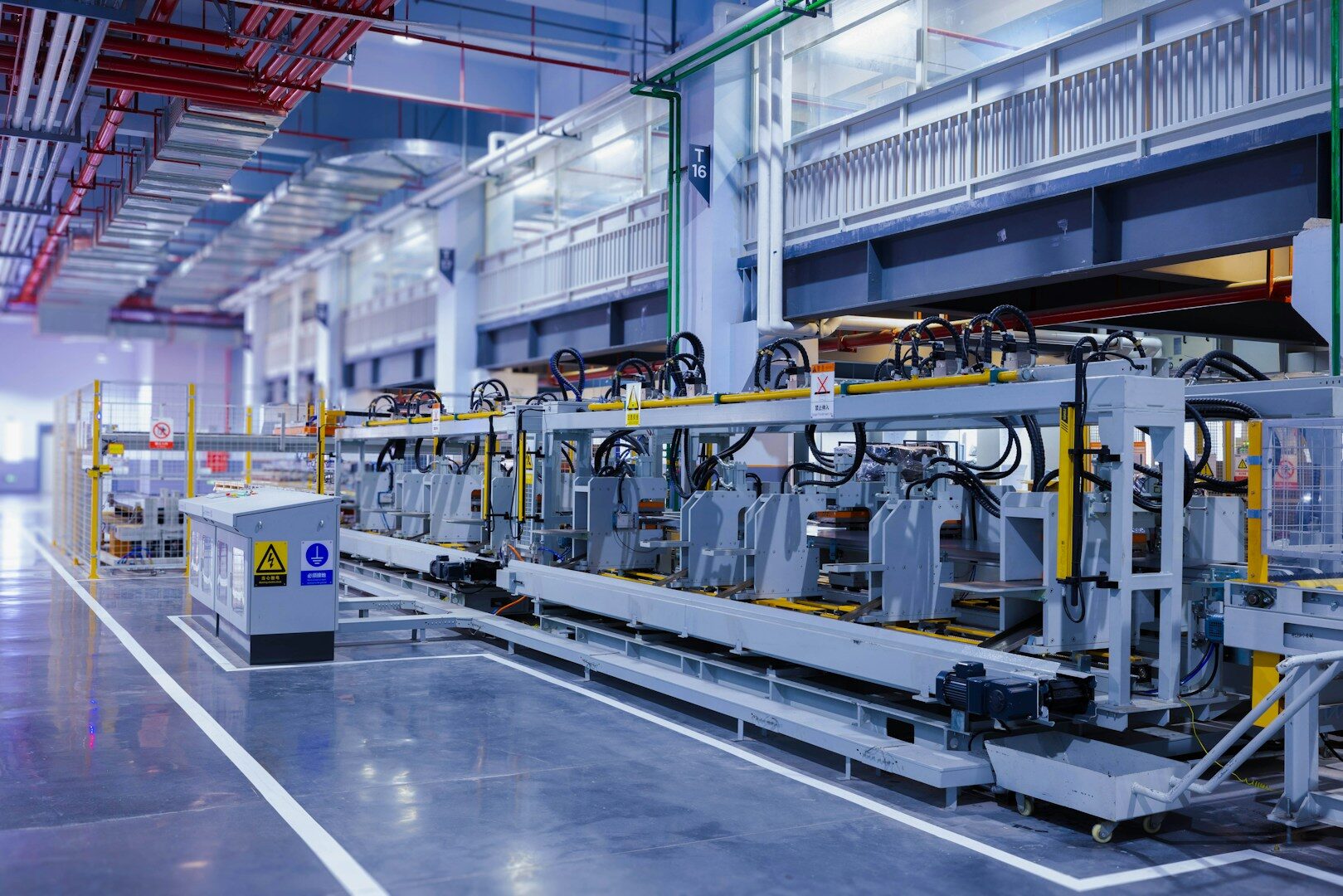
By the time you read the headline — GM and LG restart Ohio battery production — the company has already won the news cycle. A factory reopens. Jobs return. American battery manufacturing lives.
Don’t let the ribbon-cutting distract you.
The Ultium Cells plant in Warren, Ohio is genuinely starting back up next week. About 1,400 workers are returning to make large-format nickel-cobalt-manganese-aluminium pouch cells for most of GM’s electric vehicle lineup. Tom Gallagher, Ultium’s vice president of operations, confirmed most of the laid-off workers are coming back. The shutdown that began in January — announced as six months, stretched to seven — is ending.
What the announcement doesn’t linger on is the company simultaneously exiting two other battery facilities.
The Pause Was Policy, Not Engineering
The Ohio shutdown wasn’t a manufacturing problem. The plant was capable of making cells. The problem was demand — specifically, what happened when the $7,500 federal EV tax credit disappeared.
Buyers who had been waiting on the fence rushed to purchase before the credit ended. The quarter that followed was brutal. EV demand collapsed. GM had more battery capacity than it needed, and Ohio went dark. Roughly 1,330 workers lost their jobs.
The logic has partially reversed. U.S. EV sales climbed 14.2 percent in the second quarter of 2026 — 247,226 units. Chevrolet EV sales were up 11.6 percent quarter-over-quarter. Cadillac jumped 27.9 percent. When the cars are selling again, you need cells again. Ohio’s restart is simply supply following demand.
What it isn’t is a strategic shift.
While Ohio Reopened, Tennessee Changed Careers
The Ultium Cells plant in Spring Hill, Tennessee tells a different story entirely. That facility has already been converted from EV battery production to stationary energy storage — grid-scale batteries for utilities managing the variability of solar and wind generation.
It is not scheduled to make cheaper lithium iron phosphate cells for passenger vehicles until late 2027, if ever. Energy storage and passenger vehicle batteries are not the same market, not the same cells, and not the same business rationale. Tennessee’s conversion signals that GM’s joint venture found a better near-term return storing grid power than moving cars.
Indiana Went Further — GM Sold Out Before the Plant Was Even Finished
The Indiana story is the one that should stop you cold.
GM and Samsung SDI had a joint venture under construction in New Carlisle, Indiana. Samsung SDI bought out GM’s stake entirely this week. The unfinished plant will now build cells for energy storage, not passenger EVs. The prismatic EV cells the facility was designed to produce will never be made there.
GM didn’t wait for a finished factory to fail. It sold its interest in a plant that hadn’t produced a single cell yet — before the building was complete — rather than see the project through to its original purpose.
That is not a pivot. That is a preemptive exit.
The Bolt Has Nothing to Do With Any of This
Here is the detail that crystallizes the whole picture: the Chevrolet Bolt — GM’s most affordable electric vehicle and arguably its most important mainstream EV — runs on lithium iron phosphate cells sourced from China.
Restarting Ohio does nothing for the Bolt. The cells that go into the vehicle most likely to bring EV ownership within reach of a broader American market are manufactured abroad. Ohio makes pouch cells for different platforms. The two operations don’t intersect. If GM were genuinely committed to scaling affordable domestic EV production, the Bolt’s supply chain would be part of that conversation. It isn’t.
One Battery Line Returns, Two Point Elsewhere
Add it up: one EV cell line restarts in Ohio. Tennessee abandons passenger cars for grid storage. Indiana’s entire EV cell facility is sold to Samsung SDI before a single cell rolls off the line. Meanwhile, GM is most of the way through an $11 billion retreat from electric vehicles — a retreat visible in its China strategy and in the battery promises that keep shifting.
American battery capacity is growing. The share of it pointed at passenger vehicles is shrinking.
The Ohio restart fits neatly inside that retreat — a tactical response to a short-term sales uptick, not a reversal of direction. The real story of this week isn’t that a plant reopened. It’s that a company can reopen one factory, sell another, convert a third, and still have the news cycle focus entirely on the ribbon-cutting.
One plant restarts. Two quietly exit. GM calls it progress.