
Richard Finley’s customers paid for engine swaps. Many say the jobs stalled, parts went missing and they ended up retrieving their cars from a sheriff’s impound lot. A judge gave him 60 years. His appeal says it was a slow shop, not a theft ring.
Richard Thomas Finley ran Classic American Street Rods, a restoration shop in the San Leon–Bacliff area of Galveston County, Texas. On Jan. 6, Judge Jeth Jones of the 122nd District Court sentenced him to 60 years in prison for theft, and his notice of appeal reached the First Court of Appeals in Houston the same day.
According to the Galveston County District Attorney’s Office, as reported by ABC13, Finley took more than $498,000 from customers between 2018 and 2023, and investigators identified 72 victims. A jury convicted him in December 2025 of theft of property worth $300,000 or more. His appeal argues that the state took a stack of late, unfinished and disputed restoration jobs and called it a crime.
The case turns on a Texas rule most car owners never run into. Prosecutors can add many customers’ losses into a single theft, and the size of that combined total, not any one job, set the sentencing range that produced 60 years. Whether all those jobs belonged in one total is now the question in front of the appeals court.
Seventy names on the indictment, 28 on the witness stand
The first complaint reached Galveston County Sheriff’s Office Detective Dona Bouse in November 2022, according to Finley’s amended appellate brief, filed July 20, 2026. Deputies seized his business assets and inventory and hauled customer vehicles to an impound lot. Finley went before a magistrate on June 29, 2023, and was released 12 days later. At the time of the arrest, ABC13 reported that deputies had served search warrants in San Leon and Texas City and that his bond was set at $200,000. KPRC 2 reported that authorities recovered 24 classic vehicles plus parts, with an estimated value above $2 million.
The indictment, as the defense brief describes it, charged one scheme running from about April 1, 2018, to about June 30, 2023, and named 70 people as owners of the money, vehicles or parts. On the first day of trial, the state dropped 35 of those names. Twenty-eight customers testified, along with a sheriff’s detective.
By the defense’s count, the testimony fell into three groups. One group had paid deposits for engine swaps or other restoration work and said the jobs stalled, parts went missing, and they eventually pulled their cars from the shop or from the sheriff’s impound lot without refunds. A second group had left cars with Finley to sell on consignment and said they either were never paid or could not account for their vehicles. Two others had gone into business with him and said he misapplied their investment.
The jury decided guilt. The judge decided the punishment, according to the brief, and he picked 60 years. KPRC 2 reported that Finley was also ordered to pay $495,000 in restitution.
How Texas adds dozens of customers’ losses into one first-degree felony
In Texas, the grade of a theft depends on the dollar value. Under Penal Code Section 31.03(e), a theft of $2,500 up to $30,000 is a state jail felony. From $150,000 up to $300,000, it is a second-degree felony. At $300,000 or more, it is a first-degree felony, the same grade as murder.
Section 31.09 lets prosecutors reach the top tier without any single large theft. When money or property is taken “pursuant to one scheme or continuing course of conduct, whether from the same or several sources,” the law says the conduct “may be considered as one offense and the amounts aggregated in determining the grade of the offense.”
The sentencing ranges show what that addition does. Spread across the 72 victims the DA’s office counted, $498,000 comes to about $6,900 each. One $6,900 theft, charged by itself, is a state jail felony punishable by 180 days to two years in a state jail. A second-degree felony carries 2 to 20 years. A first-degree felony carries 5 to 99 years or life, plus a fine of up to $10,000. Finley’s 60 years sits in the first-degree range, which the state reached by adding the customers’ losses into one charge.
The theft statute also explains why a shop that keeps a car too long can be prosecuted at all. Under Section 31.01(2)(A), “deprive” includes withholding property “for so extended a period of time that a major portion of the value or enjoyment of the property is lost to the owner.” A car that sits for years with its engine on a stand can meet that definition even if the owner eventually gets it back. The same definition gives the defense its opening: how long is too long for a restoration shop?
.jpg)
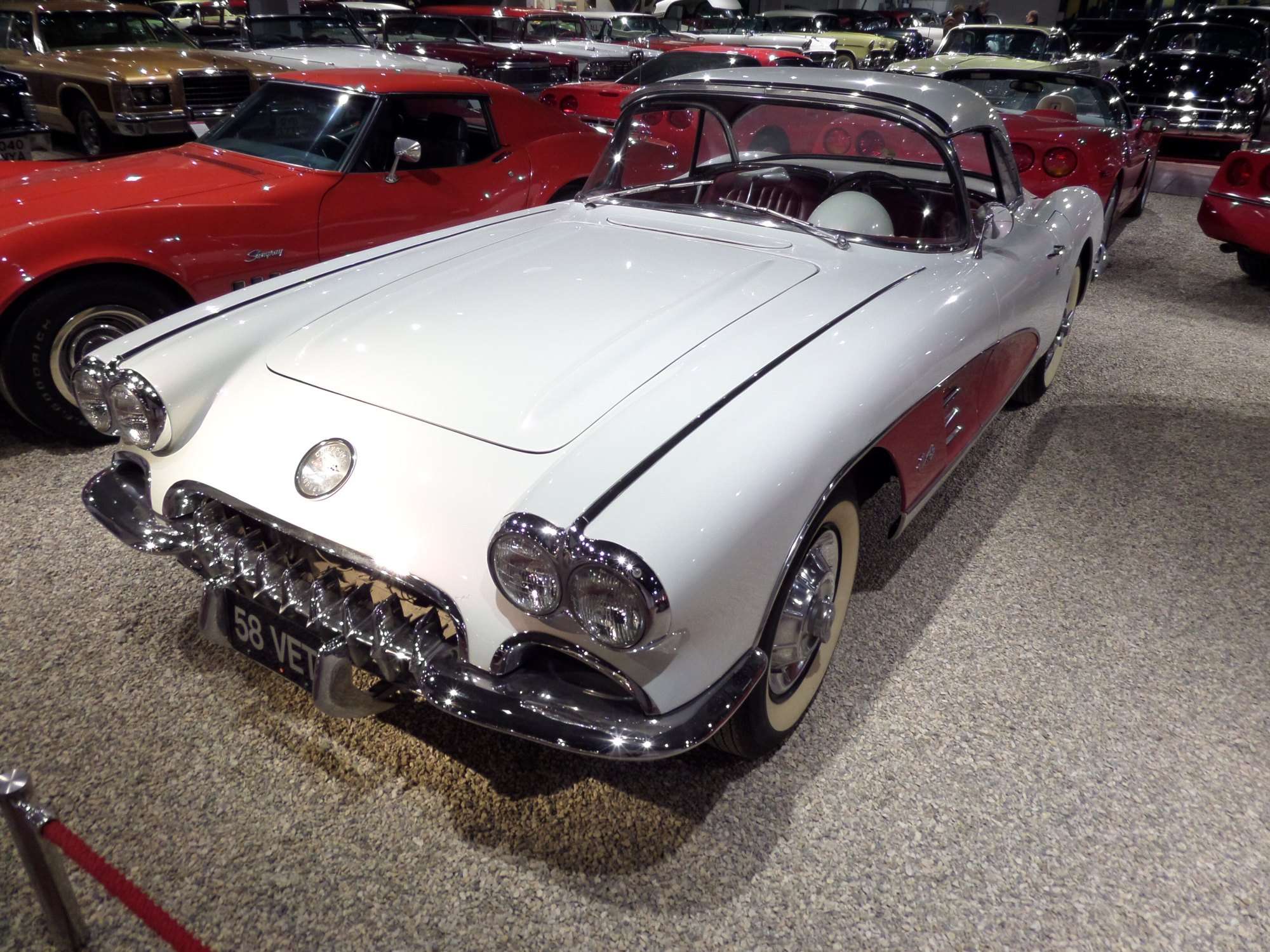
A 1958 Corvette, about $11,900 in payments and a year at another shop
One customer’s testimony, as summarized in the defense brief, shows the case in small. He dropped off a 1958 Corvette on June 28, 2022. It had a 327 V8 that was not the original engine, and it would not drive because, in his words, “nothing was connected.” He wrote Finley a $2,300 check on July 7, 2022, and a $1,700 check that September.
The car still was not ready in January 2023. In February, Finley told him it needed a new oil pump and that a Cadillac had to come out of the shop first. In May, Finley said he had spent six weeks in the hospital. The customer testified that he paid $7,900 by check and about $4,000 in cash in all, then retrieved the Corvette from the county impound lot in June 2023 without the engine swap having been done. He said another mechanic needed “a little over a year” and $12,000 to get the engine running.
Finley told the jury a different story. He testified that a previous shop had damaged the motor, that the customer wanted it pulled, painted and put back with his parts, and that “That was completed.” He said the transmission turned out to be the wrong one and that he tried to reach the owner, who was out of the country.
Both accounts can be true at once, and that is the problem for any jury in a repair-shop theft case. Texas law asks what the shop owner intended at the moment he took the check, and nobody testifies to that directly. It has to be pieced together from what happened afterward.
Finley’s appeal says the state convicted him of running a slow shop
Finley’s appellate lawyer, Jonathan Zendeh Del of Galveston, raises one issue: the evidence was legally insufficient. He breaks it into three parts. The state did not prove one scheme or continuing course of conduct. It did not prove Finley intended to deprive anyone of cars, parts or money. And it did not prove $300,000 or more in stolen property.
The brief leans on Taylor v. State, a 2014 decision from the Texas Court of Criminal Appeals on theft cases built on unfinished contracts. Under that line of cases, as the brief presents it, failing to do the promised work does not prove theft by itself. The state has to show intent to deprive at the time the property changed hands. The brief also cites a 1982 decision, Phillips v. State, for the point that a down payment followed by nothing more than a failure to perform is not enough to prove deception, and argues that customers who conceded Finley did some work on their cars cannot count toward the aggregated total.
The defense account of the delays has two chapters. Early customers, the brief says, were hit by COVID-19 supply-chain and staffing problems. Later customers were hit by the sheriff’s investigation itself, which seized the business’s assets, left Finley unable to finish jobs and cost him a storage unit full of car parts that went to auction. Finley testified that restoration projects average two to three years, that the timeline was common across shops, and that customers “could see there was 30, 40 cars ahead of you.” Several of the state’s own witnesses conceded that classic car restorations can take up to two years in normal times, according to the brief.
The brief asks the court to acquit Finley outright. Failing that, it asks for a new trial, or for the judgment to be reformed to a lesser-included offense with a new sentencing hearing.
That last request is where the aggregation math comes back. Appellate courts review legal sufficiency in the light most favorable to the verdict, a hard standard for any defendant to overcome. But the appeal does not have to win on every customer. If the justices find that enough of the 28 transactions fail as theft to pull the total below $300,000, the conviction drops to a lower grade, and a lower grade comes with a lower cap. At $150,000 to $300,000, the maximum is 20 years.
The state has not answered yet. The court granted prosecutors an extension on Aug. 7, and the docket lists a status date of Oct. 5, 2026, for the state’s brief. Kenneth Cusick, Jack Roady and Rebecca Klaren are listed as the state’s attorneys. Finley did not request oral argument.
What a 60-year theft sentence means under Texas parole law
Sixty years does not mean 60 years behind bars. Theft is not on the list of offenses that carry stricter parole rules, so Finley falls under Government Code Section 508.145(f). He becomes eligible for parole when his actual time served plus good conduct time equals one-fourth of the sentence or 15 years, whichever is less. On a 60-year sentence, both numbers are 15. Eligibility is not release. The parole board still decides.
That is still a long way from how courts sometimes handle classic car crime. In June, two 74-year-old men in Ontario walked out of court with suspended sentences after a scheme involving about 200 cars valued at $6.5 million. Different country, different law and a guilty plea instead of a trial, but the gap shows how much of Finley’s sentence comes from Texas’s grading system and the judge who applied it. The Auto Wire has followed Finley’s case since his appeal was filed.
Why the Corvette owner’s checks and cash left him with less leverage than a card
The Corvette owner paid by check and in cash. Those payments come with no built-in way to claw money back. Credit cards do. Under the federal Truth in Lending rules, Regulation Z Section 1026.12(c) lets a cardholder assert claims and defenses against the card issuer when a merchant fails to resolve a dispute over services bought with the card. The cardholder must first make a good-faith attempt to settle it with the shop, the charge must be more than $50, and the purchase generally must have been made in the cardholder’s home state or within 100 miles of home. A customer of a local shop who first tried to work things out would meet all three.
The Texas Attorney General’s car repair guidance tells drivers to make sure the work order spells out the work, the fees, the completion date and the payment terms. In a restoration job that runs two or three years, the completion date on paper carries extra weight. It is the clearest evidence of how long the owner agreed to wait, which is the same question a jury has to answer under the “deprive” definition.
Finley’s 60-year sentence stands while the First Court of Appeals waits on the state’s brief. If the justices agree that enough of those 28 customers had contract disputes rather than theft claims, the total could fall below the $300,000 line that made his case a first-degree felony, and the 60 years could go with it.
Where’s your line between a slow shop and theft: one year on jack stands? Three? And should a pile of unfinished jobs ever add up to one first-degree felony?
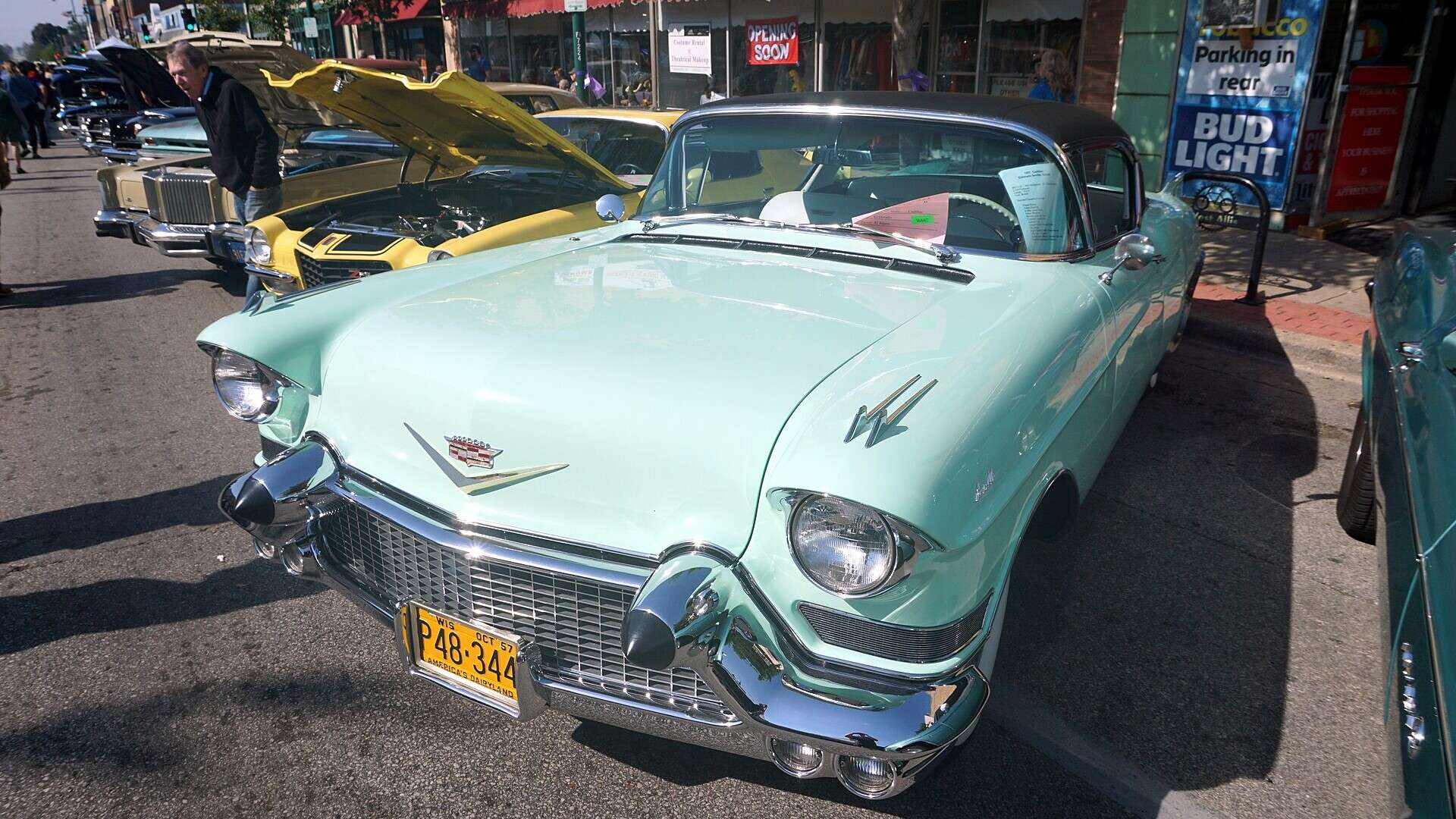
Top photo: A 1957 Cadillac Eldorado at the 2024 Downtown West Allis Classic Car Show in Wisconsin. File photo. Photo: Michael Barera via Wikimedia Commons (CC BY-SA 4.0).
.jpg)