 By Elizabeth Puckett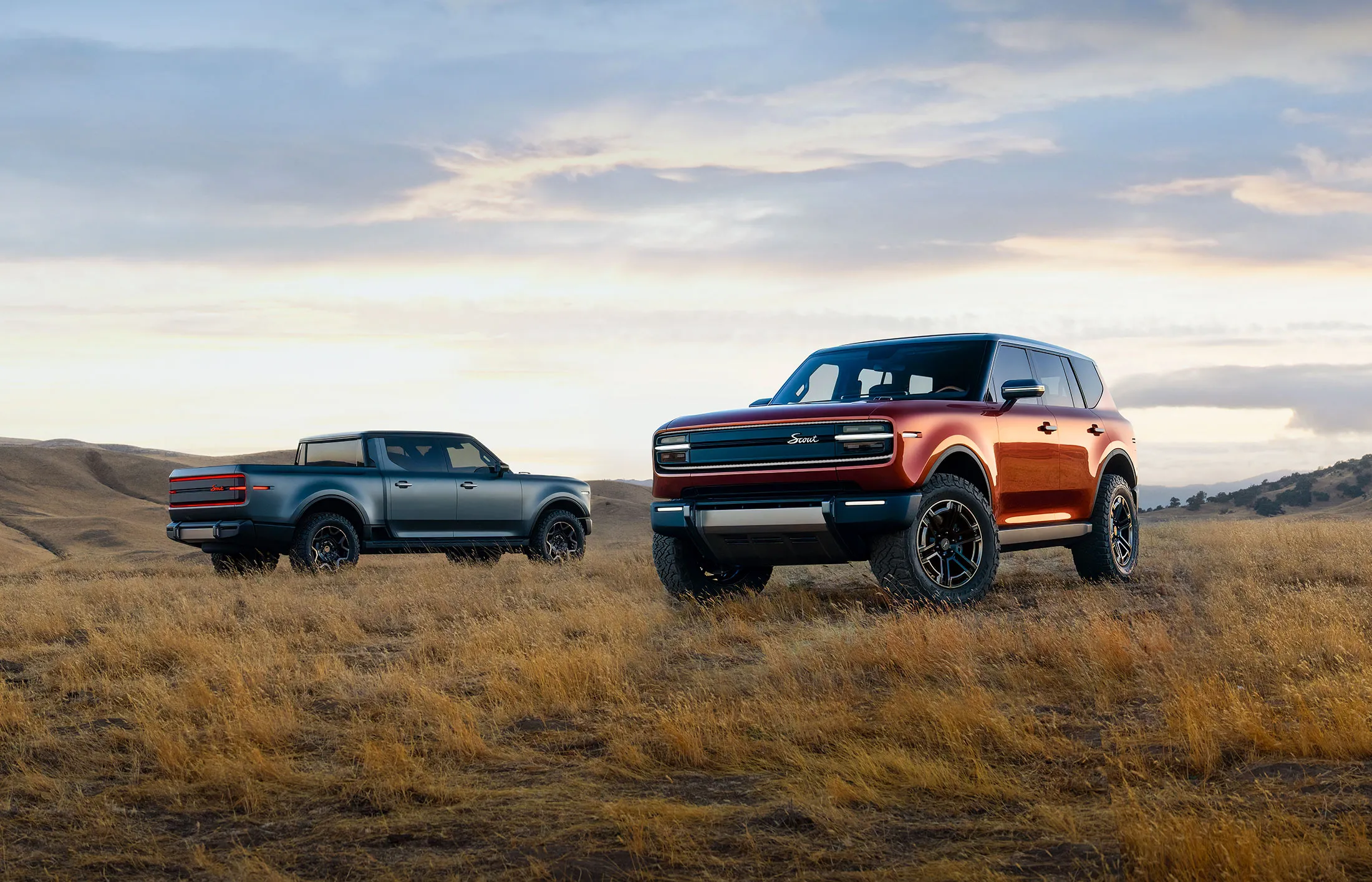
Volkswagen’s comeback effort with the iconic Scout brand — long touted as a rugged, American-built electric and extended-range off-roader — appears to be running into deeper development challenges, with multiple industry reports suggesting the launch is being pushed back by roughly a year.
According to reporting by German news outlet Der Spiegel, the production timeline for Scout’s first vehicles — the all-electric Scout Terra pickup and the Scout Traveler SUV — may now point to mid-2028 for initial deliveries, rather than the previously targeted 2027 start date. The potential delay stems from what the report describes as “technical issues” that are slowing final development.
What’s Behind the Delay
Scout Motors, owned by Volkswagen Group and headquartered in the U.S., has publicly insisted that its original plan remains unchanged: to start producing early validation vehicles in 2026, with full production and customer deliveries in 2027. A company representative told MotorTrend that the target continues to be the same, even as the automaker acknowledges “as with any ambitious project of this scale” adjustments may occur.
However, the Der Spiegel report and additional sources suggest that the sticking point goes beyond normal project fine-tuning. One of the core challenges appears to be technical complexities in finalizing the software and hardware needed for Scout’s range-extended electric vehicle (EREV) setup — particularly the so-called “Harvester” models that pair battery power with a rear-mounted gasoline engine as an onboard generator. That system adds engineering and packaging complications not found on pure battery-electric vehicles.
Scout’s partnership with Rivian — focused mainly on shared electric architecture — has also been cited as part of the technical backdrop. Because the joint-venture technology primarily covers the EV electrical platform rather than hybrid systems, Scout’s internal teams may have been forced to fill gaps in software development and electrical integration.
A Broader Picture: Ramp-Up Challenges
Delays like this are not unusual in automotive launches — particularly when a new brand is being built from scratch while debuting multiple vehicle types on a new platform. Even prior to these reports, Scout’s timeline was aggressive: a brand new factory in South Carolina, two distinct vehicles, and both EV and EREV powertrain variants slated to enter a highly competitive segment.
But the consequences of slipping production timelines can be significant:
- Supply chain alignment — Suppliers must adjust their delivery schedules, tooling and parts commitments; slip-ups can ripple through contracts.
- Cost pressures — Extended development adds expense to an already multi-billion-dollar project.
- Competitor advantage — Rivals like Ram, Ford, Chevrolet, and established EV makers have accelerated their own electric truck and SUV programs, and a delay gives them additional head-start in the market.
What Scout Has Said — and Hasn’t
Scout’s official corporate stance remains optimistic but cautious. The company insists it is still on track for its previously announced goals, noting that validation production starts before 2027 and that “changes” in program timelines are par for ambitious automotive projects. No official announcement has been made confirming a revised 2028 start date.
In other words: the company hasn’t publicly said the launch is delayed — yet — even as external reporting points toward a later timetable.
What This Means for Potential Buyers
For customers who have pre-ordered or are planning to reserve a Scout vehicle, the news complicates expectations:
- Early adopters — Those who put down reservations may face a longer wait if the delay proves accurate.
- Payment timing — Extended timelines can affect financing conditions, pricing incentives, and even tax credit eligibility depending on when the vehicles actually hit the market.
- Competition timing — Rivals slated to release electric or extended-range trucks and SUVs sooner could draw buyers away before Scout arrives.
The situation highlights an important truth about EV launches today: even well-backed brands can face engineering bottlenecks, especially when they’re integrating advanced features like range extenders and new software stacks.
Industry Context — Delays Aren’t Unique
Industry analysis suggests launch delays are more common than most casual observers realize. Over the past several years, more than half of all new vehicle launches have been pushed past their original production targets, often due to supply chain complications, software challenges, or revised market strategy.
In that context, Scout’s potential slip isn’t necessarily a red flag — but it is notable because this launch carries high expectations and represents a multi-billion-dollar bet by Volkswagen on a new American electric brand.
What’s Next
For now, the key milestones to watch include:
- Factory production readiness — Scout’s Blythewood, South Carolina, facility is already under construction and being outfitted.
- Validation vehicle roll-out — These early pre-production units are expected in 2026 and will be a major signal of whether the 2027 timeline is realistic.
- Official corporate timing updates — Scout or Volkswagen will likely clarify their official launch plans if and when the production window shifts.
For now, what looked like a 2027 debut may be looking closer to mid–2028, barring an official statement to the contrary. That has implications for buyers, competitors, and the wider U.S. EV pickup and SUV market — one that is already reshaping itself faster than even the Scout brand could have anticipated.
 Eve Nowell