
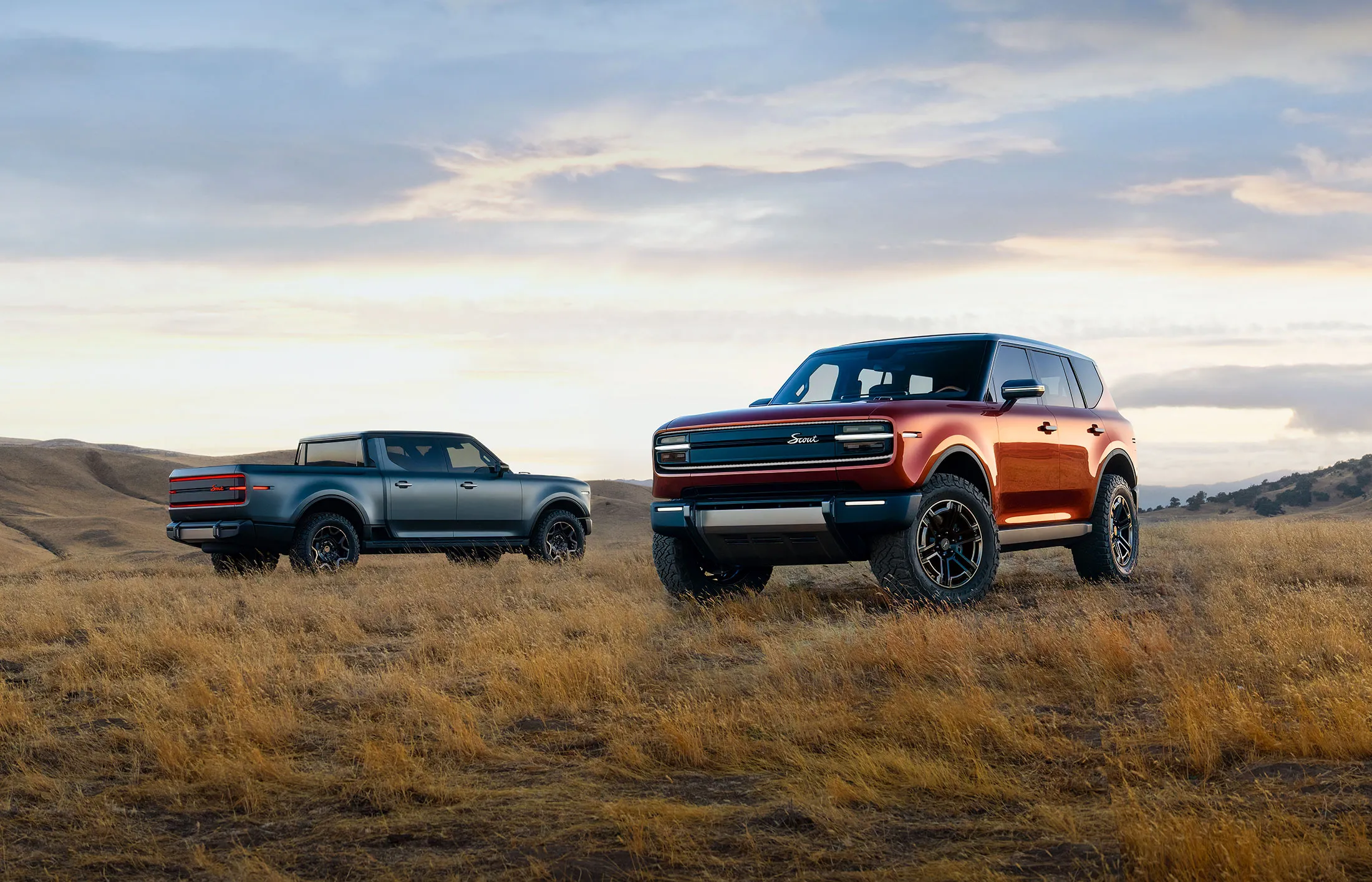
Volkswagen’s comeback effort with the iconic Scout brand, long pitched as a rugged, American-built electric and extended-range off-roader, appears to be running into deeper development trouble than the company has publicly acknowledged. Multiple industry reports now suggest the launch could slip by roughly a year.
Where the Delay Rumor Comes From
According to reporting by German outlet Der Spiegel, the production timeline for Scout’s first two vehicles, the all-electric Scout Terra pickup and the Scout Traveler SUV, may now point to mid-2028 for initial deliveries rather than the previously targeted 2027 start. The report attributes the potential slip to what it describes as “technical issues” holding up final development.
What Scout Motors Is Actually Saying
Scout Motors, owned by Volkswagen Group and headquartered in the U.S., has publicly maintained that its original plan hasn’t changed: early validation vehicles in 2026, followed by full production and customer deliveries in 2027. A company representative told MotorTrend the target remains the same, while acknowledging that adjustments can happen with any project of this scale and ambition.
The Real Engineering Bottleneck
Der Spiegel’s reporting, along with additional sources, suggests the sticking point goes beyond routine fine-tuning. A core challenge appears to be finalizing the software and hardware for Scout’s range-extended electric vehicle setup, particularly the “Harvester” models that pair battery power with a rear-mounted gasoline engine acting as an onboard generator. That configuration adds engineering and packaging complexity that pure battery-electric vehicles simply don’t have to deal with.
Scout’s partnership with Rivian, which centers mainly on shared electric architecture, may be adding to the technical load rather than easing it. Because that joint-venture technology mostly covers the EV electrical platform rather than hybrid systems, Scout’s internal engineering teams may be left to fill in software and electrical integration gaps largely on their own.
Why This Kind of Delay Isn’t Unusual, But Still Matters
Launch delays aren’t rare in the auto industry, especially for a brand-new nameplate debuting multiple vehicle types on an unproven platform simultaneously. Even before these reports surfaced, Scout’s timeline was aggressive by any standard: a brand-new factory in South Carolina, two distinct vehicles, and both EV and EREV powertrain variants all entering one of the industry’s most competitive segments at once.
Still, slipping timelines carry real consequences. Suppliers have to adjust delivery schedules and tooling commitments, and missed alignment can ripple through contracts. Extended development adds cost to an already multi-billion-dollar program. And rivals like Ram, Ford, Chevrolet, and established EV makers, all of whom have accelerated their own electric truck and SUV programs, gain extra runway to capture buyers before Scout even reaches the market.
What It Means If You’ve Already Reserved One
For anyone who’s already reserved a Scout vehicle, a longer wait is the most immediate concern if the delay holds up. Beyond that, extended timelines can shift financing conditions, pricing incentives, and even tax credit eligibility depending on exactly when a vehicle actually reaches a driveway. There’s also the competitive risk that buyers simply choose an electric or extended-range truck that’s available sooner rather than waiting on Scout.
Industry-wide, this kind of slip is more common than casual observers might assume. Over the past several years, more than half of all new vehicle launches have missed their original production targets, typically due to supply chain issues, software challenges, or last-minute strategy shifts. In that context, a potential Scout delay isn’t automatically a red flag, but it is notable given how much attention and capital Volkswagen has riding on this specific American brand relaunch.
What to Watch Next
A few milestones should make the real picture clearer in the coming months: whether Scout’s Blythewood, South Carolina factory, which is already under construction, hits its readiness targets on schedule; whether validation vehicles actually roll out in 2026 as promised, since that’s the strongest early signal of whether 2027 is realistic; and whether Scout or Volkswagen issues any official update on production timing as the year progresses.
For now, what looked like a confident 2027 debut is starting to look more like a mid-2028 possibility, barring an official statement saying otherwise. That uncertainty carries weight for reservation holders, competitors watching closely, and a U.S. EV pickup and SUV market that’s already reshaping itself faster than any single brand can fully keep pace with.