

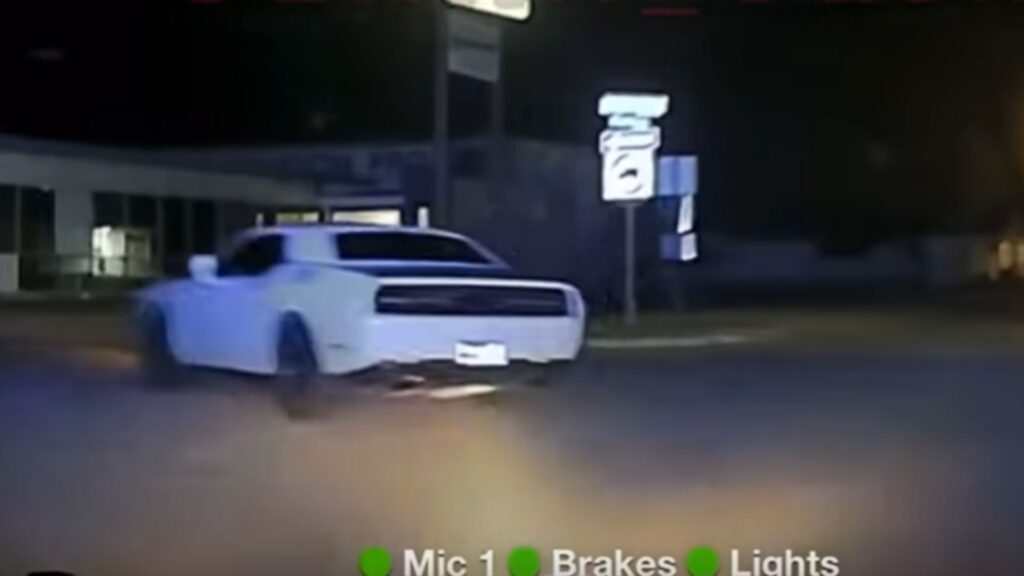
Another chapter in the ongoing story of modified Dodge Challengers and Chargers outrunning police: a Hellcat driver used the classic lights-out tactic to break visual contact with pursuing officers and escape. The blackout maneuver — cutting all exterior lighting to make the vehicle effectively invisible to officers who have lost sight of it — has become a well-known evasion technique, and the fact that it continues to work reflects both the capability gap between performance Mopars and police vehicles and the limitations of aerial and ground pursuit coordination.
The performance gap is real and worth understanding. A Dodge Challenger Hellcat produces over 700 horsepower from the factory. The Dodge Charger Pursuit Police Package — the vehicle most commonly used to chase it — uses a 5.7-liter or 6.4-liter Hemi V8 in better-equipped departments, but many agencies use the 3.6-liter V6 Charger, which is simply not competitive in a straight-line speed contest with a Hellcat. When a Hellcat driver decides to leave, police cars following from behind essentially become observers rather than pursuers.
The lights-out tactic works in certain conditions because it removes the most immediate visual identifier officers use to track a fleeing vehicle at night. At high speed in low-traffic conditions, a dark-colored vehicle with no lights can disappear from sight quickly. Officers don’t have thermal or radar tracking on every pursuit unit, and aerial support isn’t always available or fast enough to prevent the escape window.
The ongoing series of these incidents — whether the Arkansas blackout Charger, the various Hellcat pursuits, or the street takeover vehicles that simply drive away — reflects a real capability mismatch that law enforcement agencies are managing rather than solving. The decision many departments have made to abandon high-speed pursuits for non-violent offenses is a pragmatic response to this reality, accepting that some vehicles will get away rather than creating collision risks for innocent drivers.
For car enthusiasts, the appeal of these videos is understandable in a pure performance context. The vehicles are genuinely impressive machines doing what they were built to do. The problem is that this particular application — evading law enforcement — isn’t the kind of performance demonstration anyone should be cheering, regardless of how fast the car is.