
Anyone who was part of the car scene before social media took over, back in the early-to-mid 2000s, remembers what it used to feel like. It wasn’t about cameras, followers, or algorithms. It was about hanging out in a dimly lit parking lot until 2 a.m., trading parts, diagnosing a check engine light, and showing respect when someone else’s build outshined yours. Nobody was trying to go viral. People were just trying to go faster, look cleaner, or learn something new.
That version of car culture feels increasingly distant. What happened at the Slammedenuff show in Sevierville this past weekend may be one of its clearest breaking points yet.
From Enthusiasts to Influencers
The car scene used to be gritty, a little rough around the edges, and largely self-policed. Respect was earned through knowledge and craft, not through chasing attention. The people who built the culture were fabricators, tuners, and diehards who spent their time in garages and junkyards rather than in front of a camera. Sometime around 2010, that began to shift. As social media platforms grew, people realized a car build could become a personal brand, and that shift gradually changed the culture’s center of gravity.
There’s nothing inherently wrong with show cars built primarily for appearance. But when an entire scene tilts toward content creation and away from actual wrenching, tuning, and driving, something in the culture’s balance is lost.
Chaos in the Smokies
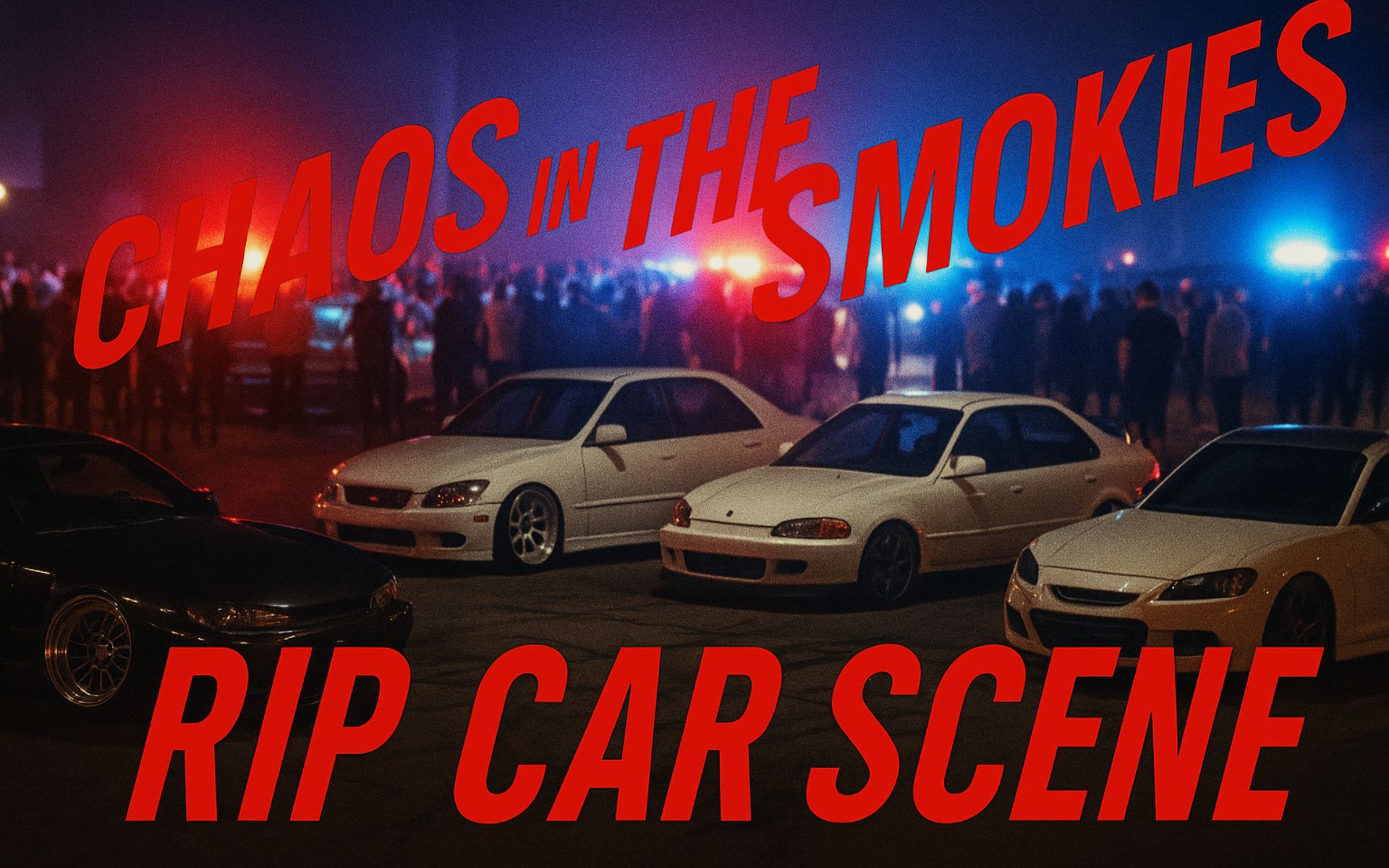
Slammedenuff, a long-running stance and show-car event, was scheduled to take place over the weekend at the Sevierville Convention Center in Tennessee. It’s typically known for heavily modified show cars and extreme fitment builds. By Saturday night, however, the event had devolved into chaos.
Police from multiple departments, including Pigeon Forge, Sevierville, Gatlinburg, Blount County, and the Tennessee Highway Patrol, were called in to manage what officials described as large, unruly crowds. Footage from the weekend showed people climbing on fuel pumps, performing burnouts, and revving engines in ways that quickly drew local media attention.
@nocamber_ Idiots gotta ruin it for everyone – #slammedenuffgatlinburg #slammedenuffgatlinburg2025 #slammedenuffsevierville ♬ original sound – nocamber_
@lucidaperture WEDNESDAY AT JIMMY’S – – – – #lucidaperture #vadedmob #slammedenuff #jimmysmarket #drone ♬ original sound – Lucid Aperture
@lowered_vandal Slammedenuff Sevierville looking like a night straight out of NFS Heat level 5! #slammedenuff #gat #pigeonforge #carcommunity #stance ♬ original sound – louiedelatorre77
@yourfriendjasten To who all DID not attend here is a rough recap #slammedenuff #gatlinburg ♬ original sound – Jasten
@user7373643710 GAT25 #gat25 #slammedenuff #fyp #s550 ♬ original sound – prod.siresco
By Sunday morning, city officials shut the event down entirely, citing reckless behavior, public disturbances, and a serious threat to public safety. Officials said the impact on the surrounding community had become unacceptable and unsustainable. Slammedenuff organizers issued refunds and publicly stated they did not condone the behavior seen over the weekend. Still, the damage extended well beyond Sevierville, affecting the broader reputation of car enthusiasts more generally.
It’s Not the Cars, It’s the Culture
This isn’t really about stance builds, imports, or any particular style of car. It’s about a cultural shift where community has increasingly given way to performative behavior. There was once an unspoken code: respect the venue, don’t ruin it for others, and don’t take unnecessary risks with law enforcement present. That code has weakened considerably as more participants prioritize being seen over being respected.
The fallout from Slammedenuff mirrors a pattern seen in cities across the country, where street takeovers and reckless stunts give law enforcement increasing justification to crack down on car gatherings altogether, making it harder for respectful enthusiasts to enjoy the hobby without scrutiny.
The Fallout Affects Everyone
Anyone who has tried to organize a legitimate car meet recently knows how difficult it has become. Cities are increasingly reluctant to host these gatherings, insurers are wary of the liability, and law enforcement officers, many of whom have their own history in car culture, have grown less tolerant of repeated incidents. As a result, even enthusiasts who are simply trying to enjoy their hobby responsibly can find themselves facing increased scrutiny over minor modifications that have nothing to do with reckless behavior.
A Call for Course Correction
This isn’t an argument for gatekeeping in an elitist sense, but rather a call to preserve something that used to carry real meaning. Car culture at its best is built on mutual respect, between enthusiasts, the broader community, and the venues that host these events. Restoring that requires real accountability from event organizers and participants alike, along with a willingness to hold accountable those who treat gatherings as content opportunities rather than genuine community events.
Remembering Why It Started
Looking back at the early 2000s import scene, muscle car crowd, mini-truck builders, and VW enthusiasts, there was often friendly rivalry, but always an underlying respect for the work involved in a build. When that mutual respect fades, and gatherings become primarily about content rather than community, what’s left is considerably more prone to disorder.
What happened in Sevierville reflects a broader challenge facing car culture nationally. Enthusiasts who genuinely value the hobby, from the atmosphere of race day to the camaraderie that once defined local meets, have a role to play in pushing back against behavior that risks turning future gatherings into liabilities cities are no longer willing to accept.