
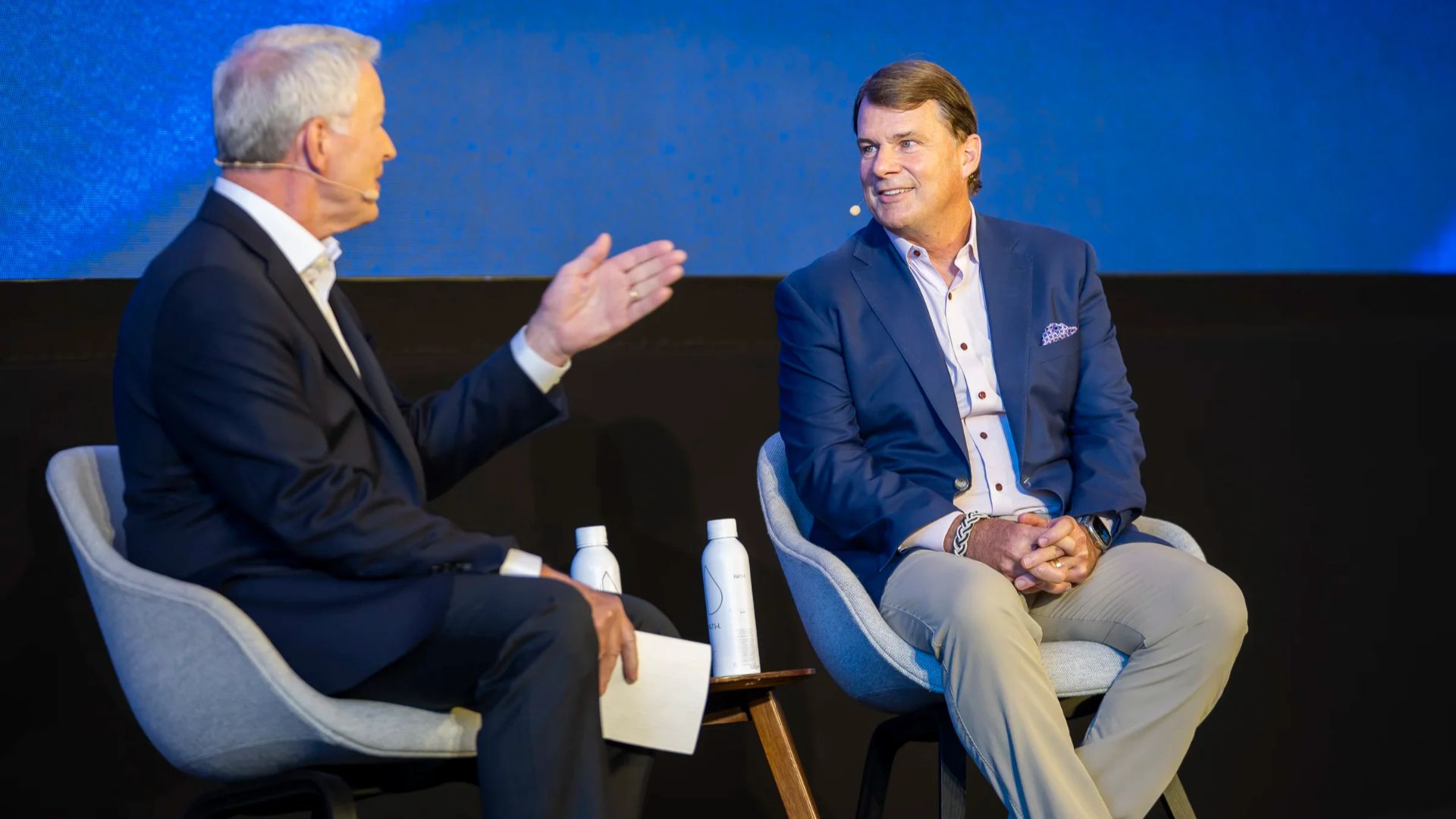
A Family Story That Resonated With the Room
Ford CEO Jim Farley joined a panel of business and government leaders this week to discuss what panelists called America’s “essential economy,” the skilled labor force that keeps the country running. But it was a personal story from Farley’s own household that stuck with attendees and captured a broader generational shift in how young people are viewing a college education.
“I Don’t Know Why I Need to Go to College”
Farley said his son spent the summer working as a mechanic and came home with an unexpected realization. “Dad, I really like this work,” his son told him. “I don’t know why I need to go to college.” Farley said the comment sparked a real conversation at home, one that mirrors a debate happening in households across the country. “It should be a debate,” he added.
A Widening Gap in the Skilled Trades
Farley’s remarks came during a keynote discussion alongside U.S. Labor Secretary Lori Chavez-DeRemer and Mike Rowe, founder of the Mike Rowe Works Foundation, which promotes skilled trades education. Rowe pointed to a specific imbalance driving the conversation: for every two tradespeople entering the workforce, five are retiring. “The math isn’t mathing,” Rowe said. “We’re running out of people who can build, fix, and make things.”
Trade Careers Offer Pay Without the Debt
Both Rowe and Chavez-DeRemer emphasized that trade careers increasingly offer competitive pay and job stability without the heavy debt load tied to a four-year degree. According to federal data cited during the panel, many skilled workers, including electricians and machinists, earn more than college graduates, often starting near or above six figures. “If you want a good-paying job and a home, the trades should be on your radar,” Chavez-DeRemer said.
Rising Tuition Adds Urgency
Rowe pointed to his own experience, recalling that his college degree cost $12,000 in the 1980s, an education he said would cost nearly $100,000 today. “Nothing has inflated faster than the cost of college,” Rowe said, arguing that lingering stigma around trade work has left many young people unaware of viable, well-paying alternatives.
AI’s Role: Complement, Not Replace
When the conversation turned to artificial intelligence, both panelists expressed optimism that the technology will complement skilled trade work rather than replace it. “AI is coming for coders, not welders,” Rowe said, noting that blue-collar roles, from electricians to pipe-fitters, remain essential to keeping industries running, including the data centers that power AI systems themselves.
Farley’s Takeaway
Farley agreed with that framing, saying the essential workforce deserves renewed respect and investment. “These are the people who keep our world moving,” he said. “If my own son wants to be part of that, I think that’s something to celebrate, not debate.”