
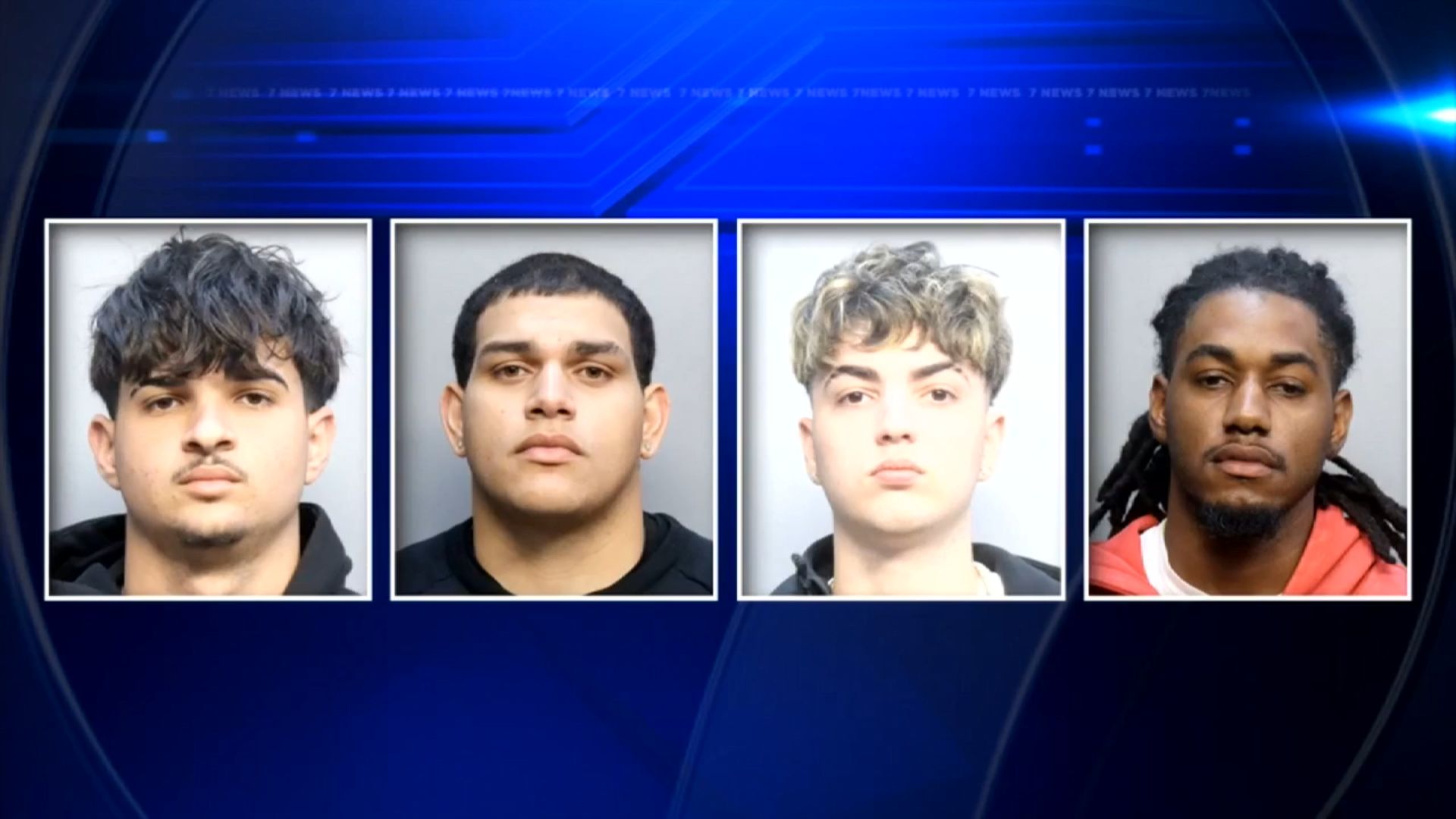
Four men were arrested in Miami after police say they staged a traffic crash at a city intersection, a calculated act that exposes how easily the system can be manipulated and how dangerous those schemes have become for everyone nearby.
Caught by Surveillance Before It Even Happened
Investigators say a Real Time Crime Center detective spotted suspicious activity on surveillance footage before the crash near Northwest Eighth Avenue and 70th Street on Wednesday. Video showed one car creeping into the intersection before another vehicle slammed into its side, a collision authorities say was entirely intentional rather than accidental.
Police charged the four men involved with insurance fraud, organized scheme to defraud, and providing false information to an officer. As with any pending case, these charges represent allegations that have not yet been proven in court.
A Planned Crash With Real Risk to Bystanders
This wasn’t a random incident. It was allegedly a planned crash, carried out in public, with real vehicles and real risk to anyone nearby at the time. It highlights a problem the auto industry and insurers have been slow to confront directly: staged accidents that turn city streets into profit-driven danger zones for the people orchestrating them.
Modern vehicles are packed with safety marketing, crash-prevention branding, and technology sold as a solution to roadway risk. Yet scams like this keep happening in plain sight regardless. Systems designed to reduce crashes did nothing to stop a collision that was deliberately engineered by the people involved.
The Cost Goes Beyond Paperwork
The consequences go far beyond insurance paperwork. Staged crashes increase insurance costs for everyone, strain emergency services responding to what looks like a genuine accident, and create unpredictable hazards for drivers and pedestrians who have no idea a wreck is being orchestrated right next to them.
The industry has often treated fraud like this as a financial nuisance rather than a genuine safety threat. That complacency has allowed organized schemes to grow, relying on the assumption that staged collisions would simply blend in with legitimate crashes on the books.
Why This Case Matters Beyond Miami
This Miami case is a warning the industry can’t afford to ignore anymore. When people can allegedly cause crashes deliberately for money, the system isn’t just flawed, it’s failing the people who trust it to work as intended. And now the fallout is difficult to spin away: these arrests make clear that staged collisions are no longer a fringe problem. They’re a public safety concern, and the pressure to address it seriously is no longer optional.