
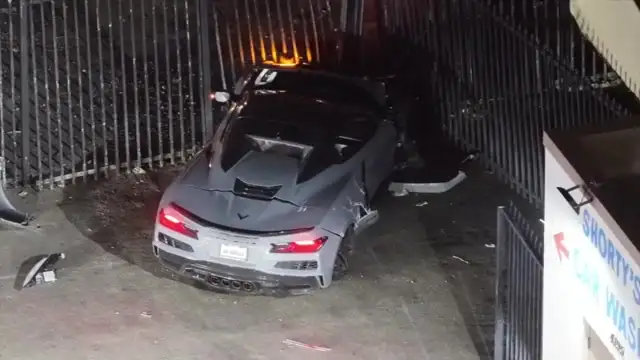
The crash of a stolen Corvette in Miami Gardens early Thursday is more than another crime headline. It’s a blunt reminder that the auto industry, law enforcement, and policymakers are losing ground in a dangerous fight playing out on public streets.
An Armed Carjacking in the Middle of the Night
Authorities say the incident began around 1:20 a.m. when Miami police responded to a reported armed carjacking near Northwest 5th Avenue and 30th Street. Two victims told officers a male suspect approached with a gun and took their newer-model Corvette. The crime unfolded quickly and violently, with the kind of confidence that comes from a pattern repeating itself across major cities.
A Crash That Ended a Wild Ride
The vehicle was later located by the Miami-Dade Sheriff’s Office near Northwest 42nd Avenue and 183rd Street, but the recovery came only after the situation spiraled into a public safety scare. Surveillance video captured the Corvette speeding through the area before slamming into a pole, crashing into an SUV parked in an accessible space, and finally coming to rest against a fence.
Nearly a dozen law enforcement units converged on the scene. Officers scrambled to contain the aftermath and detain a 16-year-old suspect accused of carrying out the armed carjacking. As with any case involving a minor, the details of what happens next legally will differ from an adult proceeding, and the allegations here remain unproven. No injuries were reported, an outcome that feels more like luck than the result of any real prevention.
Why Stolen Performance Cars Keep Showing Up in Violent Crimes
This is the reality behind modern car theft. High-performance vehicles marketed as aspirational status symbols are increasingly frequent targets in violent crimes like this one. The technology, speed, and visibility that help sell these cars to buyers also make them attractive to offenders looking for impact and a quick escape.
Meanwhile, the consequences land squarely on everyday people caught in the middle. Victims face trauma, financial loss, and the risk of a deadly encounter during the theft itself. Bystanders become collateral damage when stolen vehicles turn into projectiles on public roads. Law enforcement is left chasing these problems after they erupt rather than getting ahead of them beforehand.
The industry has spent years selling image, speed, and excitement as the core appeal of these cars. What it hasn’t solved is how those same machines keep ending up in armed crimes involving minors on public streets. This crash isn’t an isolated failure. It’s a warning flare. And the message is clear: the system didn’t get ahead of the threat here. It reacted only after the damage was already done.