 By John Lloyd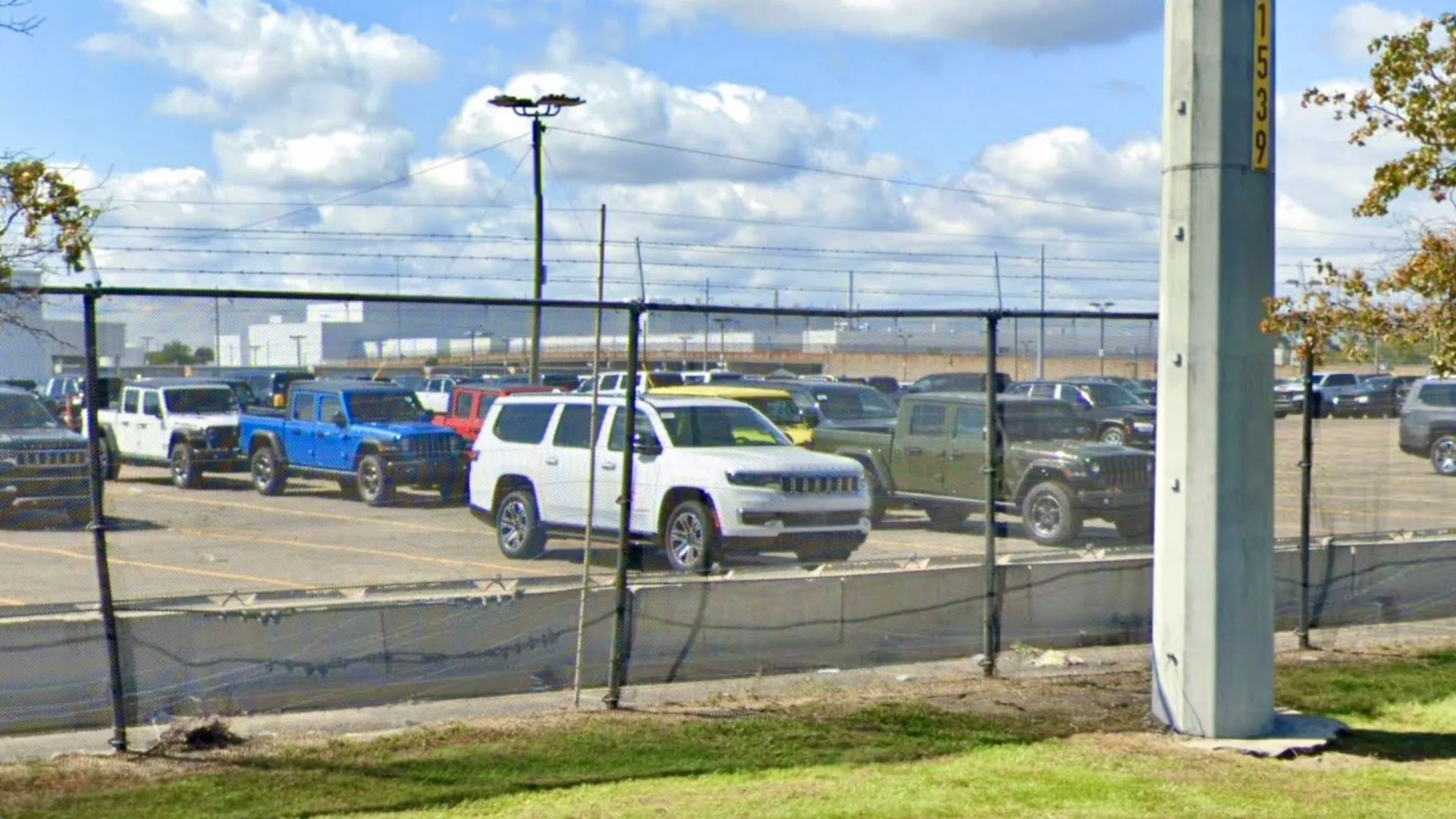
It happened again. Not years later. Not under new management. Again.
A vehicle holding lot near Stellantis’ Detroit Assembly Complex–Jefferson was hit by a mass theft early Wednesday morning, with nearly a dozen brand-new vehicles driven straight out through a torn fence. This wasn’t a clever hack or a sophisticated cyber breach. It was brute force, predictability, and neglect colliding at 3 a.m. on Detroit’s east side.
Police say suspects breached the perimeter fence near Mack Avenue and Conner Street and simply helped themselves. Ram trucks. Jeep SUVs. Dodge Durangos. Fresh off the assembly line and gone before sunrise. One truck got stuck and was recovered. The rest disappeared into the night.
This lot is operated by a third-party logistics company. That detail matters, because this same location has been targeted repeatedly over the past year. Repeated hits mean repeated warnings. And repeated warnings ignored become responsibility.
The Detroit Assembly Complex itself is a hardened facility. Security is tight where it counts for production. But the moment vehicles leave the plant and sit in off-site storage, they are suddenly protected by little more than chain-link fencing and hope. That gap is not an accident. It’s a cost-saving choice.
For car enthusiasts, this is infuriating. These vehicles aren’t just inventory. They’re future customer cars. They’re special trims, hard-earned builds, trucks and SUVs people have waited months for. When criminals steal them, the consequences ripple outward. Insurance claims rise. Replacement timelines stretch. Dealers scramble. Buyers pay more. Enthusiasts lose trust.
And this keeps happening.
The suspects didn’t need tow trucks or flatbeds. They drove the vehicles out. That alone tells you how exposed this lot was. Video from the scene shows torn fencing and clear forced entry. No deterrence. No meaningful obstacle. Just an open invitation.
Stellantis has acknowledged the theft and pointed to the third-party operator. That may be technically accurate, but it doesn’t absolve the larger failure. If you build the vehicles, move the vehicles, and profit from the vehicles, security along that chain is your problem to solve.
This isn’t about blaming cars. The vehicles did nothing wrong. This is about criminals exploiting weak links and an industry that keeps tolerating those weak links until headlines force action.
The takeaway is unavoidable. If this lot keeps getting hit, security isn’t failing by chance. It’s failing by design. And after yet another mass theft, the industry is out of excuses.
 Shawn Henry
  Eve Nowell