 By Eve Nowell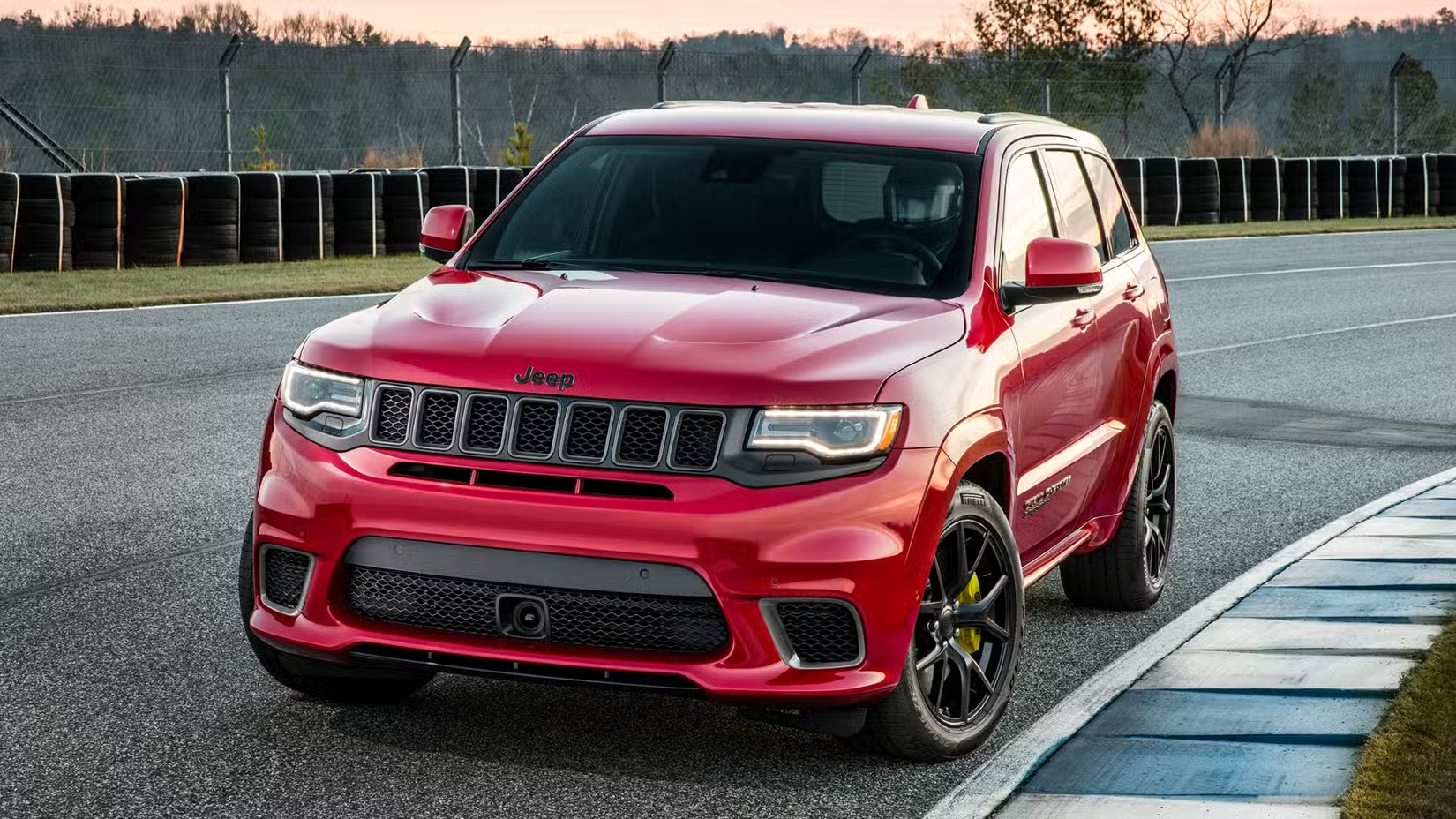
The auto industry spent the last decade convincing buyers that the only thing families were missing was supercar power stuffed into five-seat SUVs. Now the market has rendered its judgment. The world’s first 700-horsepower SUV, the Jeep Grand Cherokee Trackhawk, has fallen to around $50,000 on the used market—nearly half its original price—and the drop tells a larger story about misplaced priorities and manufactured demand.
Nearly Half-Million Ram and Jeep Vehicles Recalled Over Dangerous Towing Risk
When Jeep unleashed the Trackhawk in 2018, it wasn’t subtle. A 707-horsepower supercharged V8, a claimed 3.5-second sprint to 60 mph, and a top speed of 180 mph were bolted into a nearly 5,400-pound SUV. The message was clear: excess sells. Practicality was the excuse. Performance was the hook.
Buyers paid more than $87,000 for the privilege.
Just a few years later, high-mileage examples are trading around $50,000, with values continuing to slide. According to current pricing data, depreciation has hit hard and fast, even though these vehicles are still considered modern by most standards. That kind of value collapse doesn’t happen to products that truly meet long-term needs. It happens when hype outruns reality.
The Trackhawk wasn’t alone. This era also produced Hellcat sedans, Hellcat SUVs, and a broader trend of horsepower escalation that looked impressive in marketing decks but ignored the basics: fuel consumption, real-world usability, long-term ownership costs, and restraint. These machines burned fuel aggressively, required complex systems to manage their weight and speed, and delivered performance most owners could never responsibly use.
Jeep equipped the Trackhawk with massive Brembo brakes, adaptive suspension, all-wheel drive, and a sophisticated drivetrain just to keep the concept barely under control. That alone should have raised alarms. Instead, it became a selling point.
The used market is now doing what regulators and manufacturers didn’t. It’s forcing accountability. A $50,000 price tag for a once-flagship performance SUV isn’t a bargain—it’s a correction. It reflects how quickly consumers moved on once the novelty wore off and the costs became impossible to ignore.
This isn’t nostalgia territory yet. It’s fallout. The industry chased headlines and horsepower, and buyers are now voting with depreciation. The takeaway is blunt: the 700-horsepower SUV era didn’t age into legend. It aged into a warning.
Related posts:
 Toyota Pays Out $7.6 Million To Debt Relief In Case Settlement
 Worldwide Auctioneers Is Selling A Custom 450-HP 1937 Ford Deco Rod This Saturday
 Officials Recover Over $1m in Stolen Luxury Vehicles and Drugs in Arizona
 Anniversary Ruined: Couple’s Dodge Charger Stolen from Hotel Valet During Celebration
 Shawn Henry